
Two and a half years of needlework for five Tiel wall hangings
Until 3 January 2027 the Flipje en Streekmuseum in Tiel shows five handmade wall hangings on the city’s history, from the earliest inhabitants to Tiel today.
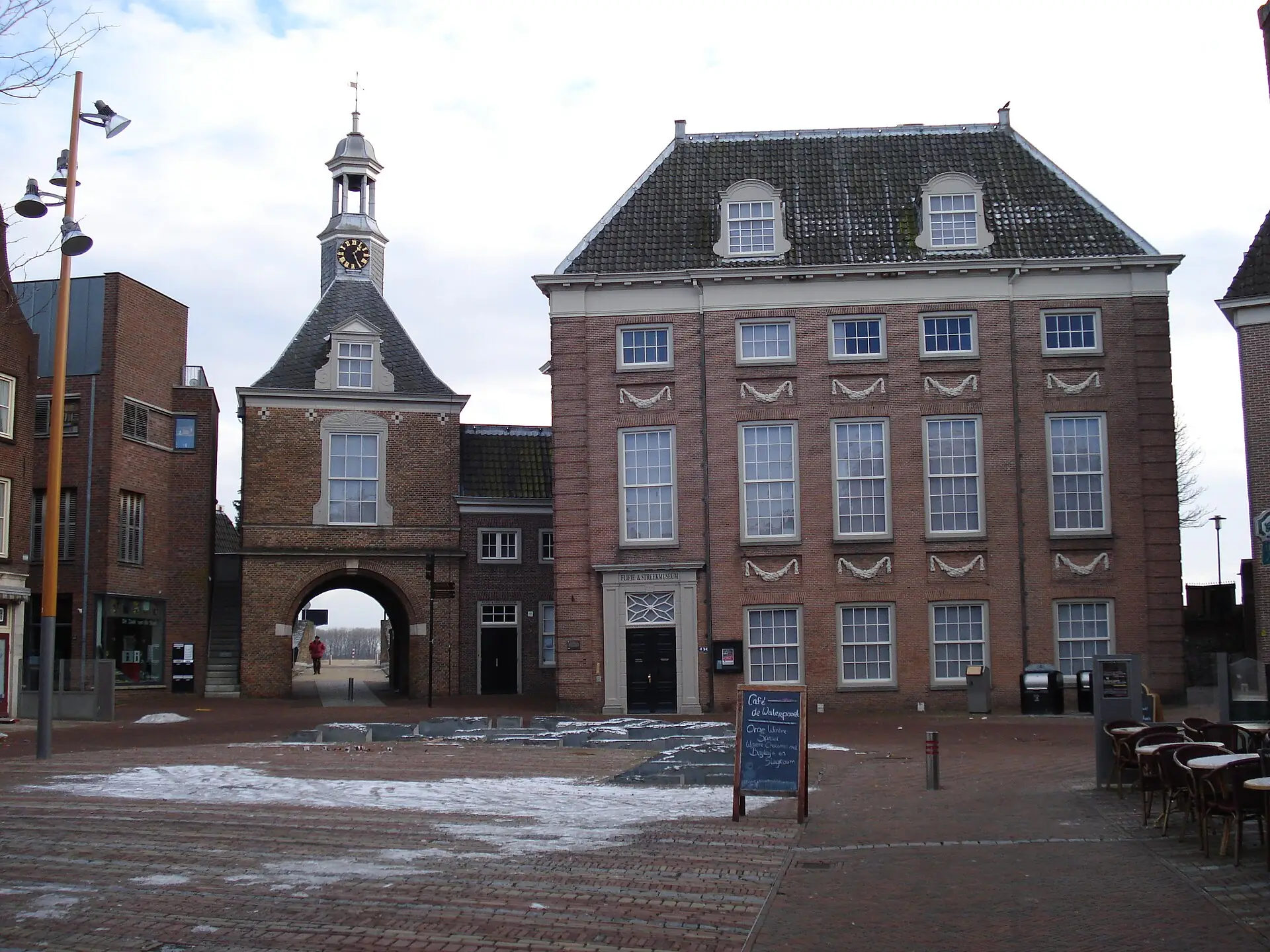
Five floors up, the Flipje en Streekmuseum in Tiel holds five wall hangings that together tell the history of the city. They are made with fabric, wool, thread and felt and hang on the fifth floor of the museum at Plein 48. The exhibition Hedendraads: vijf Tielse wandkleden (Five Tiel Wall Hangings) opened on Thursday 24 September 2026 and runs until 3 January 2027.
The panels follow five themes: the earliest inhabitants, the growth of the city, Tiel as an industrial town, Tiel in wartime and Tiel today. The Bayeux Tapestry served as inspiration, a medieval embroidery about seventy metres long that depicts the events around the Battle of Hastings. In Tiel the starting point was not a battle but the history of the city itself. To keep things manageable, the group chose five separate panels.
The wall hangings are a project of the Stadsfabriek Tiel, a creative space in the former Christelijke Mavo building on the Medelsestraat. The volunteers there call themselves ‘stadmakers’ (city makers). The idea came from Lisette le Blanc, the museum’s former curator, who knew of a similar project in Zaltbommel. She also devised the historical line of the wall hangings. Maureen Klijn, chair of the Stadsfabriek, is the initiator of the project and helped with the making herself. The Stadsfabriek is originally a national initiative. In Tiel it is made possible by, among others, Stichting Doen, the province of Gelderland, the Oranjefonds, the municipality of Tiel, the VSB-fonds and the V-fonds. The space is also home to the Stichting Ontmoetingcentrum Tiel, a volunteer organisation for people with and without physical or mental disabilities and for people with a low socio-economic status. Monique Groenesteijn, founder of the Ontmoetingscentrum, came across the idea of the wall hanging there and became one of the makers.
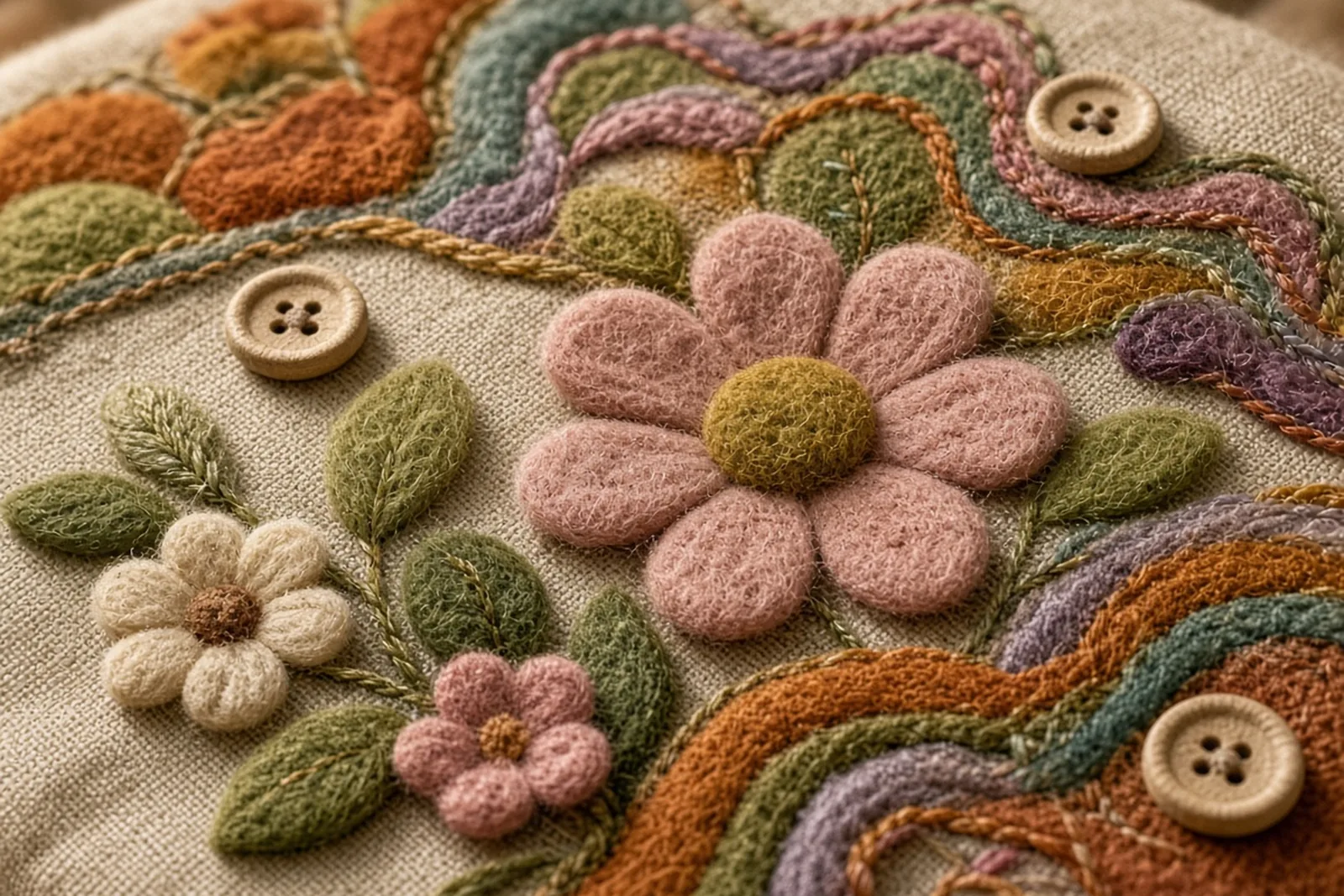
The work began with historical images and photographs of archaeological finds. Sandra Kleine Staartman turned those into design drawings, known in the trade as cartoons (‘kartons’). Using them, the makers worked on the project for well over two and a half years. The basis is embroidery, supplemented with felt and other fabric techniques. One of the makers even made the faces of the Vikings who attacked Tiel out of buttons. To keep the surprise, taking photographs during the making was mostly not allowed. Friends and family therefore only saw at the opening what the makers had worked on for those two and a half years.
That opening took place in the hall downstairs, because the upper room is too small for such a group. Museum director Jacoline Zilverschoon addressed the guests, as did Maureen Klijn and Lisette le Blanc. Seven members of the Ontmoetingskoor (meeting choir) sang the song ‘Vergit Tiel nie’ under the direction of Willem Gradisen. The makers each received a booklet tied with a ribbon; by pulling the ribbons open at the same time, the exhibition was opened. After that, everyone still had to climb five floors. One of the speakers said the hangings want to travel. They hang in the museum for three months and can then be seen in Zinder, among other places. Anyone who knows of a good space can contact the Stadsfabriek to show them too.
Around the exhibition the museum organises (children’s) workshops and a lecture on textiles through the centuries. On Wednesday 9 December there is a Erfgoedverhalen (heritage stories) lecture on textiles, from 7.30 to 9.00 pm; the lecture on the Batavians on 25 November is full. The Sinterklaas treasure hunt, which began on 14 November, runs until 5 December.
Between 1 November and 31 March the museum is open Tuesday to Friday from 1.30 to 5.00 pm and on Saturday and Sunday from 1.30 to 4.30 pm. It is closed on Mondays, as well as on Christmas Day, Boxing Day, 31 December and 1 January. Adults pay € 9.50, children aged 4 to 16 pay € 5. Children under 4 get in free, as do holders of a Museumkaart, Rembrandtkaart or ICOM card; the VriendenLoterij VIP card is not valid there. A visit takes 60 to 90 minutes on average. From Tiel station it is about a fifteen-minute walk.
You do not need to book: tickets are sold at the desk, where you can pay by card or in cash. There is a free cloakroom with free lockers. The museum has no café, but on the fifth floor there is a machine for a free cup of tea, coffee or hot chocolate.
Practical
Museum: Flipje en Streekmuseum Tiel, Plein 48
Exhibition: Hedendraads: vijf Tielse wandkleden
Runs: 24 September 2026 to 3 January 2027
Open (1 Nov to 31 Mar): Tue–Fri 1.30–5.00 pm; Sat and Sun 1.30–4.30 pm; closed Mondays
Holidays: closed on Christmas Day, Boxing Day, 31 December and 1 January
Admission: adults € 9.50; ages 4 to 16 € 5; under 4 free