
When do you cross a border, and when do you draw one yourself?
Sixteen artists show at Museum W in Weert what borders do to identity. The exhibition runs until 14 March 2027.
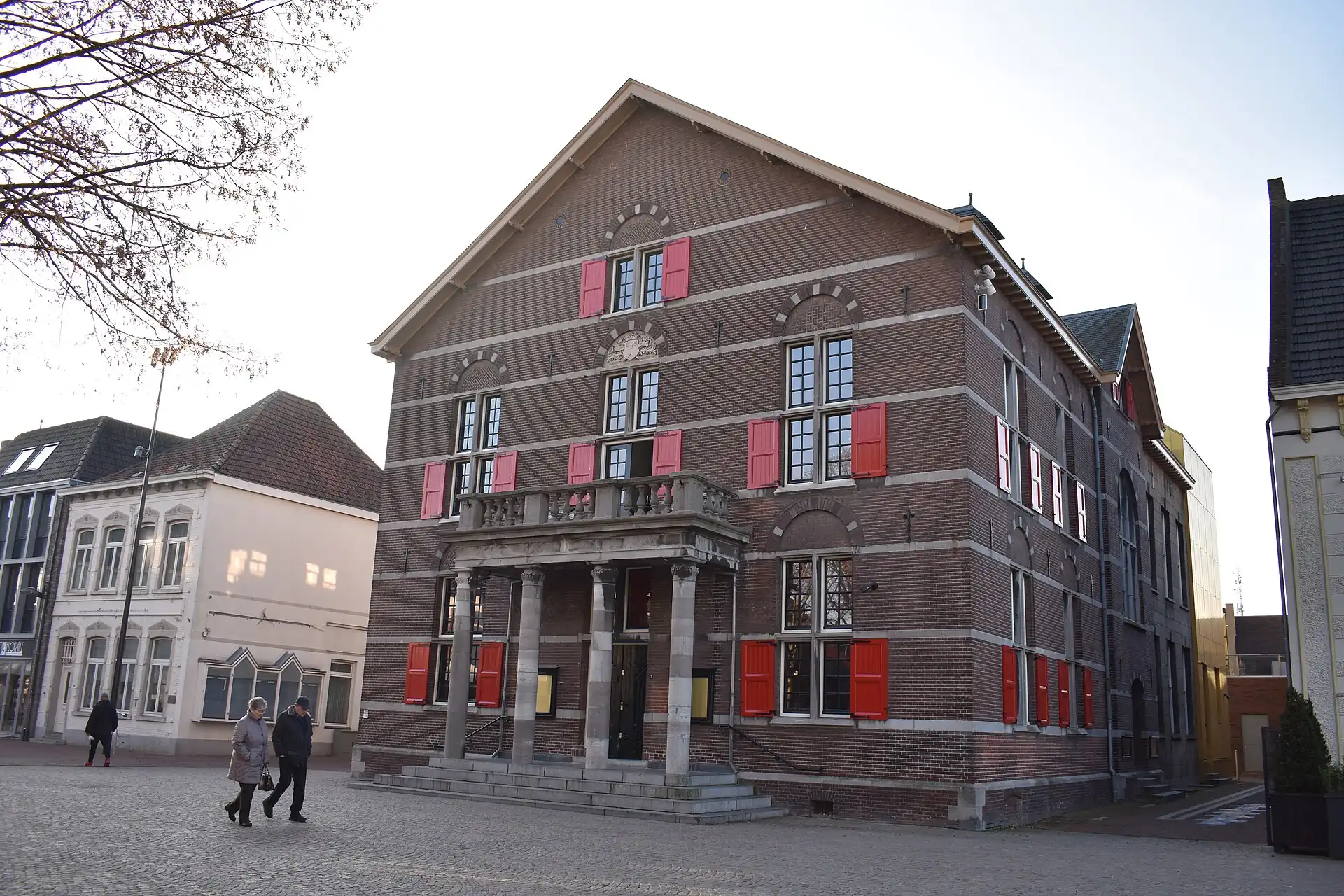
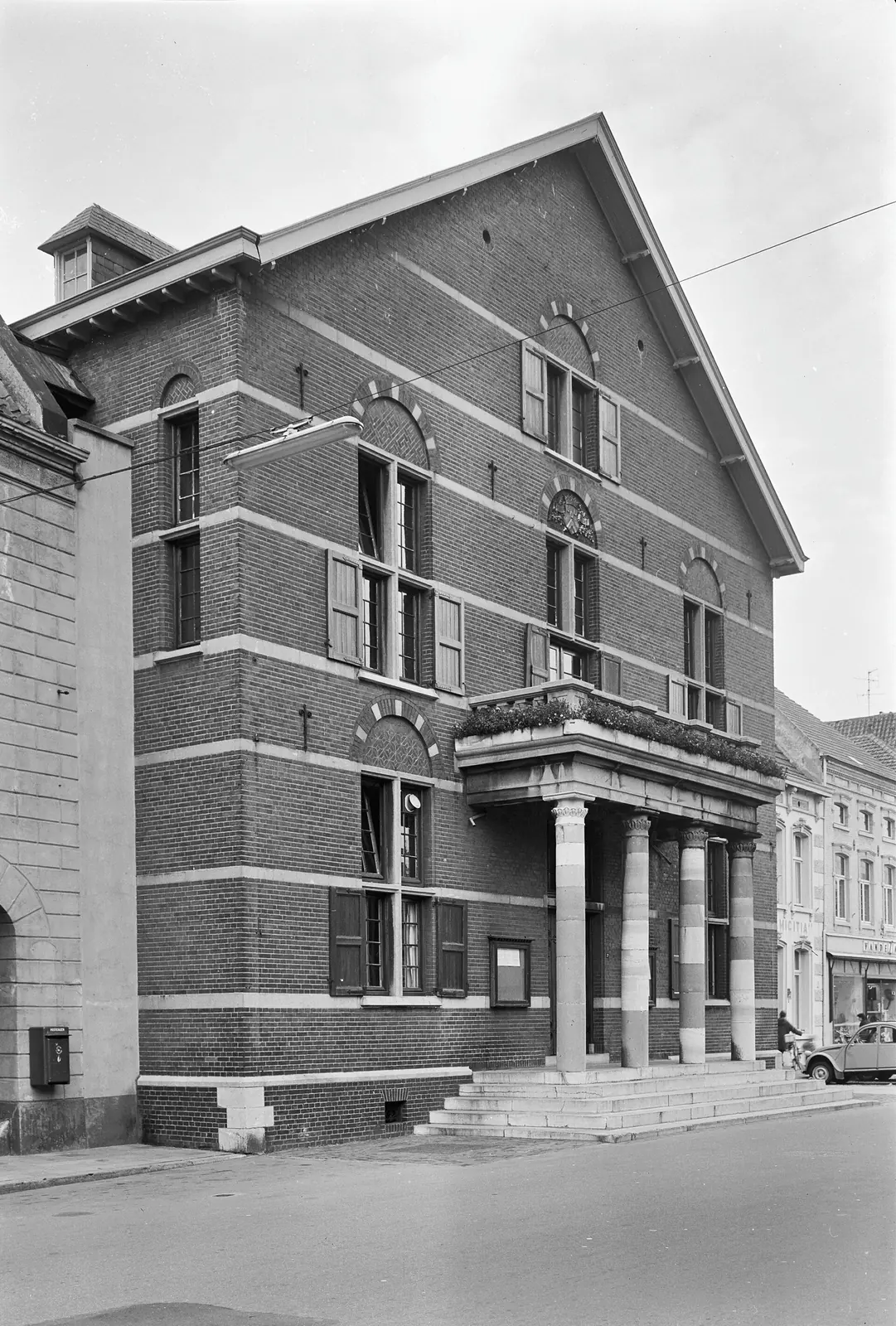
Trespasser, contrarian, defector, no man’s land, limbo: the words that Museum W in Weert puts with the exhibition I Didn’t Cross The Border, The Border Crossed Me are all about who stands where in relation to a line. The museum, housed in the former town hall, shows more than thirty artworks by sixteen artists from 17 October 2026 until 14 March 2027. They are spread over four exhibition rooms on the ground floor.
The starting point is easy to state. Borders are imaginary lines: subjective, endless and abstract. Yet they take on far-reaching meaning once they are fixed, on a map, in a law or in our collective consciousness. That goes for national borders, but also for invisible dividing lines: norms, behaviours and ideas that sit deep in our thinking. They offer support and they limit. They create barriers between what we call acceptable and what we call deviant, between normal and different.
The exhibition follows a few threads. The first is physical borders. A national border is often more than a geographical difference: it influences the identity, culture and daily experience of people on both sides. There is work by artists who resist imposed national borders and the influence such borders have on their daily lives. The second is invisible dividing lines. Hemaseh Manawi Rad shows textile works that explore, from an Iranian-Dutch perspective, how complex the sense of home is for people with a migration background in Dutch society. Anne Silverstrand Forest creates her own hybrid visual language, shaped by growing up as an American in the Netherlands, surrounded by the Russian Orthodox community. Her work blends Dutch, American and Russian Orthodox traditions into a world that is critical and escapist at once.
The third thread is called queer spaces. The museum writes that explicit room has been made for artists from the queer community, who see borders as permeable and contested spaces rather than fixed lines. Among others, Miriam Cahn, Nan Goldin, Duane Michals, Leon Stoffelen, Koes Staassen and Denys Shantar take part, together with Maja Irene Bolier, Eli Content, Frans van Hoek, Dakota Magdalena Mokhammad, Prins Nicolas, Silvia B., Charles Vos and Hanneke Wetzer. The museum names, among others, the works Natural habitat by Rad, Flash by Stoffelen, cover me by Staassen and Der zerbrochne Krug by Shantar.
The design is by Kiki van Eijk and Joost van Bleiswijk of the design studio Kiki & Joost from Eindhoven. They translate the questions of the exhibition into tangible interventions in the rooms: when do you respect a border, when do you cross it, what is private and what is public, and when does moving a border feel liberating and when confrontational or even problematic? Sometimes this happens graphically, sometimes spatially and subtly, and sometimes it is outspoken, colourful and surprising. The museum describes the interventions not as answers but as an invitation to pause, to feel, to doubt and to look again. Kiki & Joost previously designed exhibitions at, among others, the Rijksmuseum, Museum Singer Laren and the Textielmuseum in Tilburg.
In every room there is also spoken word by Salma Ali, former city poet of Weert. She draws on her own experiences and explores themes such as growing up between two cultures and identity. In this way she gives a voice to the diversity of Weert, the museum writes, and adds a poetic layer to the exhibition. Els Huver of the Kopsalon made the soundscapes that carry her texts. The curator is Haiko Sleumer.
There is also a side programme. Museum Date runs until 14 March and is meant for two people visiting the museum together, a partner, friend or colleague, with a free bilingual booklet full of conversation starters and tasks. You do not have to be an art expert, it says. The booklet is suitable for everyone aged 16 and over. On 20 February at 14:00 curator Sleumer gives a tour, with registration via museumw@weert.nl. For pre-vocational, senior general and pre-university secondary education the museum lesson Grensverleggend (boundary-pushing) was developed, in which pupils design their own country with discarded maps and together make one new world.
Museum W, Meikoel 2 in Weert, is open Tuesday to Sunday from 11:00 to 17:00. It is closed on Monday, New Year’s Day and Christmas Day, and open on Boxing Day. On 24 and 31 December the museum closes at 16:00. During carnival, from Saturday 6 to Tuesday 9 February, it is closed. A ticket costs 8 euros, 6 euros for students, CJP holders and groups of ten or more. Admission is free up to and including age 18 and with a Museumkaart. Payment is by debit card only.
Practical
Museum: Museum W, Meikoel 2, 6001 EE Weert
Exhibition: I Didn’t Cross The Border, The Border Crossed Me, more than 30 works by 16 artists
On view: 17 October 2026 to 14 March 2027
Open: Tuesday to Sunday 11:00-17:00; closed on Monday
Holidays: 24 and 31 December until 16:00; 25 December and 1 January closed; 26 December open
Admission: 8 euros, students, CJP and groups of 10 or more 6 euros, free up to and including age 18 and with Museumkaart; debit card only