Why is the light in a museum so low?
Paper and textiles get 50 lux at the Rijksmuseum, the rest usually 200. On lux hours, UV light, rotating works and a Night Watch that changed colour under LED light.
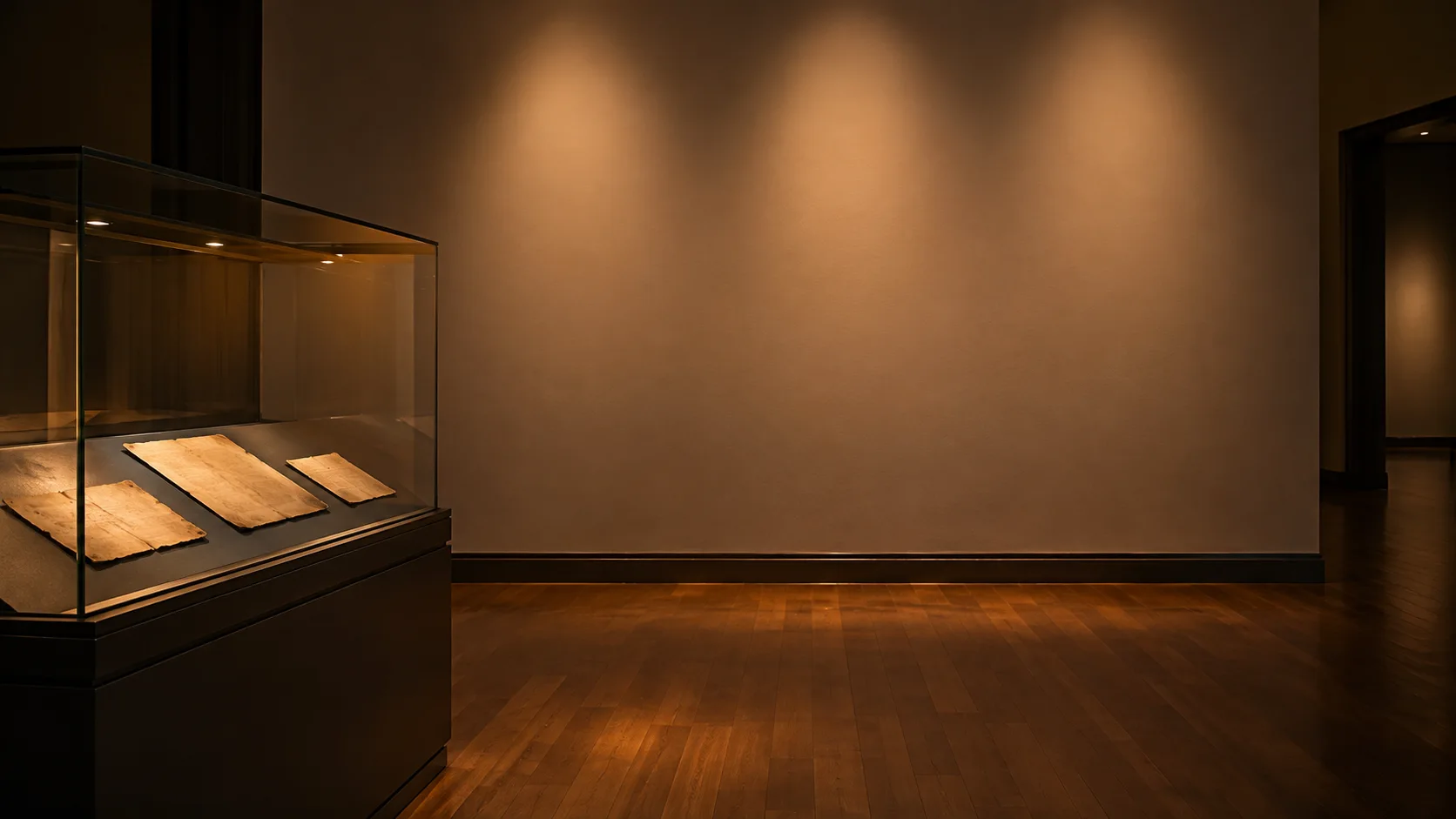
Stand in a museum in front of a drawing, a print or a tapestry and you will see lower light than at the paintings one room further on. That is intended. Works on paper and textiles are very sensitive. The Rijksmuseum lights them at 50 lux. In the rest of the museum it is usually 200 lux. The museum uses only artificial light, because daylight contains UV radiation that makes colours fade or objects bleach with long exposure. Artificial light makes it possible to set the light level in lux precisely.
Light causes damage that accumulates and cannot be reversed. Fading is one form, but weakening, discolouration, yellowing and embrittlement also occur. The degree of damage depends on the light intensity, the type of light, the duration of exposure and the sensitivity of the material. Objects that are not on display belong in the dark. In the Rijksmuseum's storage the light is usually off, and many objects lie there in packaging.
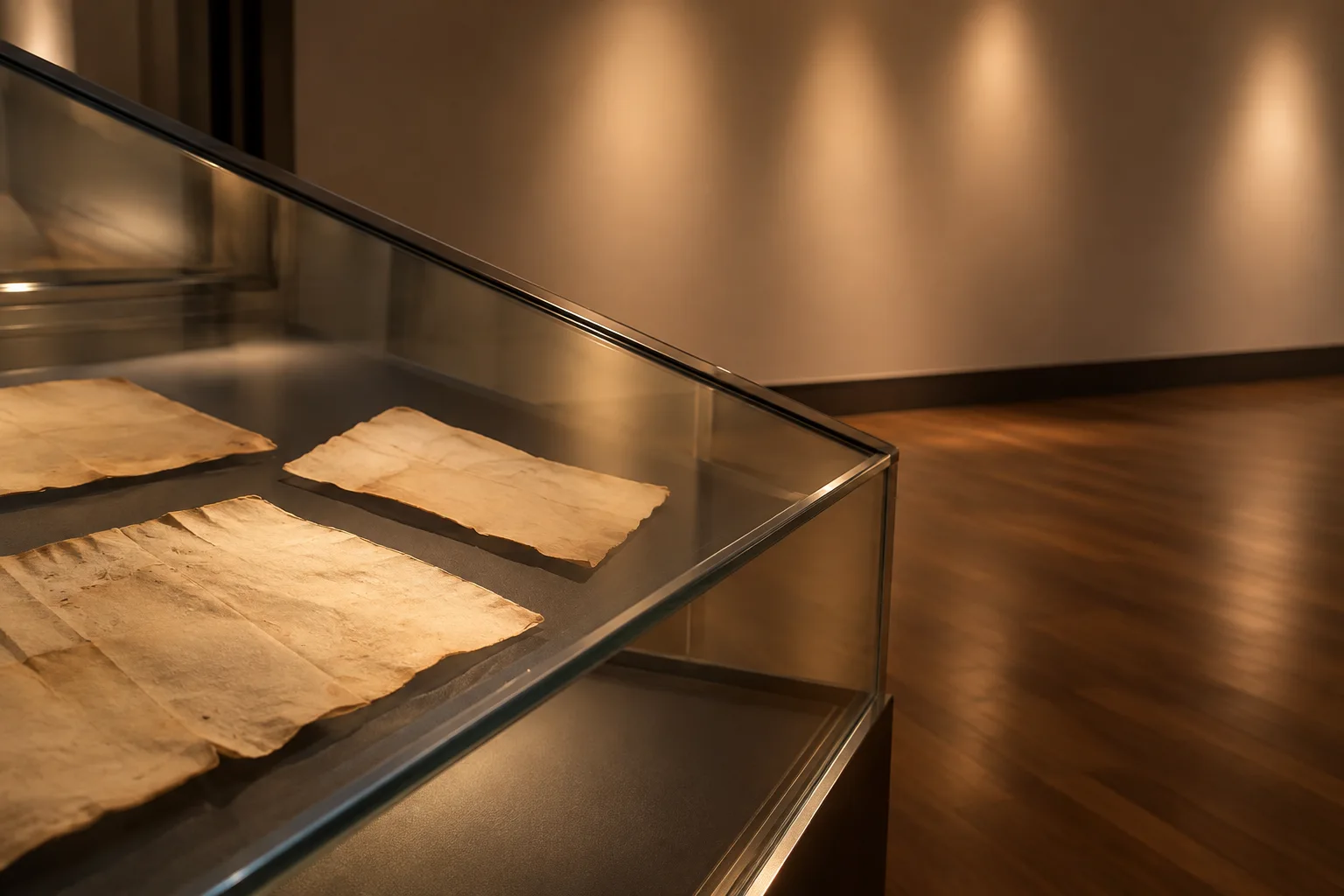
Conservators therefore calculate in lux hours: the light level in lux times the time in hours. One hour in direct sunlight, about 100,000 lux, adds up to 100,000 lux hours. You reach the same quota with 50 lux museum lighting in 2,000 hours. Little light for a long time is therefore less harmful than a lot of light for a short time, but the total load always adds up. A consultancy for museum lighting stresses that 50 lux is not a limit below which no damage occurs: ‘Even at low illuminance levels, every extra minute adds to the total dose.’ Through the law of reciprocity, 100 lux for a short time can be roughly equal to 50 lux for twice as long.
The common classification has three categories. Paper art, photographs and textiles get a maximum of 50 lux and may be on display for at most three months in five years. Oil paint, wood and leather get 150 lux, at most three months in two years. Metal, ceramics, stone and glass go up to 300 lux, and continuous display is usually acceptable. These categories are a starting point: specific objects can be more or less sensitive. For loans, Museum Boijmans Van Beuningen asks for a maximum of 50 lux of artificial light for sensitive materials such as paper, photographs and plastics, and a maximum of 200 lux for other objects.
Light is not the only factor. A stable climate is essential for all objects in the museum. The Rijksmuseum measures temperature and humidity continuously. An unstable climate can cause damage: wooden sculptures can crack if it is too dry, metal can rust if it is too damp. For paintings and works on paper, Boijmans asks for loans for 20 °C with a margin of 2 °C and a humidity of 50 percent with a margin of 5 percent. Within 24 hours the temperature may fluctuate by at most 2 °C and the humidity by at most 5 percent.
UV radiation is invisible, but carries more energy than visible light and is therefore more harmful. It is measured in microwatts per lumen. A consultancy names as a target value less than 10 microwatts per lumen. As measures, the American conservation organisation CCAHA names UV filters on light sources and UV-filtering acrylic in display cases and frames, limiting daylight with placement, film or curtains, and motion sensors so that objects are lit only when visitors are present. For the most sensitive originals, a facsimile can spare them. A colour temperature of roughly 2,700 to 3,000 kelvin makes low light levels feel warmer and more intimate, and a colour rendering index above 95 is the starting point.
That is why museums rotate works. Textiles and works on paper are replaced regularly to prevent damage. For books, a different page is shown every six months. For exceptionally fragile material, rotation can offer more protection than dimming an object ever further.
What light does to what you see became clear with the Night Watch. In 2012 the trade magazine E&W reported that the painting was lit with sixteen LED spots, specially designed for this application. Before that, halogen spots hung there. With LED the temperature at the canvas equals that of the surroundings, with common halogen lamps it is 1.5 °C higher. Halogen lamps fail after about 3,000 burning hours, an LED lamp is expected to last about twenty years. The colour rendering approaches daylight and details in the dark parts of the painting are easier to see. Rijksmuseum director Wim Pijbes said at the time: ‘It is like taking off your sunglasses.’
Key figures
Paper and textiles: 50 lux, the rest at the Rijksmuseum usually 200 lux
One hour of direct sunlight (about 100,000 lux) equals 2,000 hours at 50 lux
Books: a different page every six months
Loans: 20 °C and 50 percent humidity for paintings and paper