Deaf and mute, and yet a painter of ice
Hendrick Avercamp could neither hear nor speak and was known as ‘the Mute’. His winter landscape from around 1608 is the largest he painted.
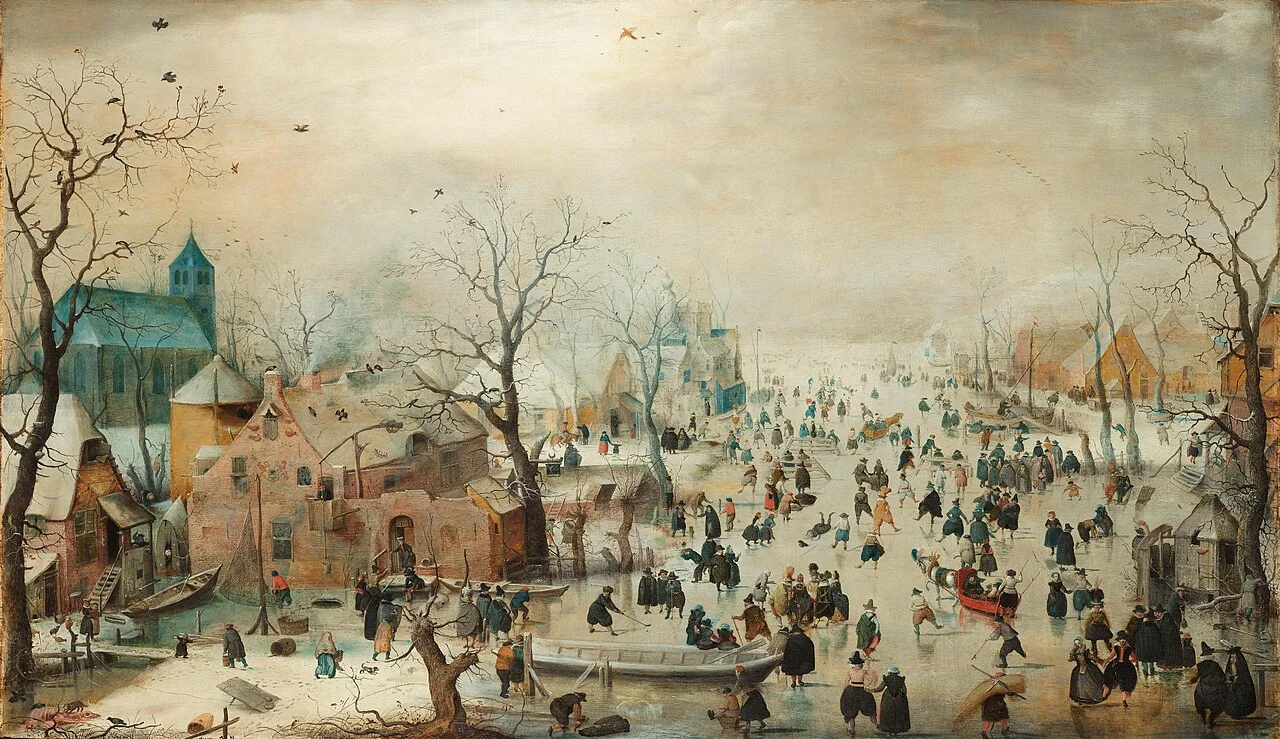
Hendrick Avercamp (Amsterdam 1585 – Kampen 1634) was born deaf and mute. He was known as ‘de Stom’ (the Mute) and mainly painted winter scenes.
The Rijksmuseum calls him the first Dutch artist to depict winter and its recreations, building on southern Netherlandish models. His Winter Landscape with Ice Skaters from around 1608 is the largest and most ambitious winter landscape he painted. It measures 77.3 by 131.9 centimetres and is signed. From a high vantage point you see a village on a frozen river, with hundreds of people skating, playing kolf, walking and riding sleighs.

Nieuwsuur used the same painting, there called Winterlandschap met ijsvermaak, as an example of the classic Dutch winter. Cultural historian Lotte Jensen said that such images keep the winters alive because they are so beautifully depicted.
The museum rates the painting’s condition as fair: there is strong craquelure and a history of flaking, but the paint layers are now stable. The Rijksmuseum bought it with the support of the Vereniging Rembrandt.
Practical
Hendrick Avercamp (Amsterdam 1585 - Kampen 1634), nicknamed 'de Stom' (the Mute)
Winter Landscape with Ice Skaters, around 1608, oil on panel, 77.3 x 131.9 cm
Rijksmuseum Amsterdam, room 2.6, object number SK-A-1718