A 24-metre map that surrounds you
Rijksmuseum Twenthe shows Calculating Empires by Kate Crawford and Vladan Joler, an ellipse full of texts and illustrations about five centuries of technology and power. The installation can be seen until 31 January 2027.
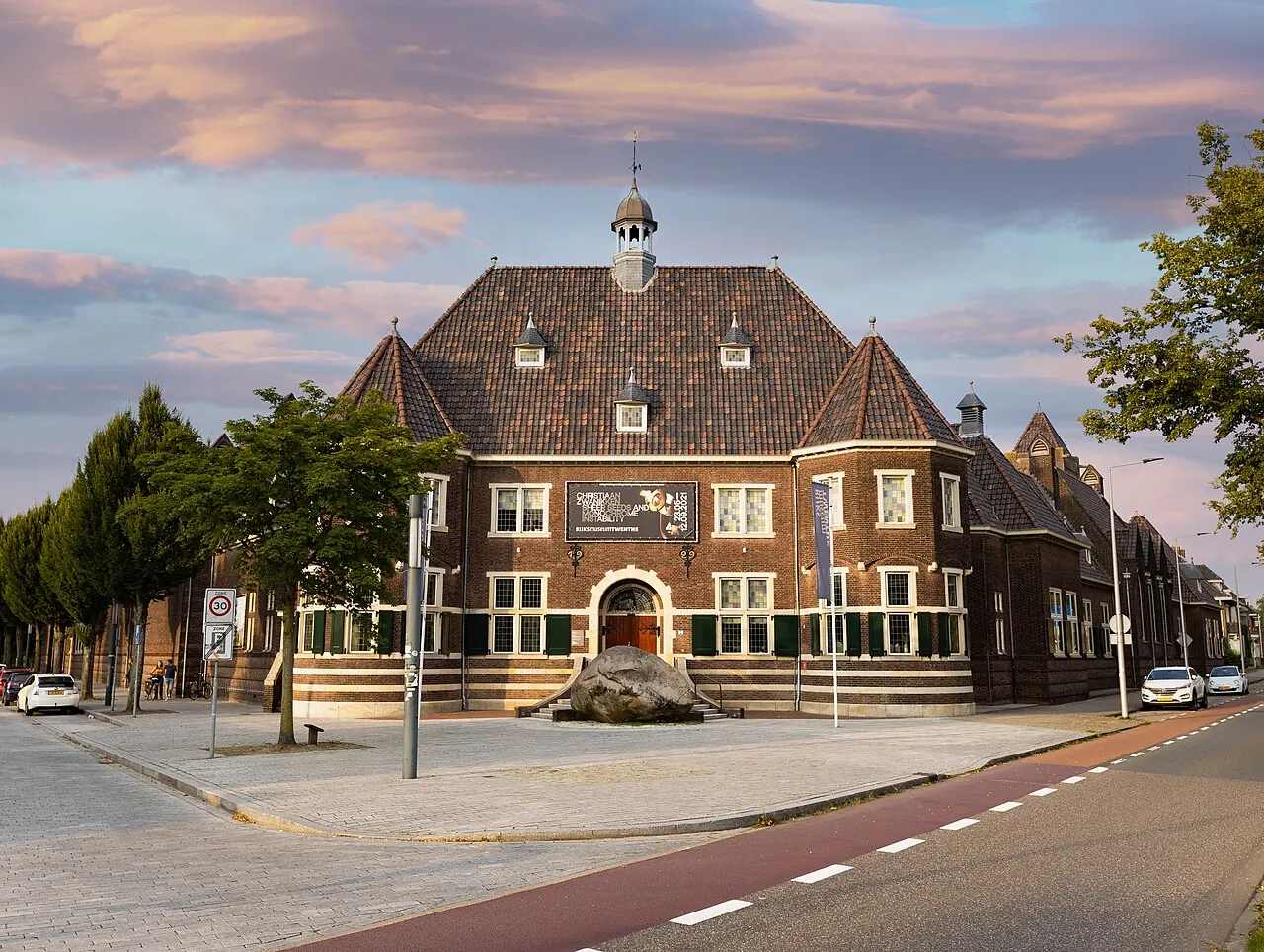
A wall 24 metres long, curved into an ellipse, and you are standing in the middle. That is how Calculating Empires: A Genealogy of Technology and Power Since 1500 by Kate Crawford and Vladan Joler is set up. Rijksmuseum Twenthe in Enschede shows the installation until 31 January 2027 as a solo presentation. The museum calls it a monumental installation that surrounds the visitor.
What is on that map? A timeline from 1500 to the present. It begins with the rise of capitalism, European colonialism and the invention of the printing press, and ends with the development of artificial intelligence. The work consists of more than a thousand small texts and hand-made illustrations. With them the makers show how five centuries of technological development are connected to automation, communication infrastructures, education, colonialism, militarisation, exclusion and inclusion.

The 2023 project also has its own website, where the map is divided into topics. Communication and Computation contains nine topics, including algorithms, models and hardware. Control and Classification has 23, from time and biometrics to prisons, borders, colonialism and military systems. There is also an audio tour explaining how to read the map.
Kate Crawford (Australia, 1976) is a scientist in the field of artificial intelligence, an artist and an author. She is a professor at the University of Southern California and wrote the book Atlas of AI, which the Financial Times named book of the year. TIME magazine named her one of the most influential people in AI. Vladan Joler (Serbia, 1977) is an academic, researcher and artist. He combines critical design, data research and cartography. He heads Share Lab, a data-driven research team that makes hidden internet infrastructures and the power of algorithms visible.
In 2025 the work won the Silver Lion at the Venice Biennale. The jury wrote that Calculating Empires challenges us to redefine our relationship to today's socio-technological structures. In 2024 Crawford and Joler also received the European Commission's Grand Prize for Artistic Exploration.
Rijksmuseum Twenthe bought the installation in October 2025 and calls it the largest contemporary art acquisition in the museum's history. The Mondriaan Fund, the Turing Foundation, PLANETART and the VriendenLoterij made the purchase possible. It is a purchase for the collection, not a loan. Only six editions exist worldwide that are available to collections. The edition in Enschede is the only one that enters a public collection in the Netherlands. The presentation lasts fifteen months, starting on 30 November 2025, and also includes historical objects from the museum's collection and loans from De Museumfabriek and Twickel Castle.
The museum calls the theme more topical than ever and points to Professor Reijer Passchier. He said in de Volkskrant: “Technology has fundamental consequences for the balance of power in society.” Passchier argues that a new aristocracy of the extremely rich is emerging, comparable to the feudal system. The means of production is no longer land, but data and technology.
Crawford and Joler also take part in Democratie NU? (Democracy NOW?), an exhibition with 15 (inter)national artists, in collaboration with the art and technology festival GOGBOT. It runs from 17 September 2026 until 14 February 2027 and explores how power and systems work, how images influence us and what role visitors play themselves.
Fourteen other artists take part alongside Crawford and Joler, including Jenny Holzer, Erik van Lieshout and Marina Naprushkina. In his video work Propaganda Theater Video Study (2023), Jonas Staal shows how propaganda manipulates opinions and creates new realities. Carlijn Kingma makes detailed maps of hidden structures in society and proposes new ways of living together. Peter Zegveld shows installations about how seductive and dangerous mass behaviour and leadership can be. In the video L’État c’est moi, Johannes Büttner shows what kind of society can emerge when people turn away from democracy.
The exhibition is meant for everyone, including people who rarely visit a museum. Bibliotheek Enschede, Pakhuis Oost and the University of Twente collaborate on the public programme. The exhibition is supported by the Cultuurfonds Overijssel, the Mondriaan Fund and the Vfonds. The museum at Lasondersingel 129 is open Tuesday to Sunday from 10:00 to 17:00.
On 22 November 2026 the museum hosts the talk RMT in gesprek met Eva Rovers, and on 13 December 2026 the film Orwell 2+2=5 is screened. The exhibition ends with a question to visitors: what does democracy mean to you?
Practical
Where: Rijksmuseum Twenthe, Lasondersingel 129, 7514 BP Enschede
Until: 31 January 2027 (solo presentation of Calculating Empires)
Open: Tuesday to Sunday, 10:00-17:00
The map: 24 metres long, more than a thousand texts and illustrations
Also on show: Democratie NU?, until 14 February 2027