Craquelure: why old paintings crack and what it means
The fine network of cracks in an old painting looks like damage. Research from 2020 shows that such a network can actually make a painting more stable, and a forger used it to make a new canvas look old.
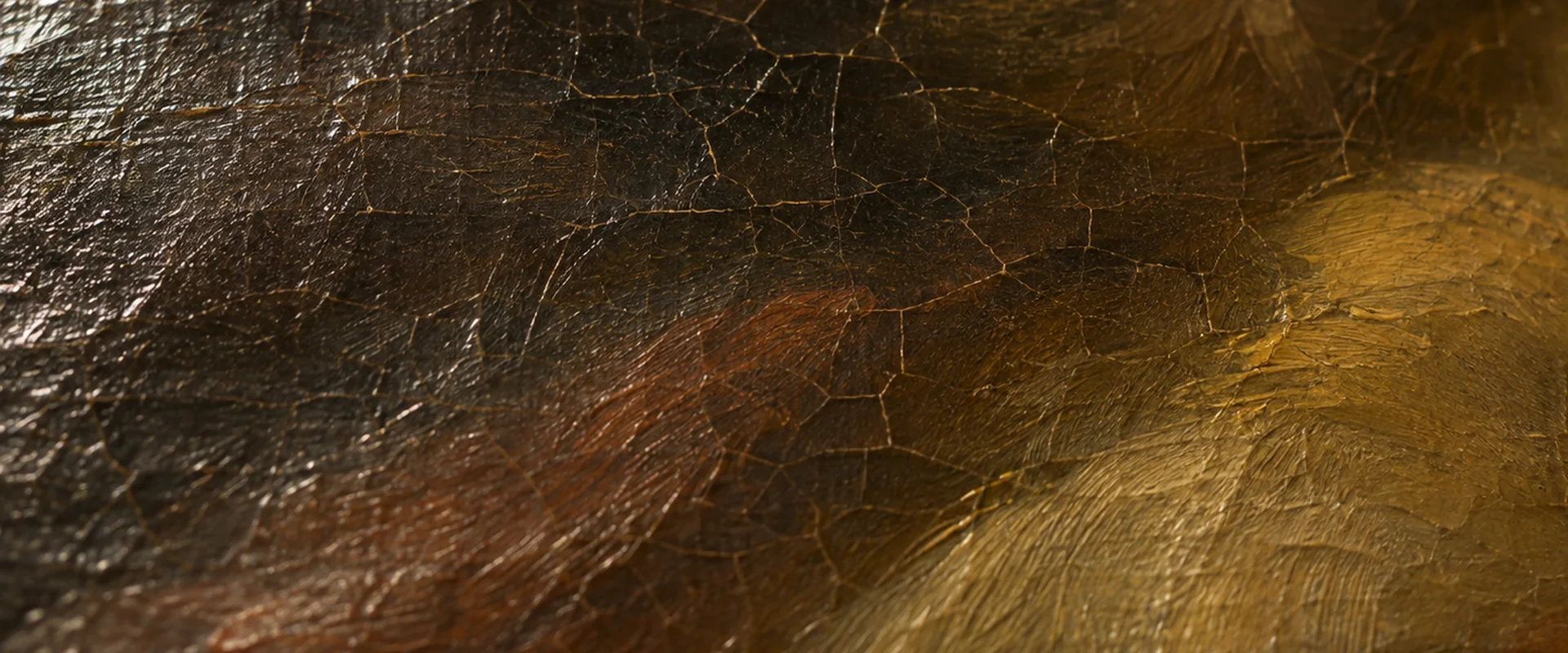
Anyone standing close to a seventeenth-century painting sees it: a fine network of cracks across the paint layer. It is called craquelure. It looks like damage, and it is often seen that way. Research from 2020 points the other way. Historical paintings on wood panels with such a mature crack network turn out to withstand swings in humidity and temperature better than was long thought.
How do those cracks form? Ageing is involved. Over the years the paint layer hardens and loses its original elasticity. The support, canvas or wood, meanwhile keeps expanding and contracting with its surroundings. The paint, now rigid, cannot keep up and cracks. Fluctuations in temperature and humidity are therefore seen as the enemies of paintings, which is why museums monitor those conditions.
There is also a second cause, which begins while the painting is being made. Old masters often applied several layers of paint. Each layer dried at its own rate, depending on its pigments or mediums, such as oil or a glaze, and also cooled in its own way. Those differences led to stresses inside the painting, which later showed up as cracks. Modern paints and materials limit such early cracks.
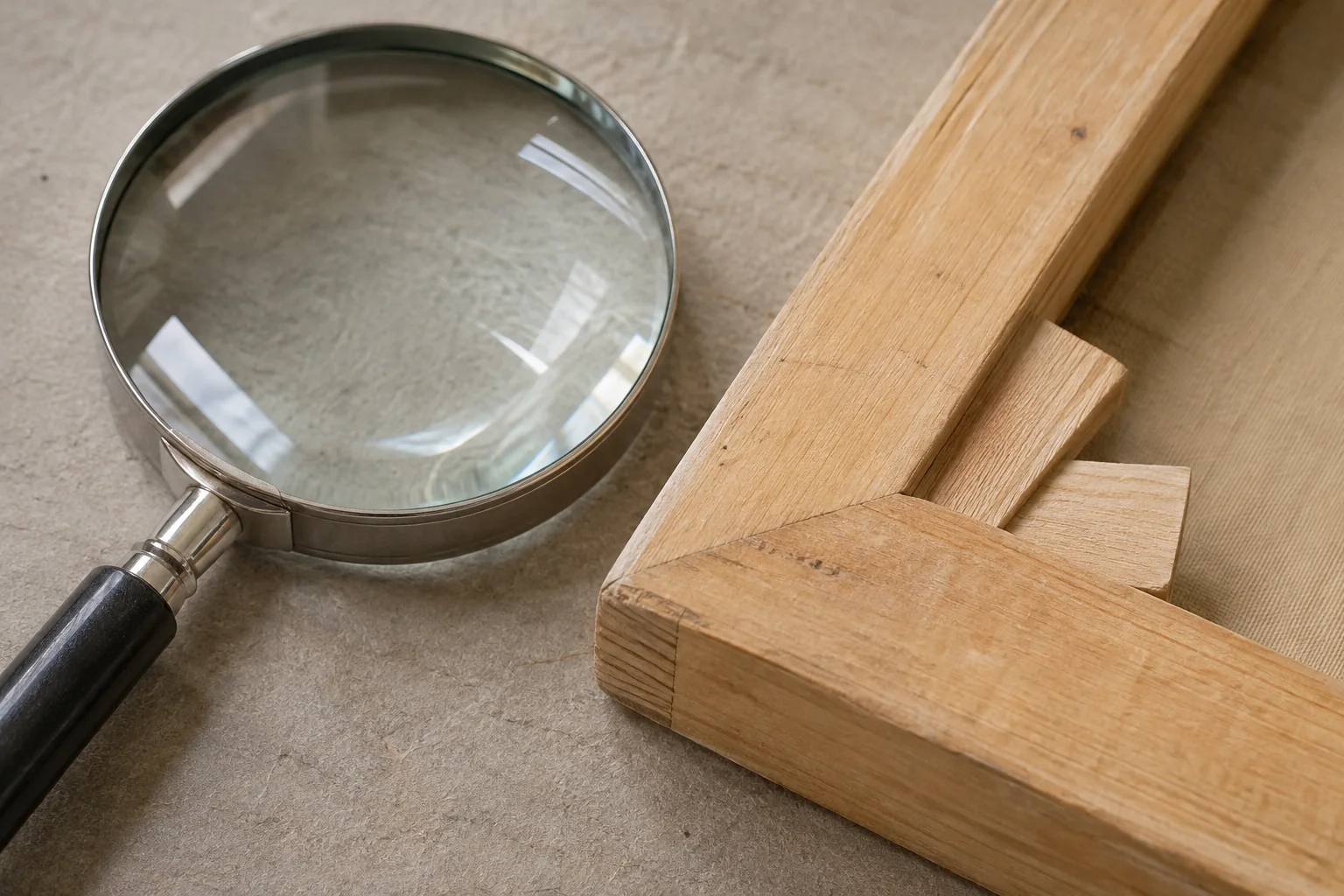
With wood panels the support adds to it. Wood expands when humidity rises and contracts as it dries out. That puts pressure on the gesso, the brittle ground layer under the paint, and causes cracks.
That these cracks sometimes have an advantage emerged from a study published in 2020 in the open-access journal Heritage Science. Researchers from the Polish Academy of Sciences, the Université de Strasbourg and Yale University took part, with Łukasz Bratasz as corresponding author. They tested gesso specimens at 25 degrees Celsius and four humidity levels: 30, 50, 75 and 90 percent, for two weeks, and then ran splitting tests to measure resistance to cracking. They also used CT scans of samples from historic panels and a computer model that took into account the elasticity of the materials and the moisture expansion of the wood.
The result: the stress in the gesso falls as more cracks appear. The stress concentrates in the areas between the cracks, and once those areas are small enough, no new cracks form. There is a caveat. The findings apply to paintings with open cracks. Filling cracks during a restoration or when varnishing can make a painting more vulnerable.
That has consequences for museums. The current guidelines call for 21 or 22 degrees and a relative humidity of 45 to 55 percent. Bratasz said: ‘The current environmental standards for the display of painted wood allow for only moderate variations of relative humidity.’ He pointed out that the findings could support more affordable climate strategies for historic buildings and museums with limited capacity for tight control.
For experts, cracks are also clues. They help date or attribute a work, because they say something about its authenticity and history. A forger knew that too. Han van Meegeren, who painted new ‘Vermeers’ in the 1930s, ran into the problem that oil paint needs about fifty years to harden. He mixed his pigments with a synthetic resin and baked the canvas. He took the crack network from a real seventeenth-century canvas that he used as a base: he scraped most of the image away but kept the canvas and the craquelure, and that made his new painting look old.
Artists have used the pattern too. In 1977 Alberto Burri made the Grande cretto nero, derived from monochrome paintings he had made about twenty years earlier. In the 1980s he took the idea into the landscape with the Grande Cretto di Gibellina in Sicily.
Anyone standing close to an old canvas in a gallery therefore sees something that years, moisture and paint have made together. For conservators that is a reason not to simply fill cracks. The network of cracks in an old painting is more than a consequence of time. It says something about the age of the work and the material, and in some cases it is a sign that the painting has reached a stable state.
Practical
Study: Heritage Science, 2020 (Bratasz et al.)
Museum guideline: 21 or 22 degrees, 45-55 percent relative humidity
Test set-up: gesso specimens at 25 degrees and four humidity levels, two weeks
Caveat: the findings apply to paintings with open cracks