Eva Besnyö: the liberated camera at Fotomuseum Den Haag
Fotomuseum Den Haag shows about 200 photographs by Eva Besnyö, all from its own collection. The exhibition runs until 31 January 2027 and follows her from Budapest and Berlin to Amsterdam.
A boy with a double bass, photographed in 1931 in Balatonlelle in Hungary. Boy with Double Bass is Eva Besnyö's iconic portrait, and it now hangs in Fotomuseum Den Haag. The museum shows it in Eva Besnyö - The Liberated Camera, one of the largest overview exhibitions ever devoted to her work. The exhibition runs from 5 September 2026 to 31 January 2027 inclusive.
Photographer, feminist, phenomenon: that is how the museum presents Eva Besnyö (1910-2003). It wants to show how she changed photography for good. The exhibition moves through her life. It starts with her first steps with the camera in Budapest and continues with her formative years in the raw Berlin of the 1930s. After that come her life and career in Amsterdam, the Second World War, which left deep scars because of her Jewish background, and her involvement in the Dolle Mina feminist movement in the 1970s.
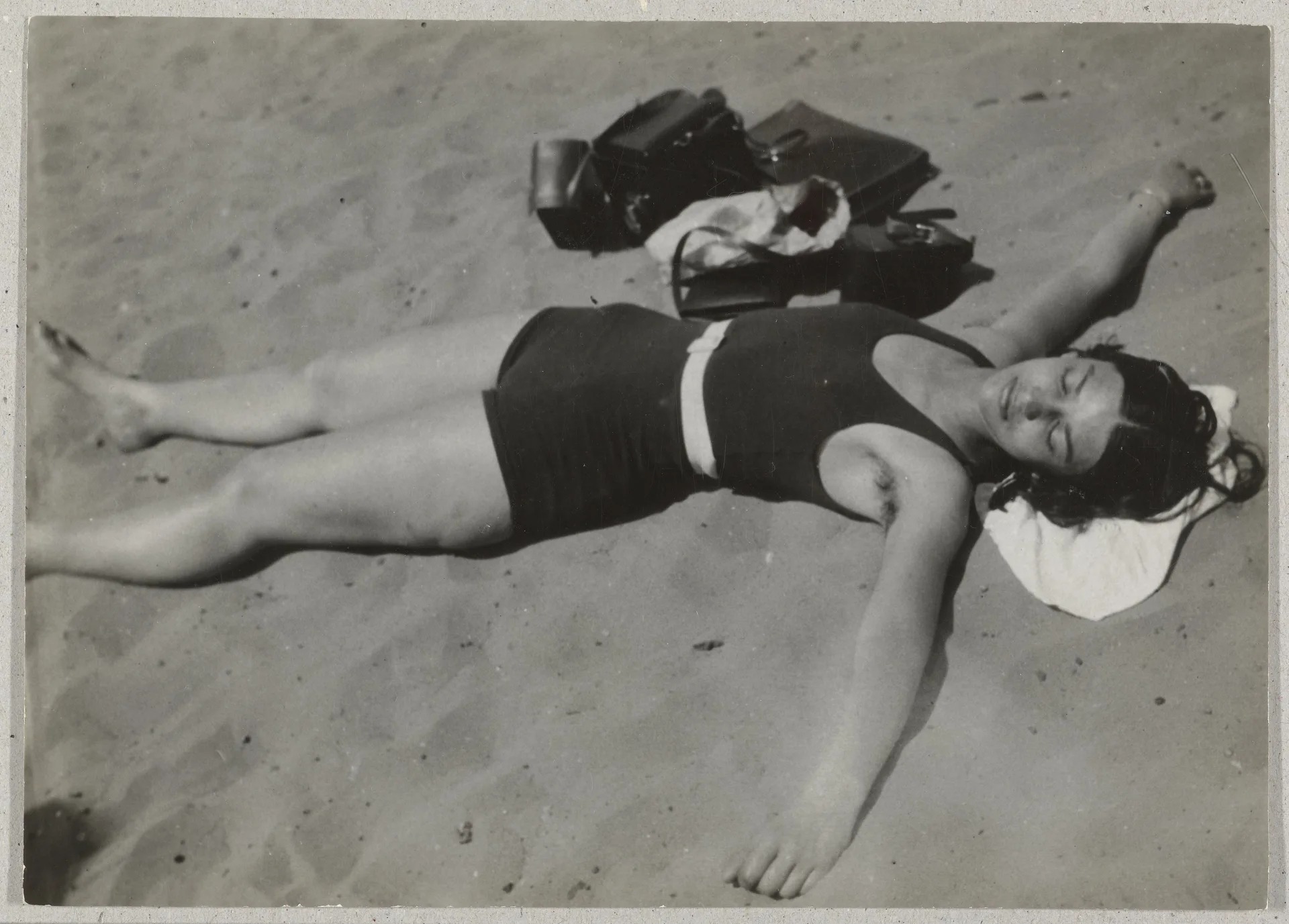

All the photographs come from the museum's own collection. There are about 200 images from the largest Besnyö collection in the world. Besnyö made every print herself or under her supervision in the darkroom. That includes the portraits of her artist friends Charley Toorop and Violette Cornelius and the self-portrait with camera, made in Berlin in 1931.
Her work is linked to the New Photography, a movement known for unusual camera viewpoints, strong diagonals and clear compositions. One example is Starnberger Straße, a Berlin street scene from 1931 with exactly those diagonal lines. The museum calls these lines typical of her work. That fits the title: a camera breaking free from the fixed frame of its time.
The best part is not a photograph but a film. Leo Erken, a photographer and friend of Besnyö, got the chance to record how she sorted her own photo collection in the last phase of her life. The result is the documentary Eva Besnyö - De keurcollectie from 2003, which plays in the exhibition. It is the best part because the galleries show what the museum keeps, while the film shows what Besnyö herself wanted to keep.
The exhibition comes with a project that builds on the Dolle Mina horse-cart trip of 1972, which Besnyö photographed at the time. Artist and writer Mirthe Berentsen (born 1984) has travelled the country with her own horse cart since 2025. She examines the traditional nuclear family and the role women are given in it, and asks whether care and responsibility for parenthood can be seen as a shared journey. In the workshop Patchwork: Beyond the Nuclear Family, participants bring a piece of fabric linked to their family history, such as clothing or curtains. They sew it into the canopy of the cart while talking about what family means to them. The starting point is: "It's about the story behind it." The sessions last from 14:00 to 16:00 and run until 31 January 2027. Booking in advance is required. Berentsen attends this edition in person, and the cart grows richer at each stop.
In the same building, the exhibition Layers runs until 29 November, with free admission. Pupils from secondary schools in The Hague explore colour, background and identity. They took inspiration from Mixedness is my Mythology by photographer Farren van Wyk, guided by photographers Roos Koole and Jeffrey Grouwstra of KijkLab.
The catalogue Eva Besnyö - De bevrijde camera brings together the roughly 200 photographs and has been in the museum shop since 5 September. The museum is open Tuesday to Sunday, from 11:00 to 17:00, and closed on Mondays. A surcharge applies for this exhibition. An adult ticket costs € 16 plus a € 2.50 surcharge. A combination ticket with the Kunstmuseum Den Haag costs € 32 plus € 2.50. For young people aged 19 to 25 and CJP and student card holders, a ticket costs € 7 plus a € 1.50 surcharge. Under 18s get in free. Museumkaart holders get in free but also pay the € 2.50 surcharge. Tickets can be bought online in advance, which avoids the queue at the box office. The exhibition was made possible with support from the Gemeente Den Haag, the VriendenLoterij, the Erik Bos Fonds, the Vereniging Vrienden van Kunstmuseum Den Haag and the V-fonds.
Practical
Where: Fotomuseum Den Haag, Stadhouderslaan 43, 2517 HV The Hague
Runs until: 31 January 2027 (opened 5 September 2026)
Open: Tuesday to Sunday 11:00-17:00, closed Mondays
Admission: € 16 plus € 2.50 surcharge for this exhibition