How dark was the night in the seventeenth century?
In From Dusk Till Dawn the Dordrechts Museum shows what artists did once the light went out. More than 100 works, a star room and an audio route with night guides, on show until 21 February 2027.
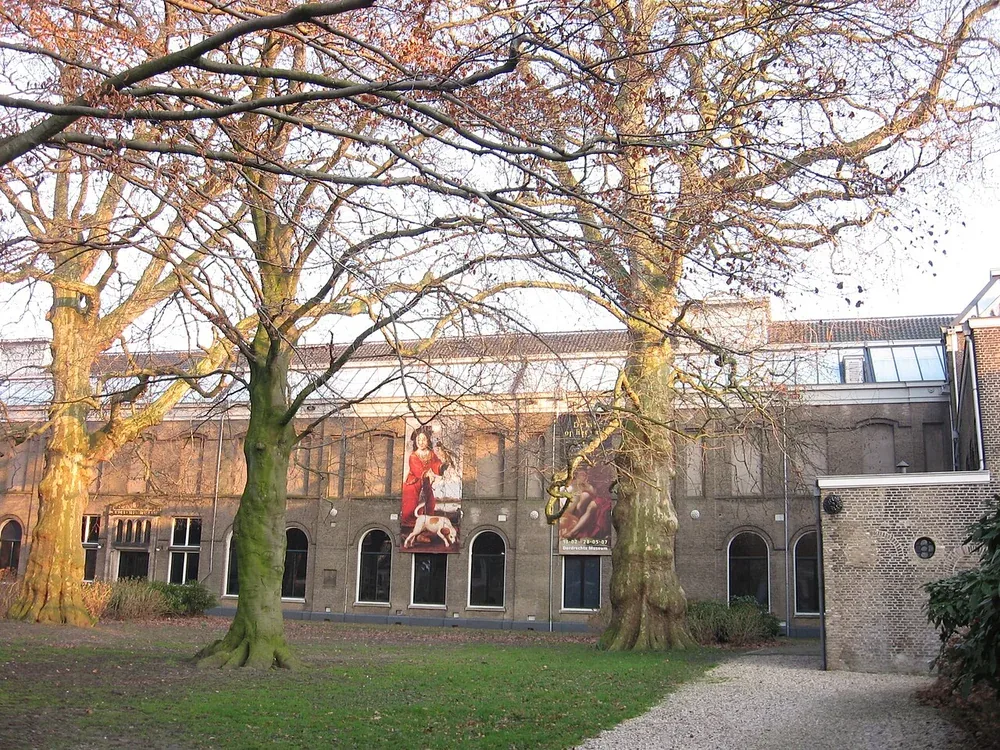
What happened in the seventeenth century after dusk fell? And was the night different then from now? The Dordrechts Museum investigates in From Dusk Till Dawn, from 5 September 2026 to 21 February 2027. The route follows a single night: it begins at twilight, moves into the darkness and ends at daybreak. Along the way more than 100 artworks can be seen, including tranquil moonlit landscapes and thrilling witches’ sabbaths. The museum calls it the first exhibition about the night in the seventeenth century.
Seventeenth-century artists were anything but night-blind. The night scene grew into a fully fledged genre. Paintings, prints and drawings of the night hours were so popular that they had their own names: maneschijntjes for moonlight scenes and brantjes for scenes by firelight. Gerrit Dou and Gesina ter Borch treated the night scene as an occasional excursion. Aert van der Neer and Egbert van der Poel specialised in it.

Some of the works come from far away. Gerrit Dou’s The Astronomer, around 1650, comes from Museum De Lakenhal in Leiden, on loan from the Cultural Heritage Agency of the Netherlands. Aelbert Cuyp’s River Landscape with Milkmaid, around 1646, comes from the Staatliche Kunsthalle Karlsruhe. There is also a View of Rhenen with riders in the foreground by Cuyp, from a private collection via the Hoogsteder Museum Stichting. Cornelis Snellinck painted the fruit market of Rotterdam by candlelight and moonlight, with the statue of Erasmus. That cityscape, around 1650-1660, comes from Museum Rotterdam.
The night, these works show, had a beauty of its own. It was not dull or dead, but fascinating and lively. And dark. The museum sees in that darkness a prompt to reflect on our brightly lit world and its consequences for people and animals. It calls light pollution and its impact a current theme, and speaks of an unjustly overlooked side of our history. The exhibition is at times intimate, at times lively and often surprisingly relevant. The museum promises an experience that is anything but sleep-inducing.
How dark it was becomes tangible in a special star room. There you experience how much the number of visible stars in the Netherlands has declined since the seventeenth century. The route itself also has guides. Through an audio-guided podwalk you are accompanied by several well-informed seventeenth-century night guides. They talk about life in the small hours and about the artists who depicted the night. The podwalk is included with the exhibition.
Stefan Kuiper is guest curator of the exhibition. The art historian and journalist researched how the night was depicted and experienced in the seventeenth century for From Dusk Till Dawn. On 31 January 2027, from 14:00 to 15:00, he gives a lecture on the moon in the early modern period, on moonlight, imagery and the meaning of the moon. On 12 December 2026, from 14:00 to 15:00, writer, poet, theatre maker and journalist Marjolijn van Heemstra gives a lecture on the cultural meaning of the night, on darkness, starry skies and our relationship with the night in a world where real darkness is becoming ever rarer. Among other things she wrote In lichtjaren heeft niemand haast (In light years nobody is in a hurry), worked with scientists of the James Webb Space Telescope and, with her initiative Het Nachtverbond, promotes awareness of the value of nocturnal darkness. On 10 January 2027, from 16:30 to 18:30, comes Schemeren (Twilight), an experience around the transition from day to night, in which the golden hour turns into the blue hour.
Outside the museum the night continues, in the Biesbosch. The Dordrechts Museum works with Biesboschcentrum Dordrecht. With the exhibition ticket you get 25 per cent off one of three excursions, and with a ticket for such an excursion 25 per cent off the museum ticket. The Nachttocht Stenen Keet goes by boat through the Biesbosch in the dark, with a visit to the old willow-grove hut on Griendeiland and a walk through the willow groves. The Volle Maanwandeling (Full Moon Walk) goes with a Biesbosch guide through the Hel- en Zuilespolder, in the bright light of the moon. During the Winterlicht Wandeling the sun can be seen through the telescope of the observatory.
From Dusk Till Dawn is on show at the Dordrechts Museum, Museumstraat 40 in Dordrecht. The night of the exhibition ends as every night does: at daybreak.
Practical
Where: Dordrechts Museum, Museumstraat 40, 3311 XP Dordrecht
Runs until: 21 February 2027 (started on 5 September 2026)
More than 100 artworks, star room and audio-guided podwalk
Lecture on the moon: 31 January 2027, 14:00-15:00
25 per cent off excursions of the Biesboschcentrum with the exhibition ticket