How cold was the winter in Avercamp’s painting?
Hundreds of people stand on the ice in Hendrick Avercamp’s winter landscape from around 1608. The KNMI places the coldest point of the Little Ice Age before the Golden Age.
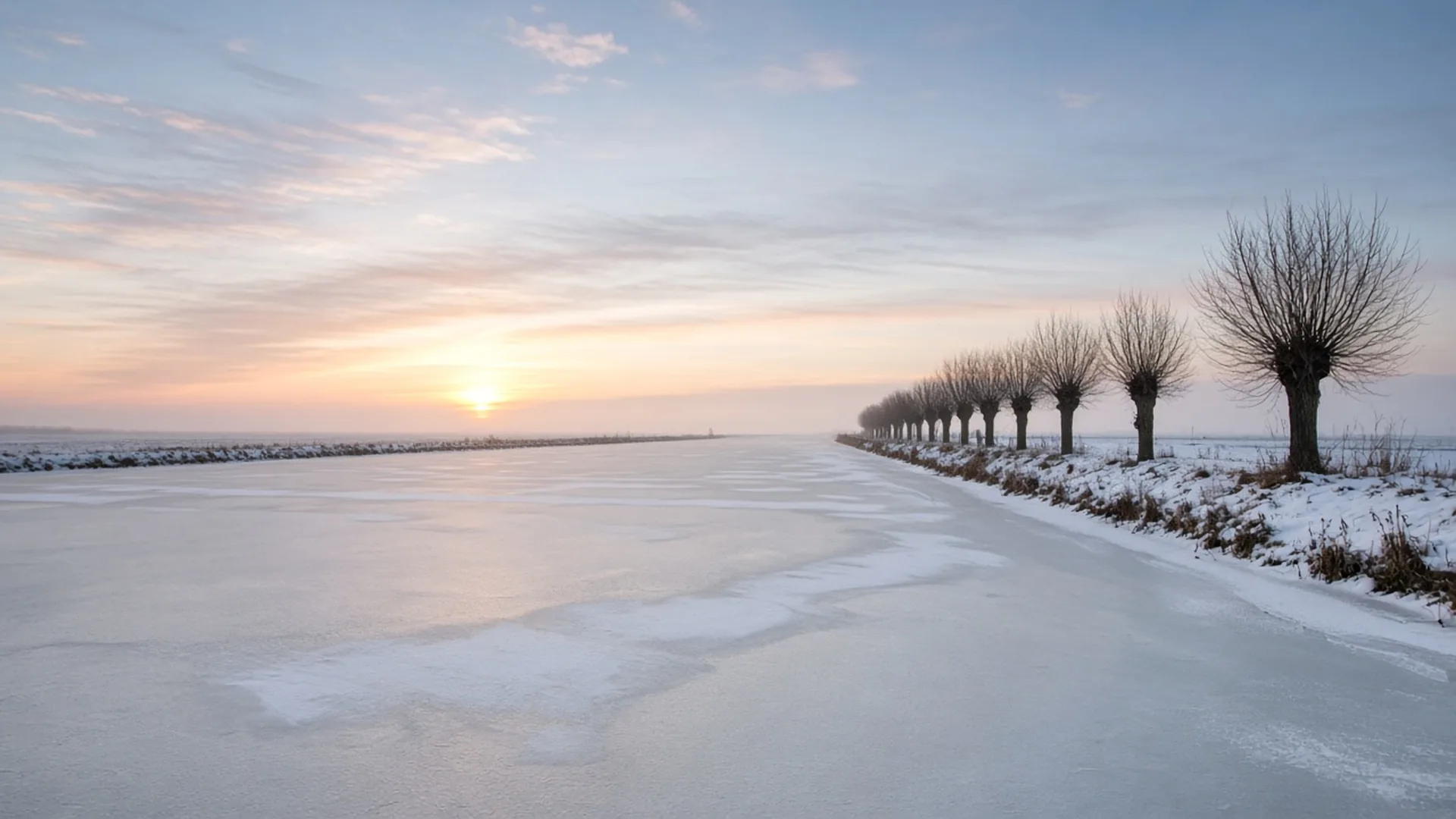
From high above the village you look down on a frozen river, and the ice is teeming. Hundreds of people skate, play kolf, walk and ride sleighs. The painting Winter Landscape with Ice Skaters by Hendrick Avercamp, from around 1608, hangs in the Rijksmuseum and shows how a village amuses itself on the ice during a harsh winter. But how cold was it, really, in Avercamp’s day?
The KNMI, the Dutch weather institute, speaks of the Little Ice Age. In the Netherlands it began around 1430 and lasted until the middle of the nineteenth century. On average the temperature in the country was 1 to 2 degrees lower than now. Climate researchers disagree about the exact start and end dates, which differ by region and by criterion, such as the size of glaciers, precipitation, the tree line and temperatures in the Alps. The Little Ice Age is therefore not a sharply defined period.
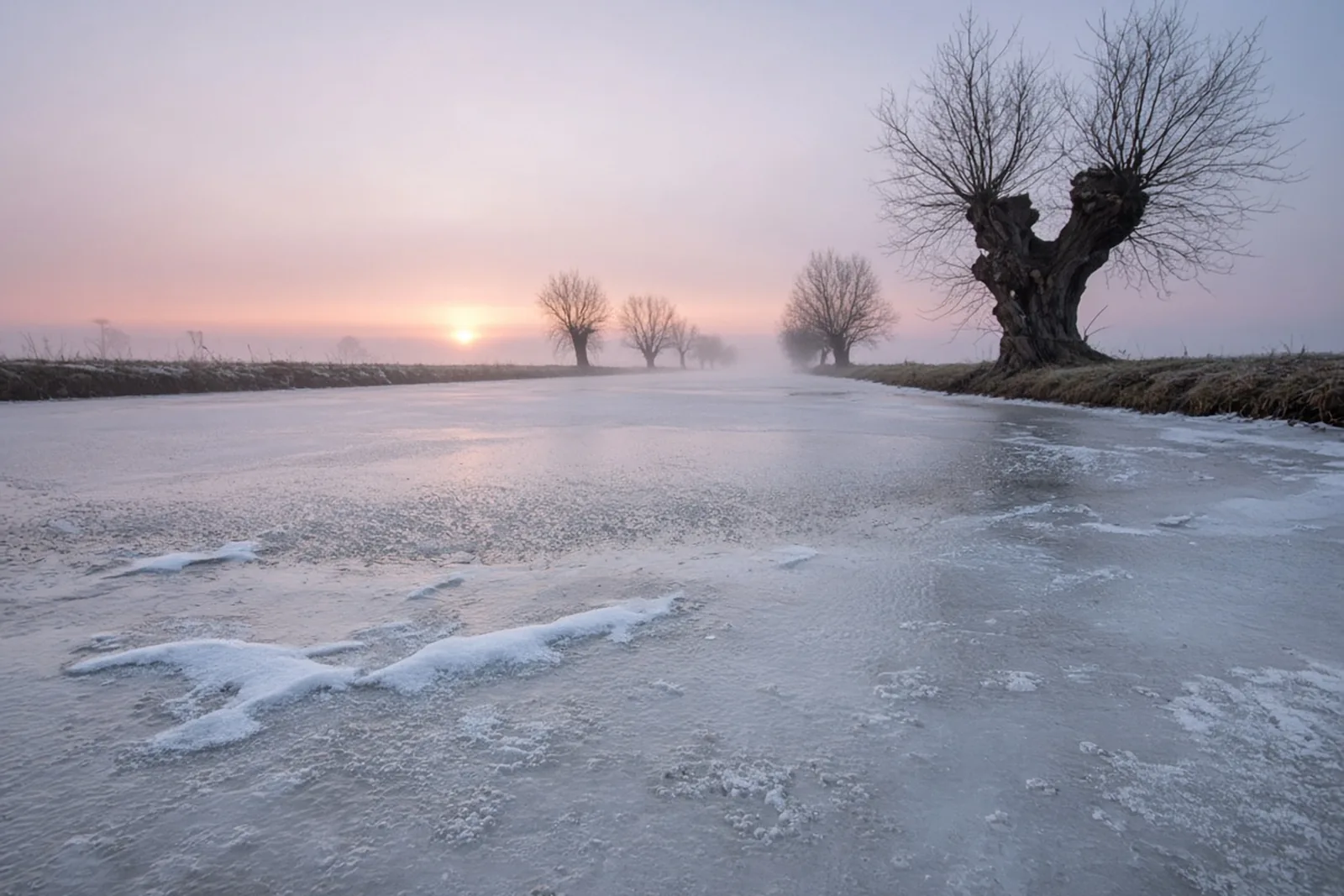
In those centuries winters were often snowy and icy. They regularly began in November and lasted until March or April. From December 1586 until September 1587 a cold spell gripped West and Central Europe. From 1530 summers also became cooler, with autumn-like weather, storms and storm surges.
The low point came at a different moment than many people think. In 2000, on the occasion of a volume in Jan Buisman’s series Duizend jaar weer, wind en water in de Lage Landen (A Thousand Years of Weather, Wind and Water in the Low Countries), the KNMI reported that the cooling reached its lowest point shortly before 1600, during the Eighty Years’ War, and not in the Golden Age. The last quarter of the sixteenth century was probably the coldest period of the past thousand years, based on diaries, city accounts and tree rings. The first quarter of the seventeenth century stayed cold. A clear recovery followed, and most of the Golden Age was relatively mild.
There was a lot of natural variation in that. The second quarter of the seventeenth century was clearly milder, with warm summers in 1636 and 1637 and early, rich wine harvests. The winters of 1636 and 1637 were mild in West Europe. So the seventeenth century was not one unbroken cold spell.
Much of what we know about the weather of that time comes from the work of the historical geographer Jan Buisman. He spent more than forty years on ship logs and diaries to reconstruct the weather in the Low Countries over roughly a thousand years, Nieuwsuur wrote. Volume 4 of his series has 784 pages, with tables on wine harvests, high waters of the Meuse, tree-ring widths and shipwrecks, among other things. It also describes how the weather played a part in the Eighty Years’ War, the Anglo-Dutch wars and the Disaster Year of 1672.
Buisman told Nieuwsuur that as a child of four, in the winter of 1929, he walked with his mother over the frozen Lek. In 1979 he took his children to Friesland to see metre-high snowdrifts.
Avercamp’s painting falls in the cold first quarter of that century. It measures 77.3 by 131.9 centimetres and is painted in oil on panel. The Rijksmuseum calls him the first Dutch artist to depict winter and its recreations, and this the largest and most ambitious winter landscape he painted. The KNMI calls the Little Ice Age an important source of inspiration for painters of winter landscapes.
Not everyone on the ice is there for fun. Most people are enjoying themselves, but others work out of necessity: a fisherman carries an eel spear. The company comes from all layers of the population. In the left foreground crows and a dog feed on a horse that has frozen to death. There is also a bird trap with footprints around it, borrowed from Pieter Bruegel the Elder. Researchers have suggested that details such as the carcass, the bird trap and the almost invisible flour mill may depict the fragility and transience of life.
The cultural historian Lotte Jensen told Nieuwsuur in 2020 that such a painting shows what people imagine when they think of classic Dutch winters: “Everyone together on the ice, young and old, poor and rich.” She says the image of those winters is deeply rooted in our idea of what the Netherlands is. The image stays alive because it is so beautifully depicted.
Measurements with thermometers and barometers came only later. The winters of the Little Ice Age can therefore be followed through diaries, city accounts and tree rings, and through paintings. Avercamp’s painting hangs in room 2.6 of the Rijksmuseum.
Practical
Little Ice Age: around 1430 to the middle of the nineteenth century, on average 1 to 2 degrees cooler than now
Low point: shortly before 1600, not in the Golden Age
Painting: Hendrick Avercamp, Winter Landscape with Ice Skaters, around 1608, 77.3 x 131.9 cm
On view: Rijksmuseum Amsterdam, room 2.6