How blue became cheap: 6,000 francs for a recipe
For centuries ultramarine cost more than gold. Until the 1820s nobody managed to make the pigment artificially. A French chemist won a prize of 6,000 francs with his method.
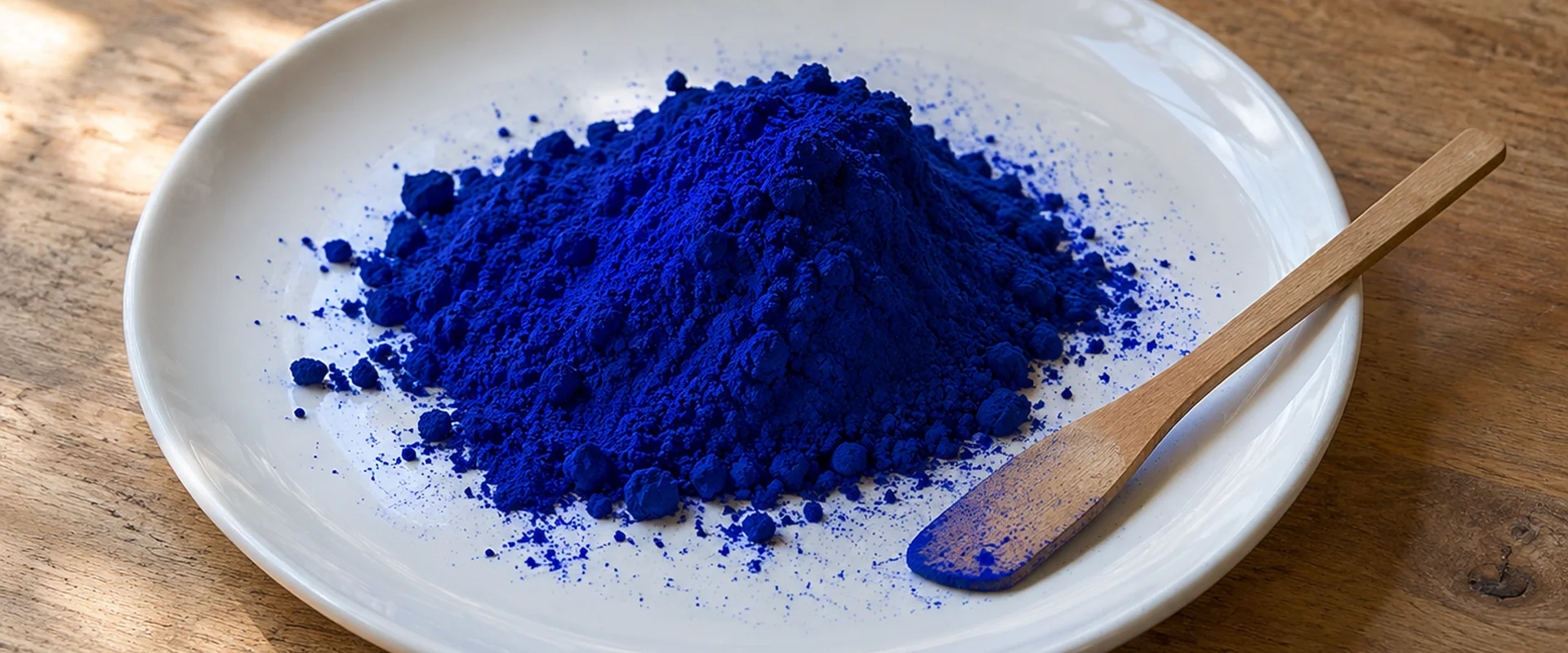
For centuries the finest blue cost more than gold, because it was ground from a semi-precious stone. Attempts to make it artificially failed until the 1820s. Jean Baptiste Guimet won a prize of 6,000 francs with his method. After that the stone lost its place as a raw material.
At the same time C.G. Gmelin in Tübingen found a slightly different method. Around 1830 there was commercial production, and the pigment was given the name ‘French ultramarine’. Natural and artificial ultramarine look almost alike, but laboratory tests show the difference. That makes it possible to check which pigment is in a painting, and that has brought forgeries to light.
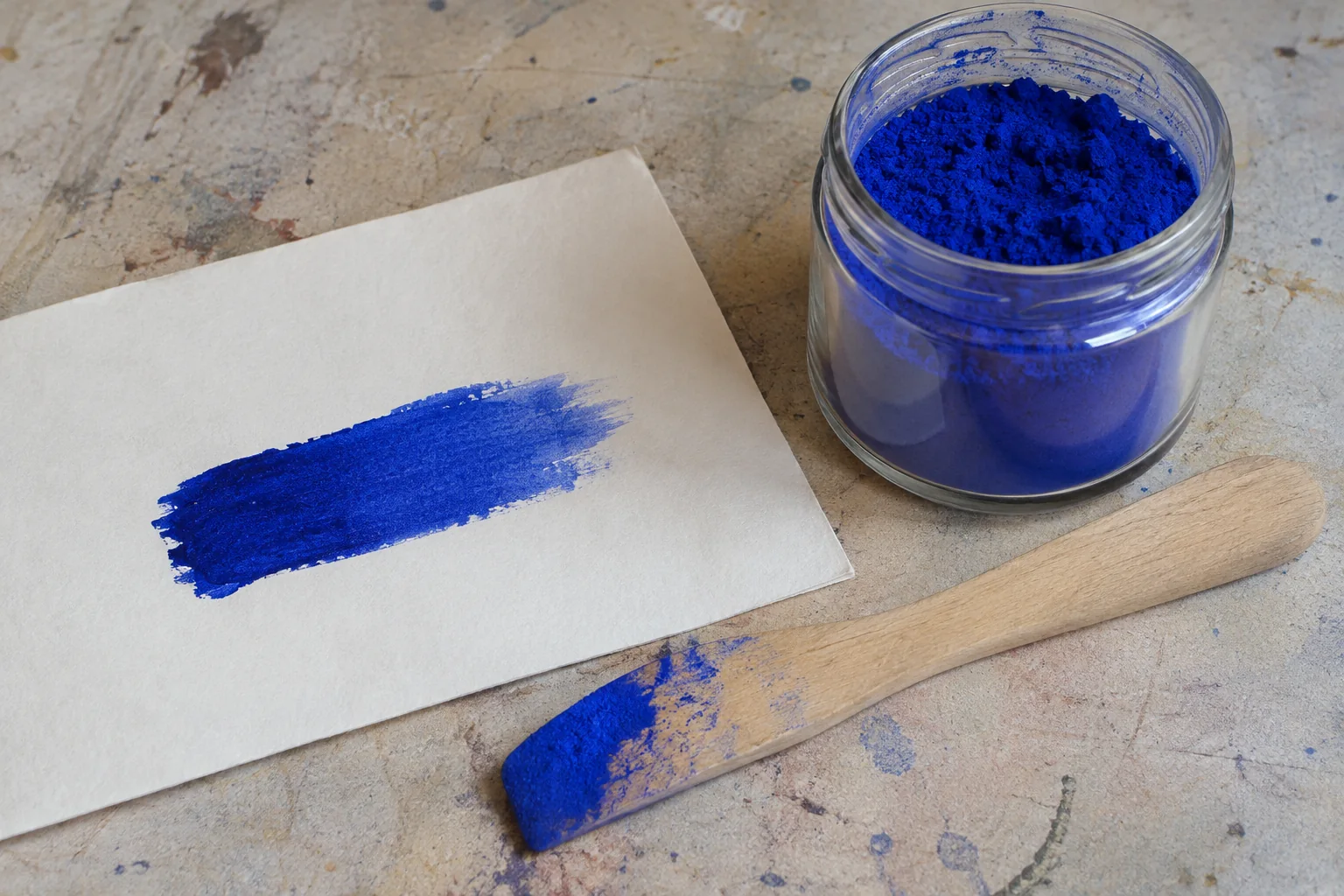
A century later an artist showed what that blue could still do. The blue named after Yves Klein relies heavily on ultramarine. In 1960 Yves Klein made a deep blue paint that consists almost entirely of artificial ultramarine, in a binder of polyvinyl acetate, formulated with a paint supplier.
Practical
Prize for an artificial method: 6,000 francs (Jean Baptiste Guimet)
Second method: C.G. Gmelin, Tübingen
Commercial production: around 1830, ‘French ultramarine’
Yves Klein: deep blue paint from 1960, almost entirely artificial ultramarine