Medusa looks back
Monster, victim or hero? The Valkhof Museum investigates, from 11 December 2026 to 9 May 2027.
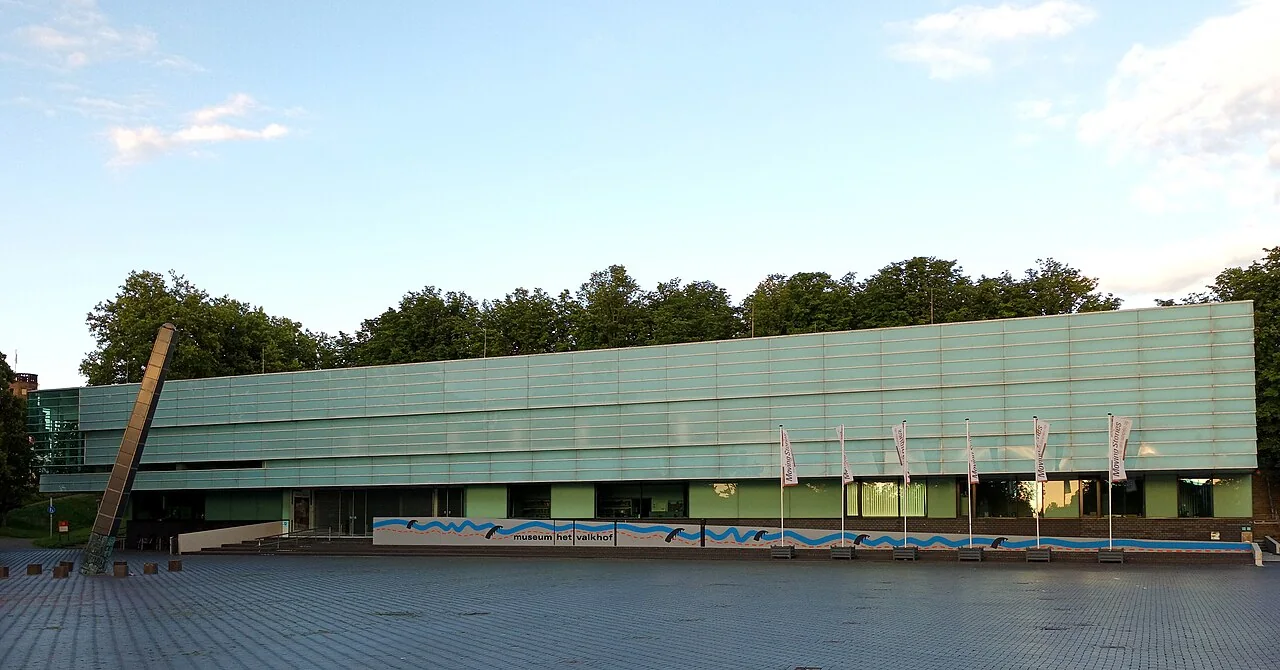
In the oldest depictions Medusa was not a beautiful woman with snakes for hair, but a terrifying creature with tusks, bulging eyes and a protruding tongue. Her image protected houses, temples and shields against evil. Only later did she get a human biography: a beautiful young woman who was raped by Poseidon, then punished by Athena and turned into a monster. The hero Perseus was sent out to kill her. The Valkhof Museum in Nijmegen follows that change from 11 December 2026 to 9 May 2027 in the exhibition Medusa.
In art history Medusa was mostly seen through the eyes of others. She became a monster, a victim or a trophy, while Perseus got the role of hero. The exhibition therefore asks who actually decides who is a hero, who is a victim and who is a monster. It shows how the image of Medusa has been changing for more than three thousand years, through archaeological objects, ancient and contemporary art, fashion, design, film and games: from protective Gorgon in antiquity to feminist symbol in the #MeToo movement. Medusa is a terrifying monster and a seductive nymph, a vulnerable victim and an activist hero: it depends on who tells the story.

The first work turns the roles around. Medusa with the Head of Perseus, made in 2008 by Luciano Garbati, does not show Perseus holding up Medusa’s severed head, but has her standing with Perseus’s head in her hand. The sculpture became known worldwide as a symbol within the #MeToo movement and is the key to the exhibition.
Loans come from, among others, the British Museum, the Louvre, the Victoria and Albert Museum and the National Archaeological Museum of Naples. There is work by Franz von Stuck, Antonio Canova, Damien Hirst and Wangechi Mutu, and by Iris van Herpen, Laetitia Ky, Carolein Smit and Koen Vanmechelen. A monumental cast of the archaic temple pediment from Corfu shows Medusa as a powerful Gorgon and protector. Carolein Smit is making a new work especially for the museum, in which the monster gets a contemporary meaning again.
In the last part Medusa appears as a feminist, anticolonial and ecological figure of thought. Feminist writers and artists have rediscovered her as a woman who is not dangerous because she is evil, but because she cannot be controlled. Her ties to animals, water and earth also get attention. As a hybrid being, human, animal and monster at once, she offers an alternative to a worldview in which humans stand above nature. In popular culture she even turns up as a powerful end boss in video games.
Hedwig Saam, director of the Valkhof Museum, says: ‘Medusa shows that stories are never neutral or unchanging. Every era makes her into something different: monster, victim, seductress or heroine.’
The exhibition has its origin in Anchoring Innovation, a national research programme in which ancient historians from the universities of Amsterdam, Groningen, Leiden, Nijmegen and Utrecht work together. The central question is how people understand and accept innovations by linking them to existing knowledge, stories and traditions. The programme is part of a ten-year Gravitation programme supported by the Ministry of Education, Culture and Science. Medusa is the first major international exhibition at the Valkhof Museum since its reopening in June.
The scenography is by the Arnhem design collective Maison the Faux. Visitors move through light and dark spaces in which sound, projection, scent and tactile materials are part of the experience. The presentation also deals with sexual violence and victimhood. This takes place in a separate, hushed space in which not the image but Medusa’s voice is central. On entering, visitors are clearly informed about possibly sensitive content.
A book, Medusa: van tempel tot tattoo (Medusa: from temple to tattoo), is published with the exhibition, edited by Maarten Depourcq and Martje de Vries. They are co-curators of the exhibition and researchers at the Radboud Institute for Culture and History. There is also a public programme with debates, performances and workshops, among other things. The Valkhof Museum describes itself as the place where times, cultures, ideas and people come together. At the same time as Medusa, from 11 December 2026 to 9 May 2027, the exhibition Look Her in Her Eyes by Mounira Al Solh is on. Mensen en de menigte (People and the crowd) and Anders dan gedacht, Romeinen in Nederland (Different from what we thought, Romans in the Netherlands) run until 22 November 2026.
The question with which the exhibition sends its visitors away is already waiting: who is Medusa to you, the monster, the victim or the hero?
Practical
Where: Valkhof Museum, Kelfkensbos 59, 6511 TB Nijmegen
Runs until: 9 May 2027 (starts on 11 December 2026)
Book with the exhibition: Medusa: van tempel tot tattoo
Public programme: debates, performances and workshops
On entering, visitors receive information about possibly sensitive content