
Chinese painters tried to paint a Dutch tulip
Museum Havezate Mensinge in Roden brings its porcelain out of the display cabinets.
For centuries the porcelain at Mensinge simply stood in the interior: in display cabinets, on top of cupboards, on the wall and on tables. It was the self-evident possession of residents who liked to show off their wealth, taste and social status. But how many stories lie behind a plate, bowl or jug? With the exhibition Pronken met Porselein (Showing Off Porcelain), Museum Havezate Mensinge in Roden literally brings a large number of pieces to the front.
Individual objects are truly highlighted for the first time, as carriers of stories about history, trade, fashion, status and technique. There is an elegant wine jug with a Feng Huang, a mythical bird of good fortune from Chinese mythology. There is a service that spent years on its way from China and arrived when the client had already died, and a service that tells a story of forbidden love. And there is a plate on which Chinese painters tried to depict a typically Dutch tulip. The small, human stories of broken, repaired, forgotten or cherished pieces also get attention.
In the seventeenth century porcelain became a beloved luxury product in Europe. It was shipped from Asia to Western Europe by the shipload. For a long time Europeans did not even know how porcelain was made, which only increased its appeal. The residents of Mensinge also became fascinated and collected Chinese and Japanese porcelain. The exhibition shows a selection from that collection, supplemented with pieces from the Groninger Museum and from private collections. It runs from 6 June 2026 to 2 May 2027.
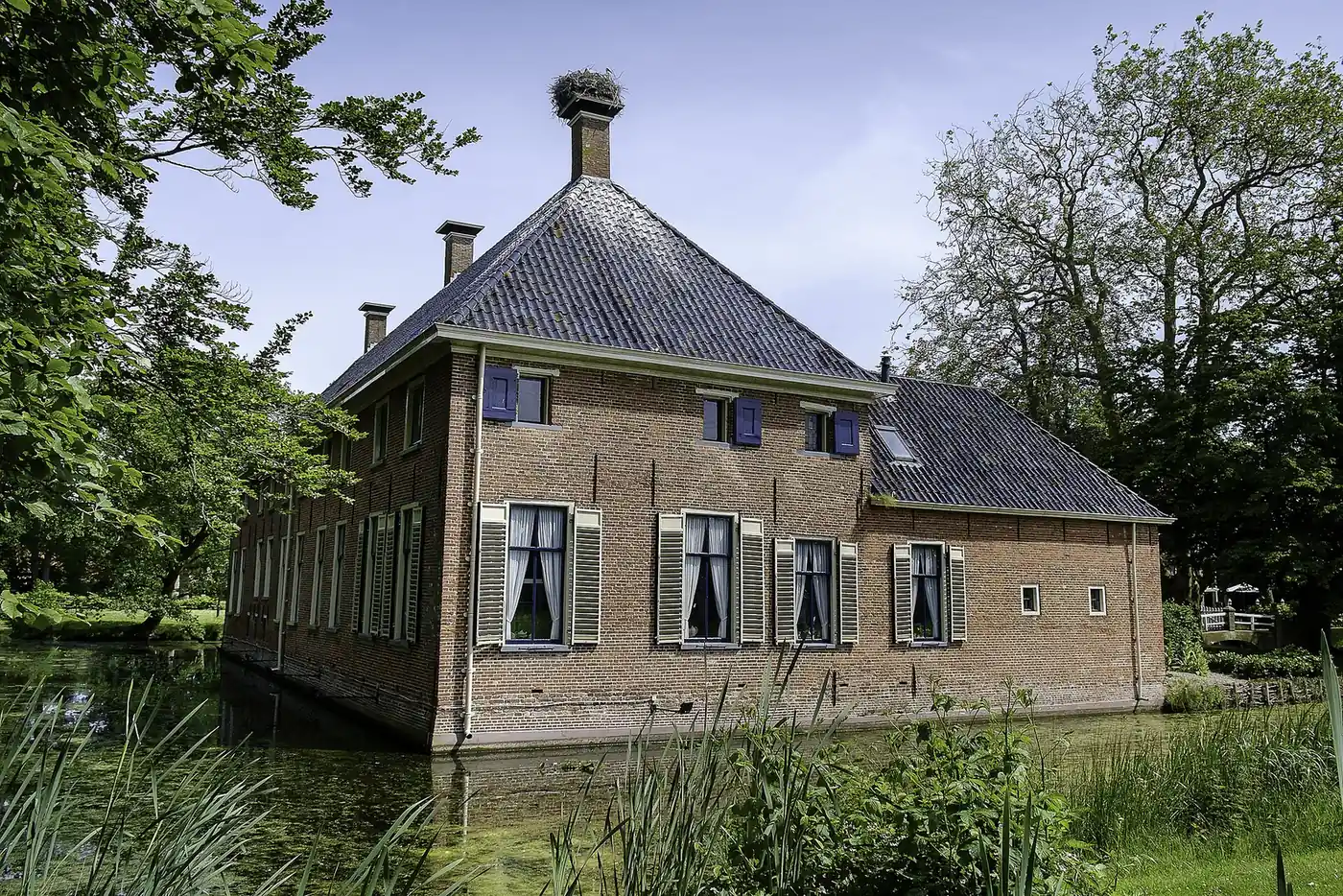
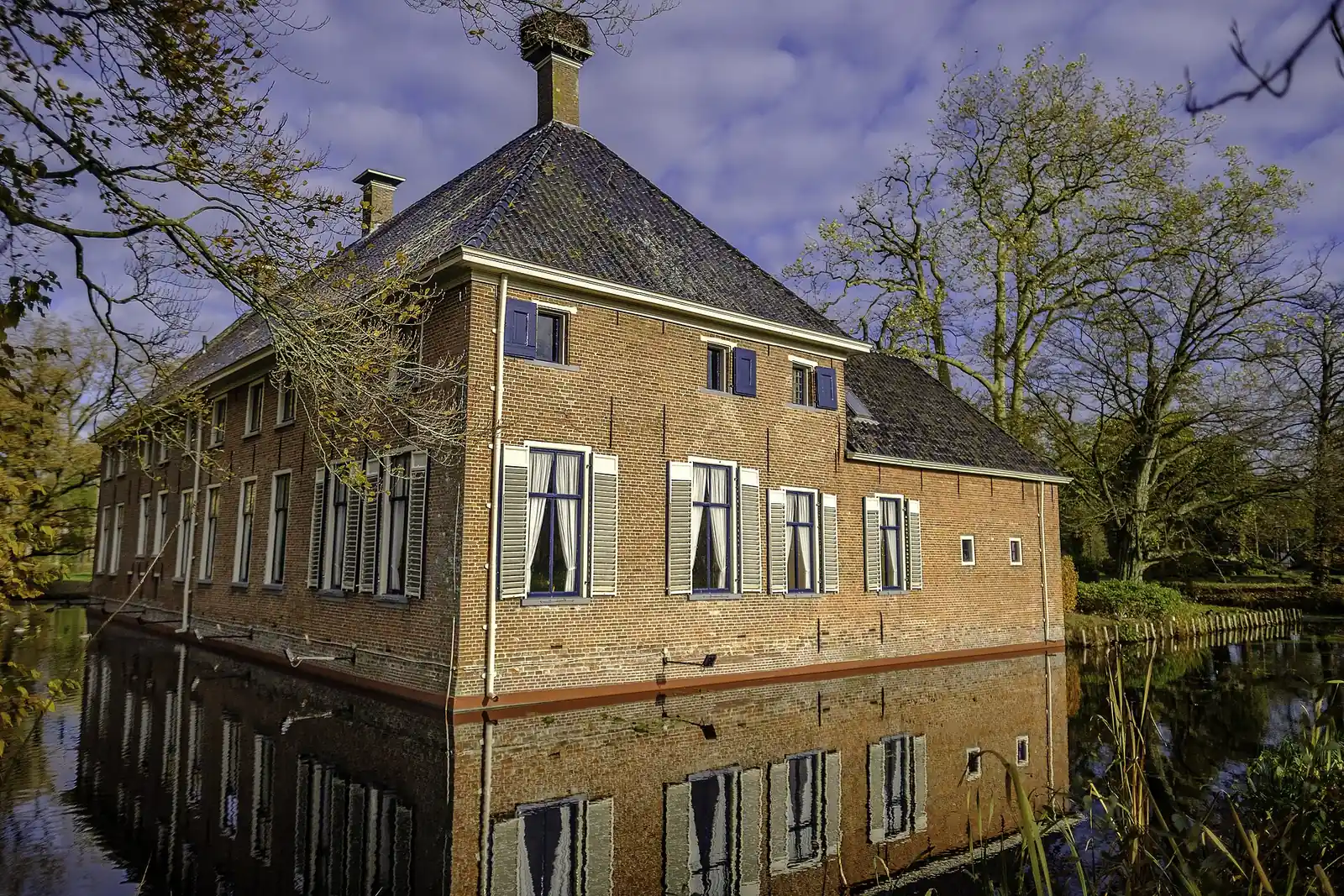
The house itself has a long history. The first mention dates from 1381-1383, in a list of vassals of the Bishop of Utrecht. It states that Steven Zighers holds the estate of Mensinge, a borchleen: a defensible stone building surrounded by a moat. The real owner was the bishop. Later the house belonged to the noble Groningen family Van Ewsum, who lived through an eventful period there: the country residence was the target of fighting several times. Around 1728 it took the form it still has today. Owner Ida Elisabeth Ripperda had it rebuilt and went bankrupt. From 1818 Mensinge belonged to the Kymmell family, until the estate was sold in 1985 to the then municipality of Roden. After a thorough restoration the havezate has been open as a museum since 1988.
What a havezate is, the museum explains itself. The word comes from hofstede, literally ‘sitting on a court’. A havezate is a noble house of some value that was recognised through the right of havezate. That right gave access to the Ridderschap of Drenthe, which together with the eigenerfden, wealthy Drenthe farmers, formed the government of the Landschap. It also brought advantages, such as exemption from certain taxes. In total 28 Drenthe houses were recognised as havezate, but never more than eighteen at the same time. In 1795 the right of havezate and the tax privilege disappeared for good. Although most Drenthe havezaten were demolished, nine managed to survive. Four are privately inhabited today. The others, including Mensinge, have another purpose.
The museum calls Mensinge the most authentically furnished havezate in the Netherlands. The furnishings consist largely of original objects from former residents. A heavy linen press from 1690 stands next to a lady’s writing desk from the early last century and an Empire chaise longue. In the corridor a Drenthe chair clock from 1760 and a Frisian long-case clock from 1850 tick away the hours together. On the walls hang family portraits from the eighteenth century, next to landscape paintings that Coenraad Kymmell made around 1900 in the surroundings of the house. The porcelain ranges from Chinese wine jars from 1600 to a complete Chien-Lung dinner service from 1790. A very rare, 500-year-old left-hand dagger witnessed the wars in the Ommelanden, which also hit Mensinge hard.
Outside stands the only surviving stone dovecote in Drenthe, probably built in the eighteenth century on a small field called ‘de doevekamp’. The knight Johan van Ewsum already kept pigeons there almost 500 years ago, which he used as live bait for falconry. In the nineteenth century as many as 200 pigeons were allowed at Mensinge, a record number for which permission from the province was needed every year. The last registration dates from 1938, in the name of Christine Sophie Kymmell. With her pigeons she won many prizes, which can be seen in the museum.
The museum entrance is in the Koetshuis (coach house), which was built together with the coachman’s house in 1912. The permanent exhibition on the history of the Drenthe havezaten is also there. Museum Havezate Mensinge is open Wednesday to Sunday from 1.00 pm to 5.00 pm, with guided tours on other days as well. It is also open on both Christmas days. From 14 to 17 December it is closed while the Christmas decorations are put up. From 18 December to 3 January it is open every day from 1.00 pm to 5.00 pm, except on 1 January. Adults pay € 9.50. Children up to and including 17 and Museumkaart holders enter free of charge. Every first Sunday of the month there is a drop-in guided tour at 2.00 pm for € 5 per person.
Practical
Where: Museum Havezate Mensinge, Roden
Exhibition: Pronken met Porselein (Showing Off Porcelain)
Runs until: 2 May 2027, from 6 June 2026
Open: Wednesday to Sunday 1.00-5.00 pm; also on both Christmas days; closed 14-17 December and on 1 January; daily 18 December-3 January
Admission: adults € 9.50; up to and including 17 and Museumkaart free