
Where does heaven end and where does hell begin?
The Missiemuseum in Steyl shows how a peaceful monastery village turns into a very different world at carnival. Tösse HEMEL en HEL runs from 13 November 2026 to 21 February 2027.
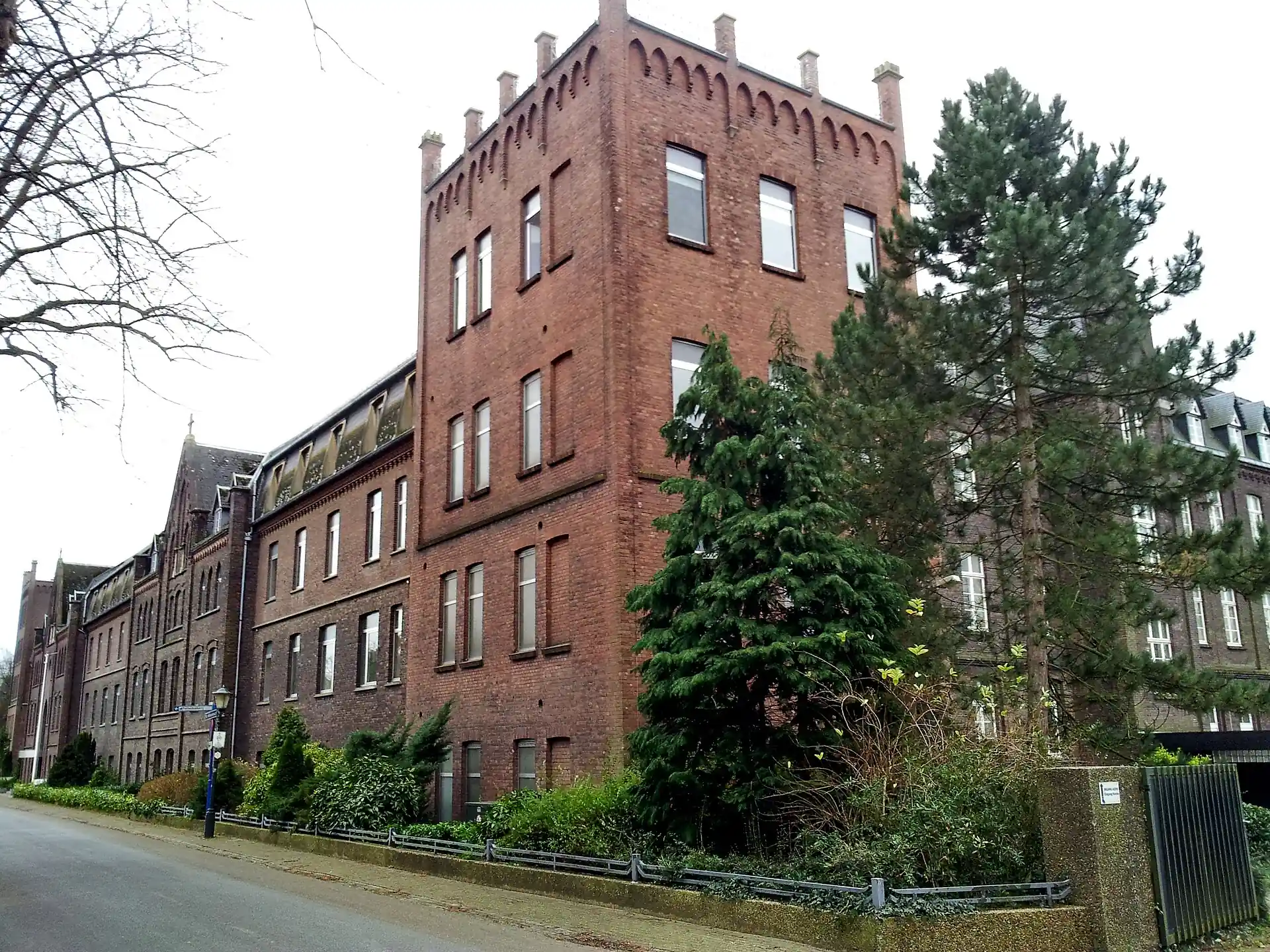
At first glance Steyl looks like a peaceful monastery village on the river Maas. But appearances deceive. Since 1883 the village has turned into a completely different world during carnival. Its heavenly serenity is suddenly disturbed by hellish scenes. Vors Lucifer takes over and his devils roam the streets, looking for new souls for the hellfire of the cauldron.
Since then countless villagers and well-known Dutch people have passed in review, from the legendary ‘Nekse’ and the ‘Sjpekvot’ to Huub Stapel and Geert Wilders. No one is safe when this devilish court passes judgment. The Missiemuseum in Steyl has turned it into the exhibition Tösse HEMEL en HEL. It takes you to a world where carnival, history, art and tradition have been inseparably linked for more than 140 years. The question at its heart: where does heaven end and where does hell begin? The exhibition runs from 13 November 2026 to 21 February 2027.
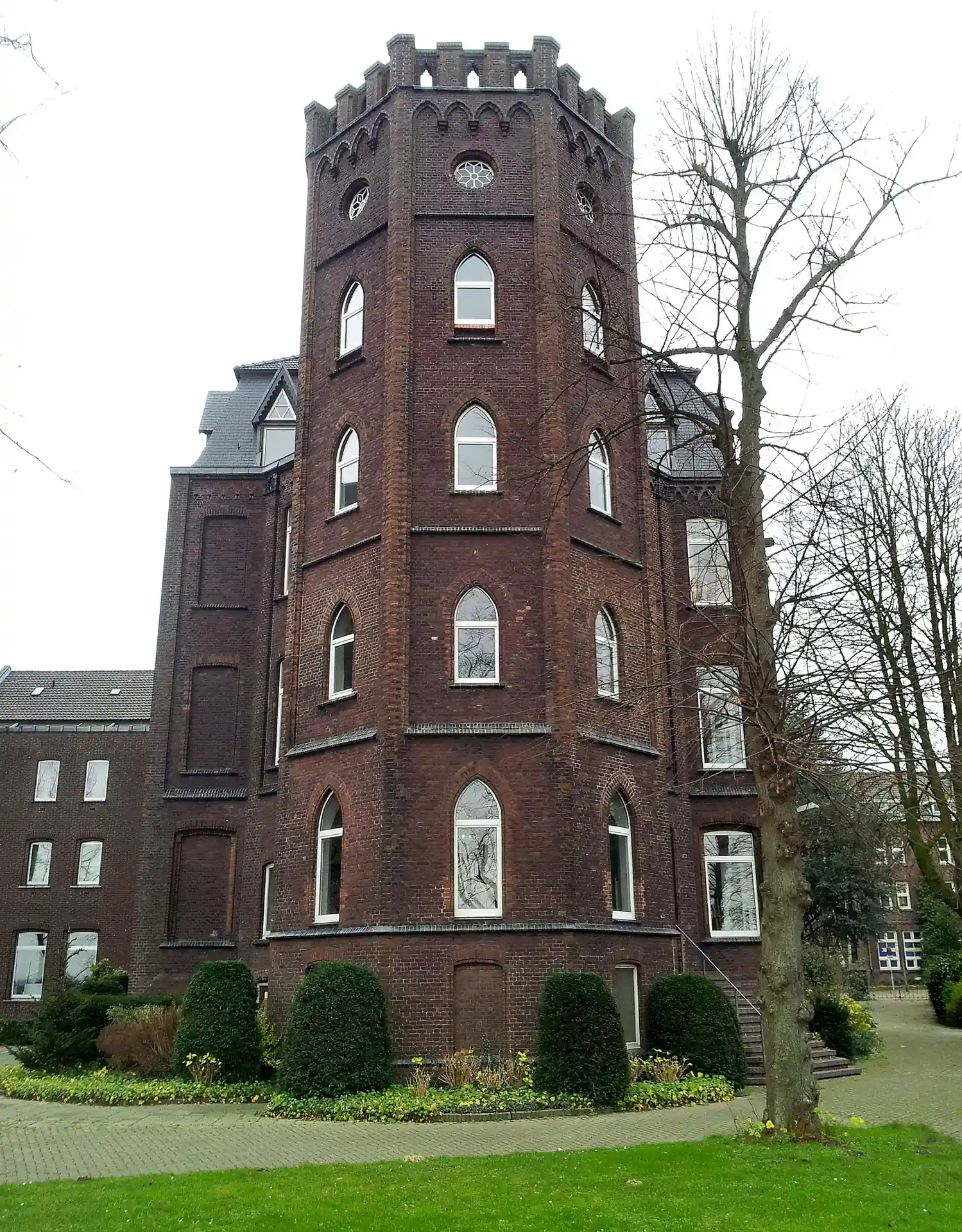
The village has had several lives. For centuries Steyl was a place where trade, shipping and business shaped daily life, thanks to its favourable position in a bend of the Maas. From the seventeenth century Steyl increasingly took on the character of a trading settlement. Trade brought prosperity and attracted wealthy families. They had large houses built, some of which can still be admired today. The wine trade was one of the activities that contributed to this economic development. In the nineteenth century conditions changed. New means of transport, including the railway, made overland trade routes more attractive, and the traditional importance of the Maas as a transport link gradually declined.
It was precisely in that period that Steyl gained a new purpose. In the second half of the nineteenth century relations between the Catholic Church and the German state were tense. Under Chancellor Otto von Bismarck the German government pursued the Kulturkampf, with which it wanted to limit the social and political influence of the Catholic Church, among other things by making it harder to found monastic communities. For the German priest Arnold Janssen (1837-1909) that was a reason to realise his ambition just outside Germany. In 1875 he came to tolerant Netherlands. In Steyl he set up a training institute for men who wanted to dedicate themselves to spreading the Catholic faith on other continents. A modest start in a former inn laid the foundation for the Society of the Divine Word, Societas Verbi Divini. Janssen built the Missiehuis Sint-Michaël there. In 1879 the first missionaries left for China. In 1889 he founded the congregation of the Servants of the Holy Spirit together with Maria Helena Stollenwerk and Hendrina Stenmans. Seven years later a third community followed, the Pink Sisters, who chose a contemplative life.
From the first mission activities onwards, objects and natural-history specimens from the mission areas were sent to Steyl. The collection was meant to familiarise future missionaries with the regions they might be sent to. It also let visitors get to know other parts of the world, in a time without film or television. Brother Berchmans, a great nature lover, took charge of the museum. In Brazil he had become fascinated by butterflies and insects, and he became a butterfly expert of renown. Three times a newly discovered butterfly species was named after him. A specimen of one of them, Ornithoptera Lydius Bergmansi, can still be seen in the insect room.
The collection grew and had to move twice for lack of space. The foundation stone of the present museum was laid in 1929 and the new building was completed in 1931. On Sunday 1 February 1931 the Missiemuseum was officially opened. The arrangement of the collection has remained virtually unchanged since the death of Brother Berchmans in 1934. That makes it a museum within a museum. The ethnological department holds objects from China, Japan, Indonesia, the Philippines, Papua New Guinea, Ghana, Togo, Congo and Paraguay. Visitors are confronted with thousands of objects in display cases several metres high and deep. No single object is singled out for attention: they are arranged by country and by type.
The natural-history department consists of an insect cabinet and a zoological section, with stuffed mammals, reptiles, birds, amphibians and fish. The open group of animals with giraffe, antelopes, cattle, lions and zebras stands at the centre of the museum. The Missiemuseum at Veerweg 6 is open Tuesday to Sunday from 11.00 am to 5.00 pm. On 24 December 2026 it closes at 4.00 pm. It is closed on 25 December 2026, 31 December 2026 and 1 January 2027. It is open on Boxing Day. An adult pays € 9.00, young people aged 4 to 17 pay € 5.00. Entry is free with a Museumkaart.
Among the permanent residents is also a stuffed brown bear, 1.75 metres tall, from Russia, who was given the name Joseph. Brother Berchmans bought him in 1932 from the firm Wöbke in Leipzig, which specialised in stuffed animals with a mechanism. After a coin is inserted, the bear performs his tricks. Which ones? The museum does not give that away.
Practical
Where: Missiemuseum Steyl, Veerweg 6, Steyl
Exhibition: Tösse HEMEL en HEL
Runs until: 21 February 2027, from 13 November 2026
Open: Tuesday to Sunday 11.00 am-5.00 pm; closes at 4.00 pm on 24 December 2026; closed on 25 and 31 December 2026 and 1 January 2027
Admission: adults € 9.00; young people 4 to 17 € 5.00; Museumkaart free