In the Rembrandt House, drawing tables stand in the middle of the gallery
Until 3 January 2027 the Rembrandt House Museum shows more than eighty works on paper, from Rembrandt to Glenn Brown, and you can draw yourself among the prints.
In the middle of the gallery stand drawing tables with different kinds of paper and drawing materials. You can get to work yourself, among the artists around you. That is how Experimentation is set up, the autumn exhibition of the Rembrandt House Museum in Amsterdam. More than eighty works from the museum’s own collection are on view. The exhibition runs from 19 September 2026 to 3 January 2027. This autumn the museum invites visitors not only to look at art but to experience up close how it is made.
All the artists have two things in common: they made works on paper and they experimented without holding back. By trying out different techniques and materials, they kept discovering something new. Thanks to those experiments, they developed their craftsmanship into mastery. The gallery shows work by Rembrandt, Hercules Segers, Geertruydt Roghman, Willem den Ouden, Glenn Brown and Guy Vording. The press release also names Francisco Goya.

The first experiment is about trees. If Rembrandt had had a motto, it would have been ‘work from life’, in his own time ‘nae ’t leven’. He observed his subject very carefully. That is how he managed to depict a group of lonely trees on a hill convincingly. You can almost hear the wind approaching through the leaves. But Rembrandt was not the only one with a sharp eye. The gallery has prints by artists from the 17th to the 20th century who all put their own spin on the same subject. Every print includes a tree, yet never the same one. Among them is Landscape with a Spruce Branch by Hercules Segers, an etching on linen from 1625-1630.
The second experiment revolves around tronies. In the 17th century these were popular portraits of models who portray a certain type or a feeling. The Mauritshuis explains it this way: a tronie does not show a specific individual but a character type or an emotion. Rembrandt was a master of them and two of his tronies hang here, including The Third Head from 1635, an etching. Contemporary artist Glenn Brown (1966) took Rembrandt’s tronies as the basis for a series of his own. On a tablet he turned them into a wild interplay of lines, made an etching of that new tronie and printed two etchings on top of each other. The result, Half-Life (after Rembrandt) 1 from 2016, hangs here too. In the nineteenth century, when Rembrandt became more famous than ever, people were keen to recognise members of his family in such works. At the Mauritshuis a tronie of an old man became the ‘father of Rembrandt’. There is no evidence that the sitters were his father Harmen Gerritsz van Rijn or his brother Adriaen van Rijn.
The third experiment is about lines. Willem den Ouden (1928-2025) lived on the Waal and studied the landscape for more than fifty years. With just a few lines he depicted the flowing water, the reflections of clouds and low-hanging mist. He printed his lithographs on thin Chinese paper glued to a sturdy sheet of paper. There is a French term for this: chine collé. The technique makes the paper protrude slightly, creating a shimmering effect.
The fourth experiment is black. Rembrandt often played with light and dark, not only in his paintings but also in his prints. That is difficult, because making a print very dark takes a great many scratches on the plate. The difficulty lies in preserving nuances so that details stay visible even in the darkness. What do you show, and what do you let fade into the black? Artists after Rembrandt asked themselves the same question.
Alongside the exhibition runs Rembrandt Open Studio. For the fifth edition, contemporary artists Marije Gertenbach (Netherlands, 1990) and Shani Leseman (Curaçao, 1996) set up their studio in the house where Rembrandt lived and worked almost four hundred years ago. From 13 November 2026 to 10 January 2027 they work there live. Visitors can follow their creative process up close, see their new work and talk to them. It does not get closer to the craftsmanship of contemporary artists. Earlier participants were Iriée Zamblé and Timothy Voges (2020), Guy Vording and Abul Hisham (2023), Neda Mirhosseini and Rens Krikhaar (2024) and Pris Roos (2025).
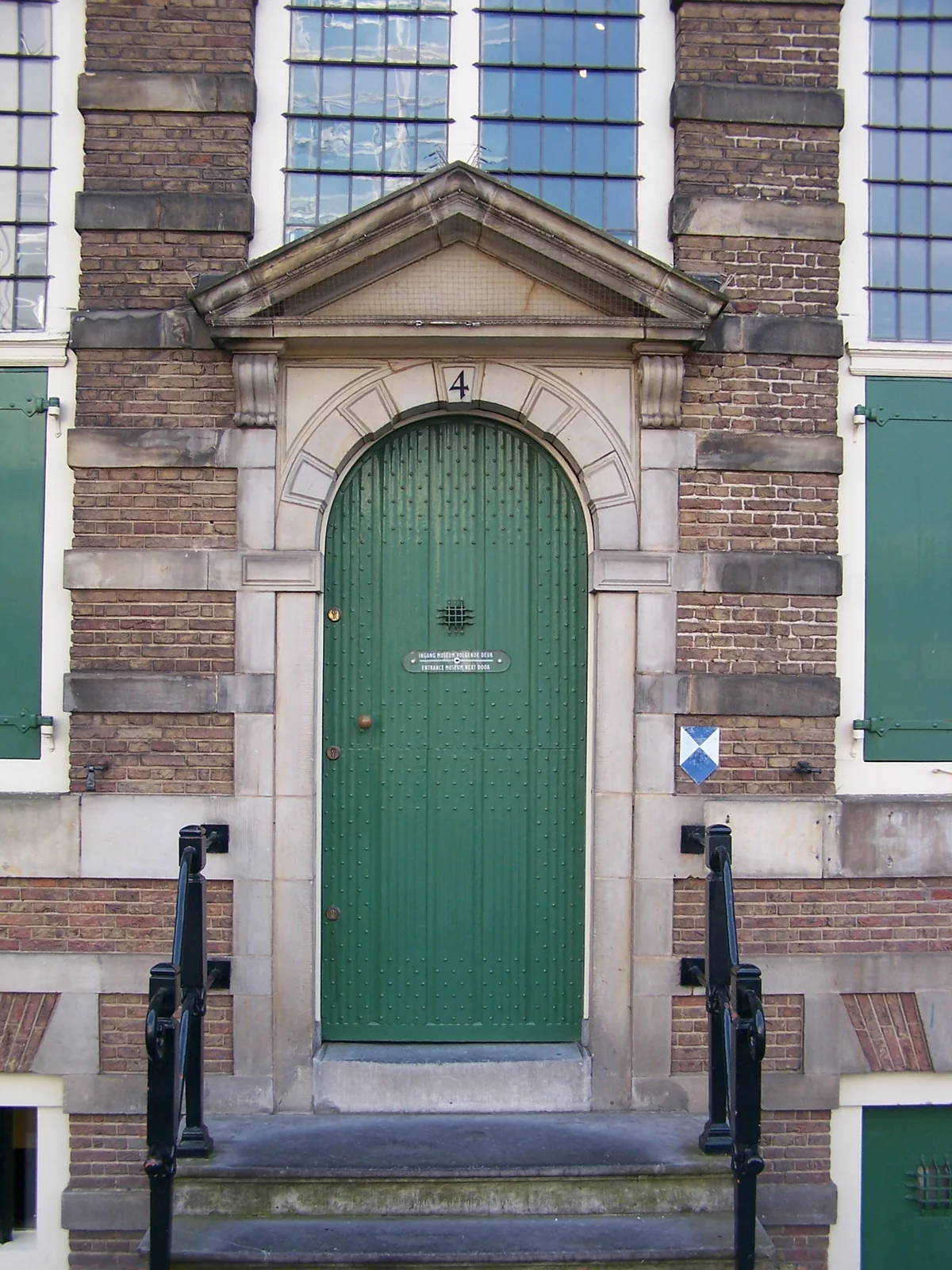
The Rembrandt House Museum, Jodenbreestraat 4 in Amsterdam, is open every day from 10.00, except King’s Day and 25 December.
Practical
Where: Rembrandt House Museum, Jodenbreestraat 4, Amsterdam
Until: 3 January 2027 (Experimentation, since 19 September 2026)
Open: every day from 10.00, except King’s Day and 25 December
Rembrandt Open Studio: 13 November 2026 to 10 January 2027
More than 80 works on paper from the collection, with drawing tables in the gallery