A Gouda tapestry was credited to the wrong maker for centuries
In Wonder Walls, a landscape tapestry more than ten metres long by Jannetje Wouters is on view for a limited time. New research attributes the seventeenth-century work to a woman who signed with a cross.
For a long time, a cross beneath a tapestry was not a name. In Wonder Walls, Museum Gouda says the forest landscape, more than ten metres long and once in the town hall’s wedding room, was made by Jannetje Wouters (c. 1640–1722). The work was attributed to a man for centuries; new research changed that attribution.
Wouters could not write and used a cross as her signature. The tapestry is on view at the museum for a limited time while the town hall is renovated and the work is restored. The display is therefore about more than a large textile: it also raises questions about how makers are recognised in art history.
For nearly two centuries, Gouda was a centre of tapestry making in the northern Netherlands. In the seventeenth century, about 450 tapestry makers worked there in roughly forty workshops, according to the museum. Some workshops were in former monasteries left empty after the Reformation.

The exhibition broadens this local history with loans. Tapestries from Skokloster Castle near Stockholm have, according to the museum, returned to the Netherlands for the first time in centuries. Other loans include Orestes’ Revenge on Aegisthus from the Rijksmuseum and a tapestry depicting Africa from the Petit Palais in Paris.
Wonder Walls connects historic workshops with contemporary weaving. Designer Mina Abouzahra works with contemporary guilds on cushions using Amazigh visual language; they are woven in Morocco. Her work is also presented in the separate display Woven Letters.
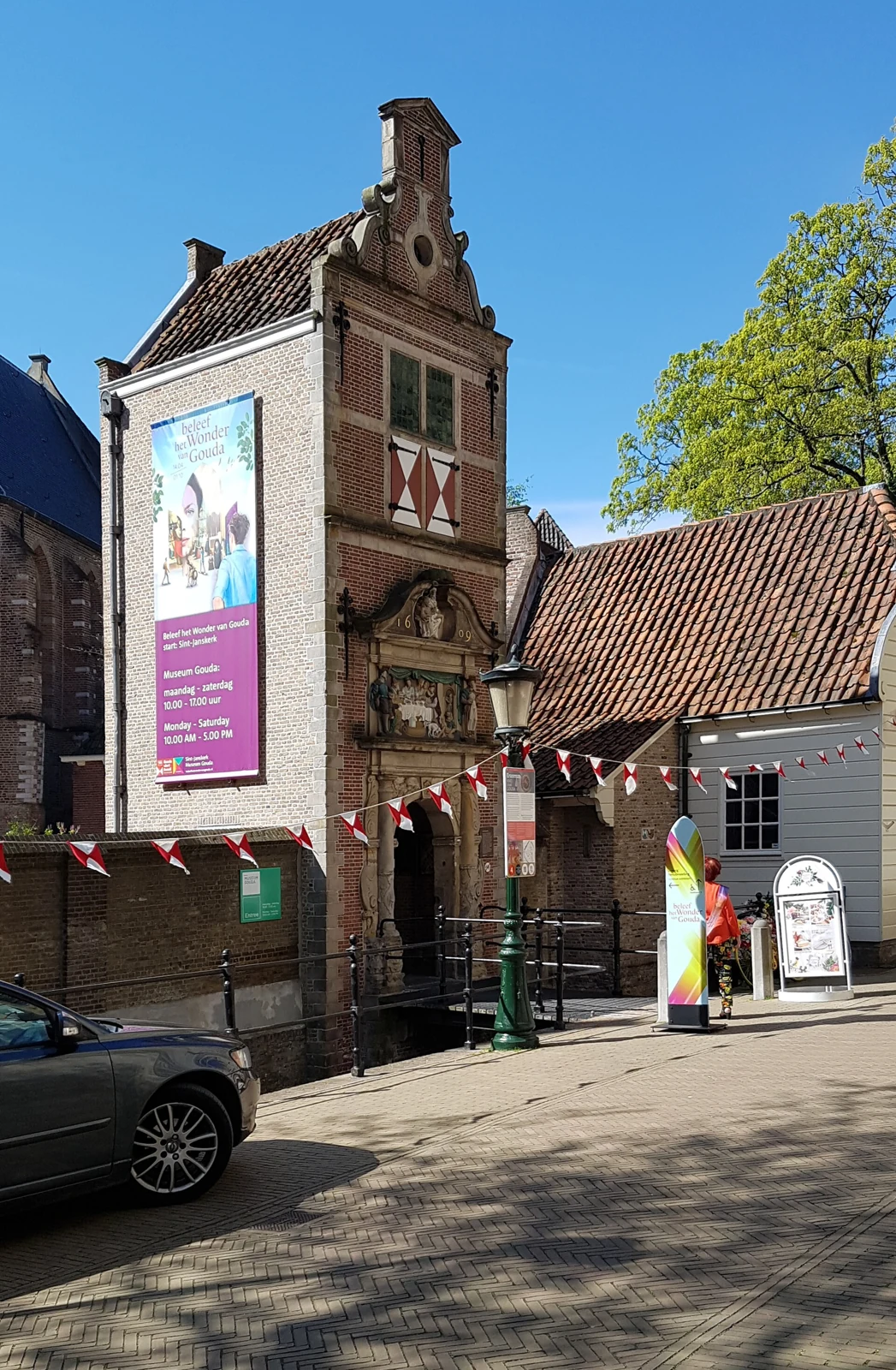
The exhibition runs through 29 March 2027 at Museum Gouda, Oosthaven 9. The museum is open Tuesday to Sunday from 11:00 to 17:00. Adult admission is €16; entry is free for visitors aged 17 and under and for Museum Card holders.