Behind the scenes · Textiles
A carpet the museum shows only half of
A carpet measuring 4 by 7.6 metres could cover an impressive area of floor. The Victoria and Albert Museum’s Bullerswood Carpet is instead displayed vertically, with only one half visible. That choice is about preservation: the museum says the carpet is periodically rotated to limit fading caused by light.
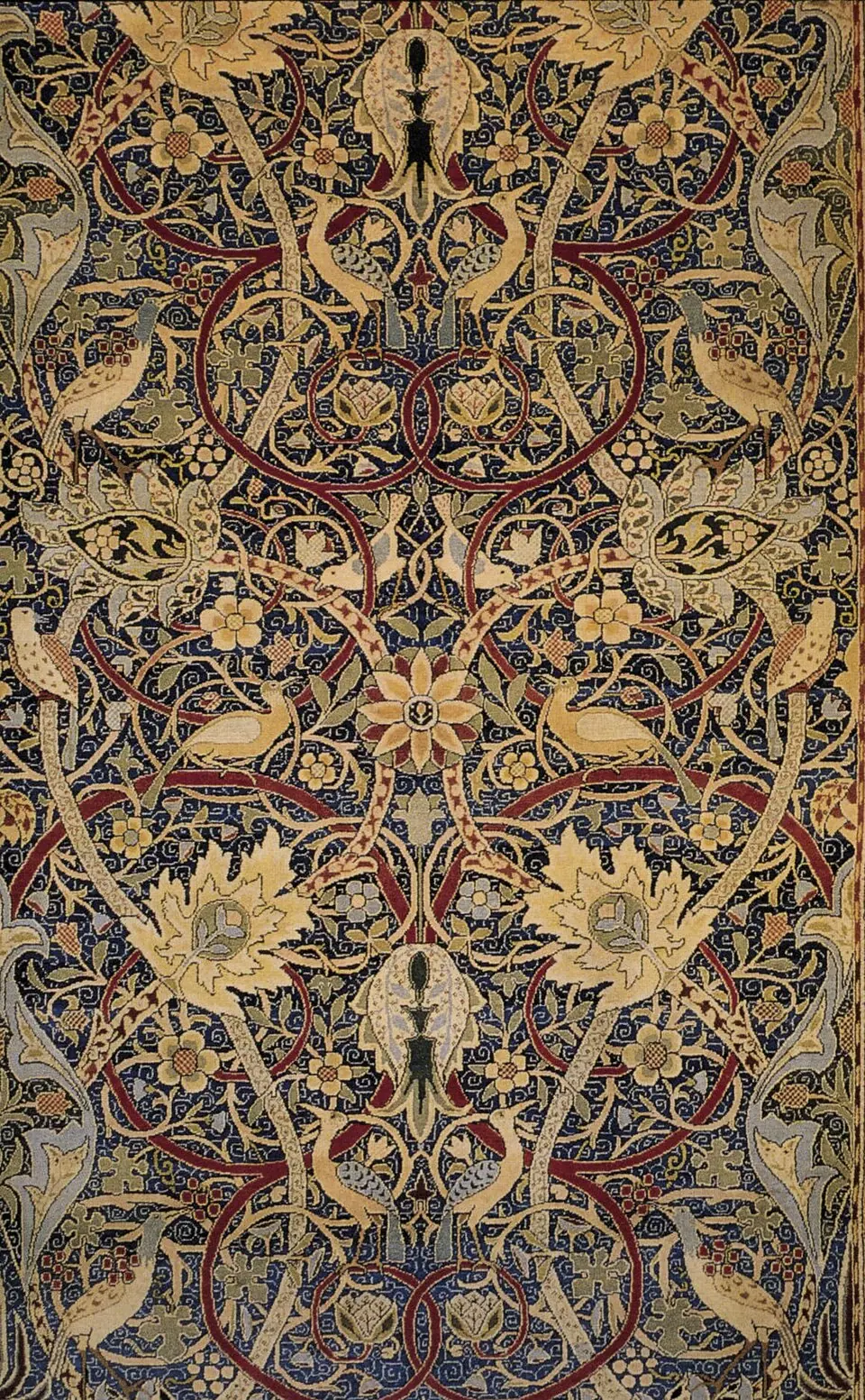
The work dates from around 1889. The V&A links its design to William Morris and John Henry Dearle. The pattern contains stylised flowers and birds. Beneath it is a vulnerable combination of materials: cotton warp threads, jute weft threads and a wool pile dyed with natural dyes. A carpet intended for use can also be a fragile museum object.
Maintenance requires space and teamwork. The V&A describes lowering the carpet to the floor and having a team of eight technicians take it to the Raphael Gallery. There, dust is vacuumed away, light damage assessed and the fringes untangled. This is care for the material, not a promise that every change can be reversed.
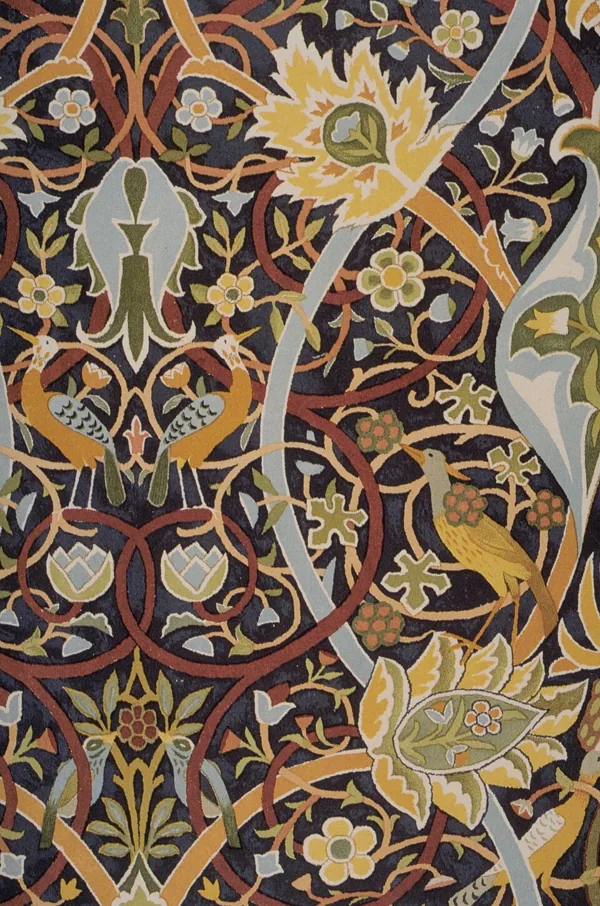
That changes how you look at the object. The half you can see does not suggest that the other half is unimportant. The display is a choice made to preserve the whole. It also reveals something of the museum’s task: allowing access while limiting the effects of that access.
You need not read that restriction as a shortcoming. It makes clear that a work of art is not just a design, but also wool, threads and colour that must endure time. What appears in the gallery is the part that can be entrusted to the light at that moment.
Sources and image credits ↗