Fotomuseum aan het Vrijthof: from Eve Arnold to the ENCI quarry
International photojournalism and Maastricht’s history meet in the Spanish Government building. Now called Fotomuseum aan het Vrijthof, the museum presents changing exhibitions.
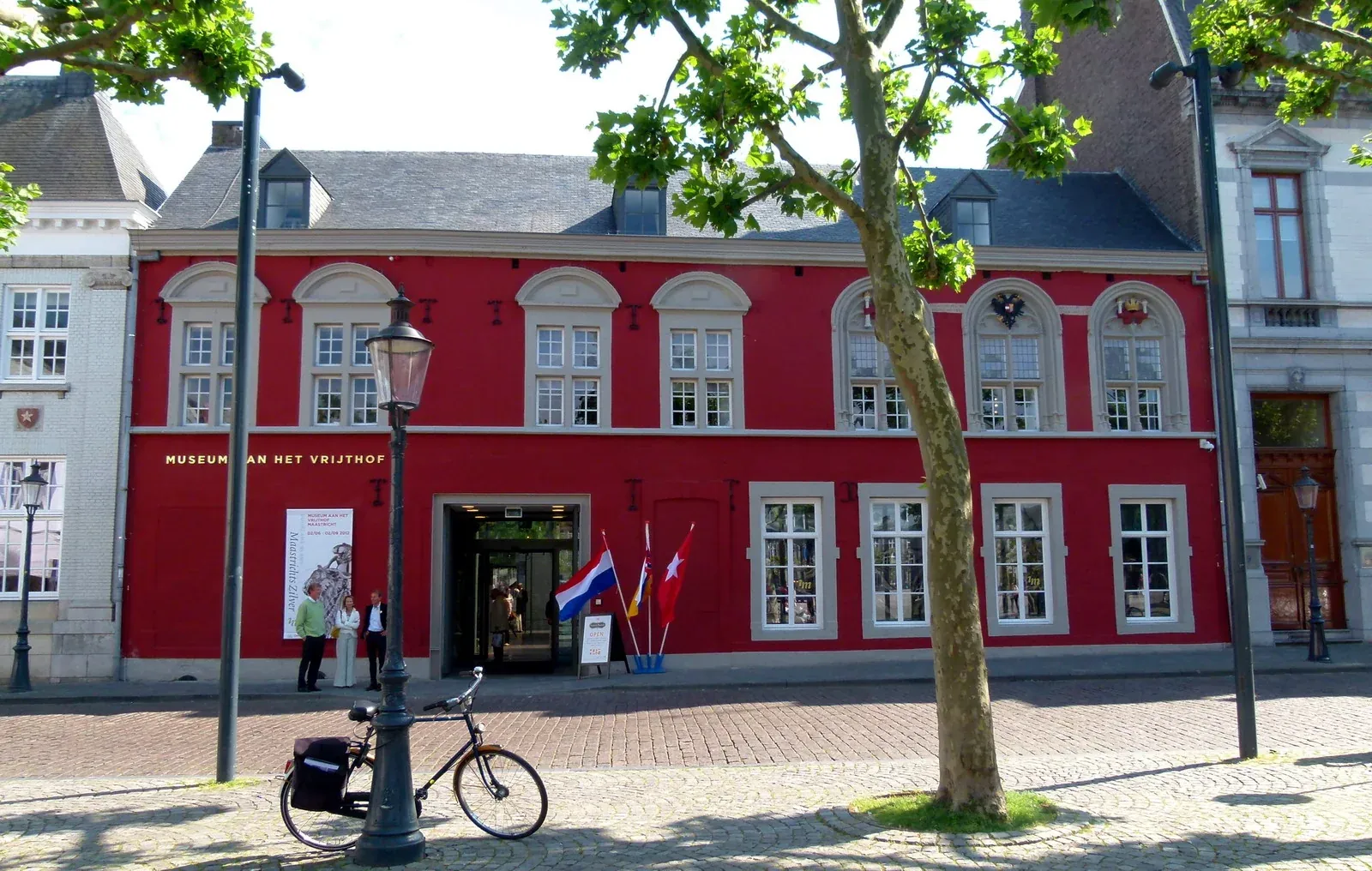
At the Vrijthof in Maastricht stands a red-fronted building that still bears the name Museum aan het Vrijthof in an older photograph. Its current name is Fotomuseum aan het Vrijthof. Since September 2019, it has presented itself as a photography museum. The old name in the photograph thus tells part of the site’s history, not its current programme. Behind the façade is the Spaans Gouvernement, a historic complex where old structures meet newer museum spaces. The visit begins with a change of perspective: from the busy square into a building with a past of its own.
The museum focuses on photography and changing exhibitions. No permanent collection display is announced; the programme determines which photographs are on view. Two temporary presentations are specifically scheduled for Friday 16 October 2026. According to the museum, the major retrospective All about Eve runs from 19 September 2026 through 31 January 2027. Kamer 13: Mergel – Mens – Machine also begins on 9 October. The two subjects take visitors from international photojournalism to a landscape near Maastricht.

All about Eve brings together 130 black-and-white and colour photographs by American photojournalist Eve Arnold, with an emphasis on the 1950s, 1960s and 1970s. Portraits of Marilyn Monroe and Marlene Dietrich appear alongside reportage and series about Harlem, Malcolm X and journeys through several countries. This range makes clear why the museum presents her as more than a portrait photographer. Arnold gained access to famous people, but also turned her camera towards work, communities and social change. The exhibition was made with Magnum Photos and CAMERA in Turin.
Kamer 13 works on a very different scale. Mergel – Mens – Machine shows photographs from the ENCI archive about marl extraction on Maastricht’s southern edge. According to the museum, the images follow the quarry, its workers and the equipment used to extract material for cement. This is not a complete company history; the selection shows where landscape, labour and machines meet in photographs. Tracé – Limburgs Samenlevingsarchief put the exhibition together with Sterre Boessen and Andrea Peeters. For visitors from Maastricht, this local dimension may counterbalance Arnold’s international work.
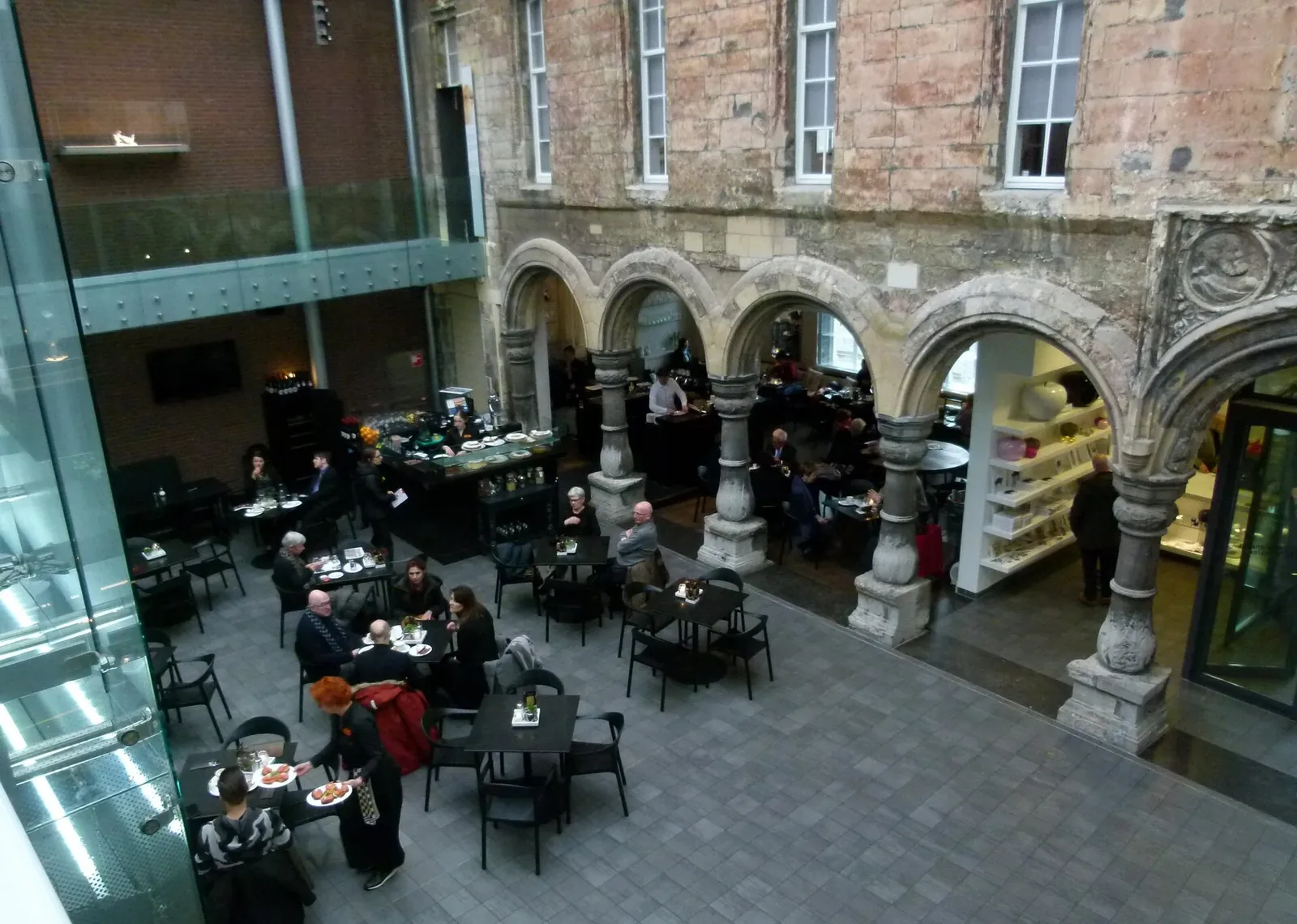
The building itself deserves attention. The museum describes the Spaans Gouvernement as a historic house on the Vrijthof with a colonnade around its courtyard. The combination of old brickwork and modern passages does reveal how the building has been adapted as a museum. Visitors drawn by architecture can explore it alongside the photography displays.
The visitor page lists opening hours of 10 am to 5 pm for Friday 16 October. Adults pay €14. Admission is free with a Museumkaart; visitors aged eight through eighteen pay €7 and CJP cardholders €6.50. Tickets are available online and at the desk. Note the payment methods: the museum accepts debit and credit cards at the desk, but not cash.
The address is Vrijthof 18, 6211 LD Maastricht. According to the museum, every exhibition space can be reached by lift by visitors using a walker, wheelchair or mobility scooter; there is also an accessible toilet. That matters when planning a visit to a historic complex. Displays for changing exhibitions may be rearranged, while the visitor page explicitly directs readers to current information for exceptional opening hours.