Exhibitions
Final weekend: woven art from the TextielLab in Tilburg
Eleven works in Mens <3 Machine show how artists, weaving specialists and machines work together. The anniversary exhibition is approaching its final weekend; the museum's own website gives two end dates.
In Peter Struycken's wall hanging, colour begins with the yarn. The TextielMuseum describes how the artist worked with weaving specialist Stef Miero to investigate different threads and weave structures. The result is part of Mens <3 Machine – 25 jaar TextielLab, still on show in Tilburg this week.
According to the museum, the exhibition brings together eleven works made in the TextielLab. Studio Parade designed their arrangement in the exhibition space. Video portraits introduce the artists, designers and weaving specialists involved. Material, design and collaboration each have a place.
Colour and volume
The lab's new weaving machine could be controlled by computer. In 2002 Struycken was the first artist allowed to work with it. His colour palette had to take account of how yarns mix. The museum describes Miero trying out different weave structures.
Fransje Gimbrère and Aleksandra Gaca, like Jan Taminiau, are among the designers of the exhibition's three-dimensional textiles. In their contributions, space can become part of the woven construction. Three-dimensional textiles thus introduce a different form from a flat surface. The museum also lists works by Aiko Tezuka, Koen Taselaar and Ursula Wagner; the display places different artistic uses of weaving alongside each other.
A workshop in the museum
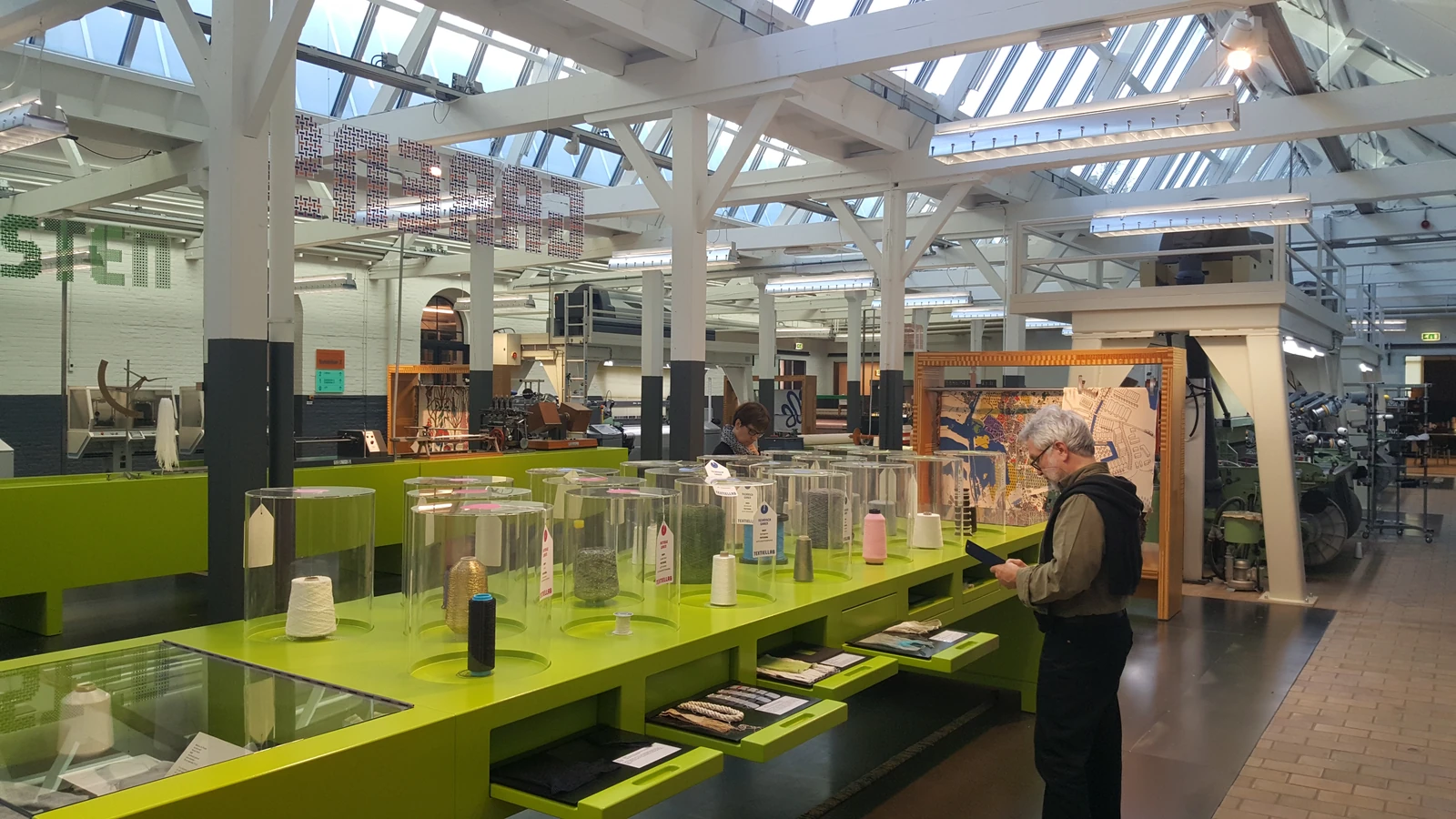
The TextielLab is a professional development space within the TextielMuseum. The visitor information describes makers working there on bespoke projects. They can embroider and knit, or choose weaving and tufting. Laser cutting and passementerie are also among the options. Machines and handwork both play a part in the lab.
Visitors can see the workshop during their museum visit. To hear an explanation, you can scan the QR code beside a section with your phone. The audio is in Dutch and free of charge. English-speaking visitors can read the text. The museum asks you to use your own headphones or earphones when listening.
The museum thus describes two ways of following the making process. In the anniversary exhibition, works and video portraits show what has emerged from the lab. In the workshop itself, textile development continues. The projects you encounter on a visit depend on what is being made at the time.
Machines have a history too
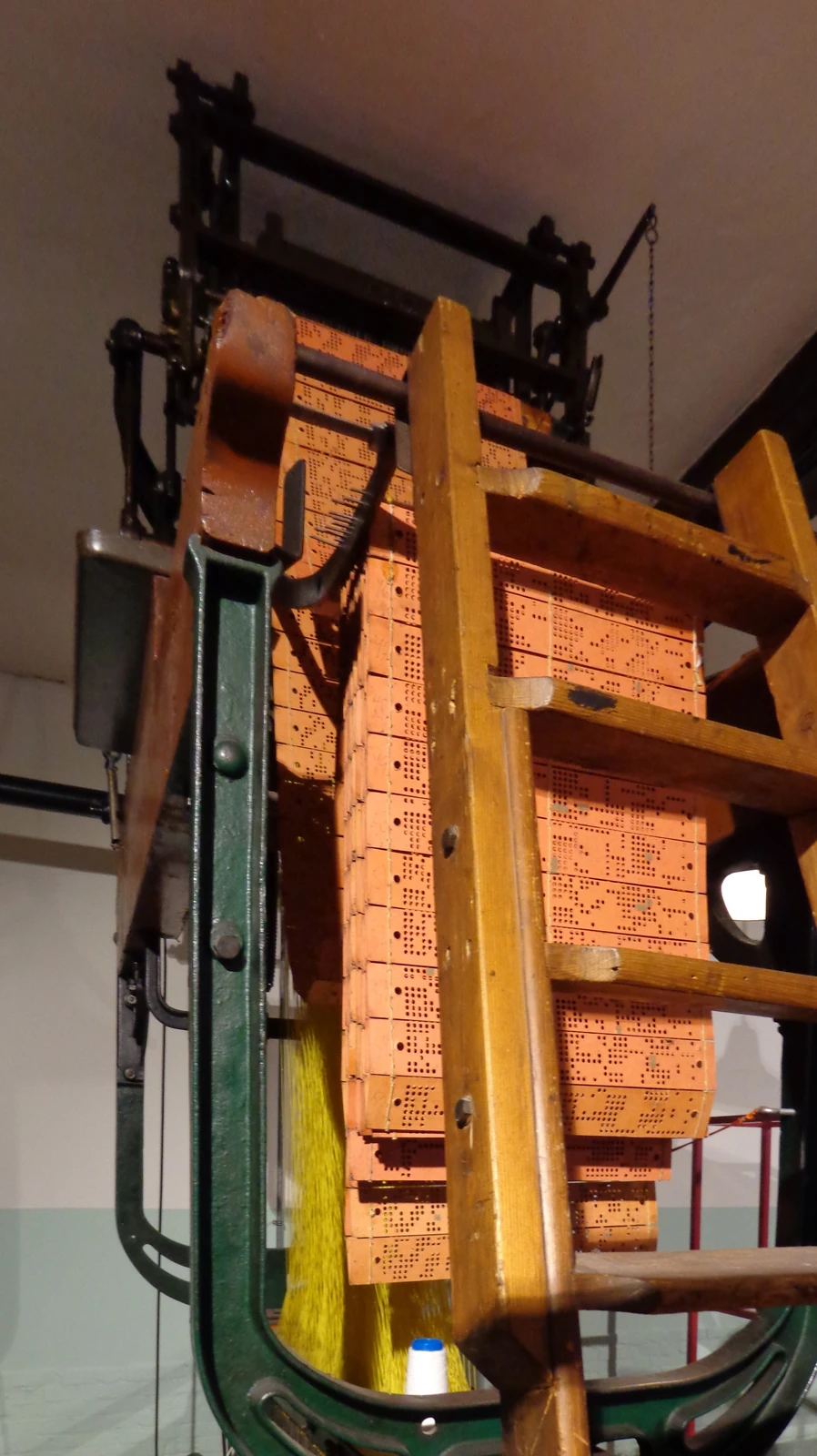
An older museum publication about a Dornier weaving machine offers a concrete example of technical development. It concerns a machine 3.5 metres wide, which could weave larger surfaces without seams. Artist Otobong Nkanga was invited to work with it on four wall hangings.
That publication refers to a presentation at Kunsthaus Bregenz in autumn 2021. It therefore provides background on the lab's development. The technical possibilities do help explain why artists and specialists need to work together to discover how a design can be realised in textiles.
Practical information
TextielMuseum: Goirkestraat 96, 5046 GN Tilburg. Tuesday to Friday, 10am–5pm; Saturday and Sunday, 12pm–5pm. Closed on Mondays.
Admission prices for 2026 are €16.00 for adults and €6.00 for young people aged 13 to 17 inclusive. Children aged 12 or under and Museumkaart (Dutch museum pass) holders have free admission. The museum asks visitors to book an e-ticket in advance.
Visitor information checked on 4 October 2026. The exhibition text gives both 10 and 11 October as the end date. Check with the museum which day still allows entry to Mens <3 Machine. This article covers the final exhibition weekend of 10 and 11 October.
Sources and image credits ↗