A photography museum behind a layered facade
Today’s Fotomuseum aan het Vrijthof occupies the former Spanish Government House. Late Gothic windows recall Charles V, while a covered courtyard shows how the site was adapted for exhibitions.
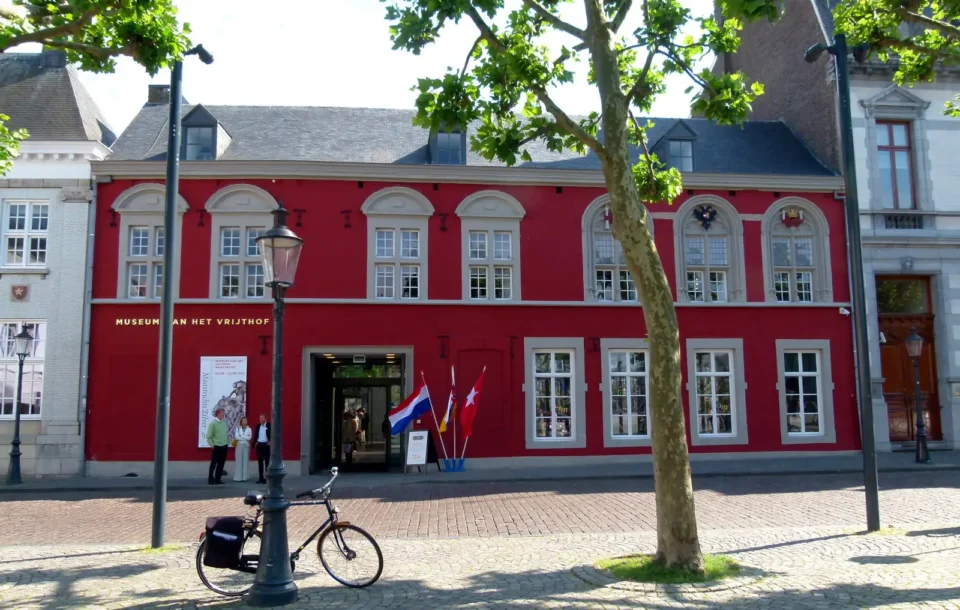
Fotomuseum aan het Vrijthof occupies the Spaans Gouvernement at Vrijthof 18. The building is far older than the photography displayed there: the site’s history reaches back to the fourteenth century. The Dutch Cultural Heritage Agency lists it as national monument 27700.
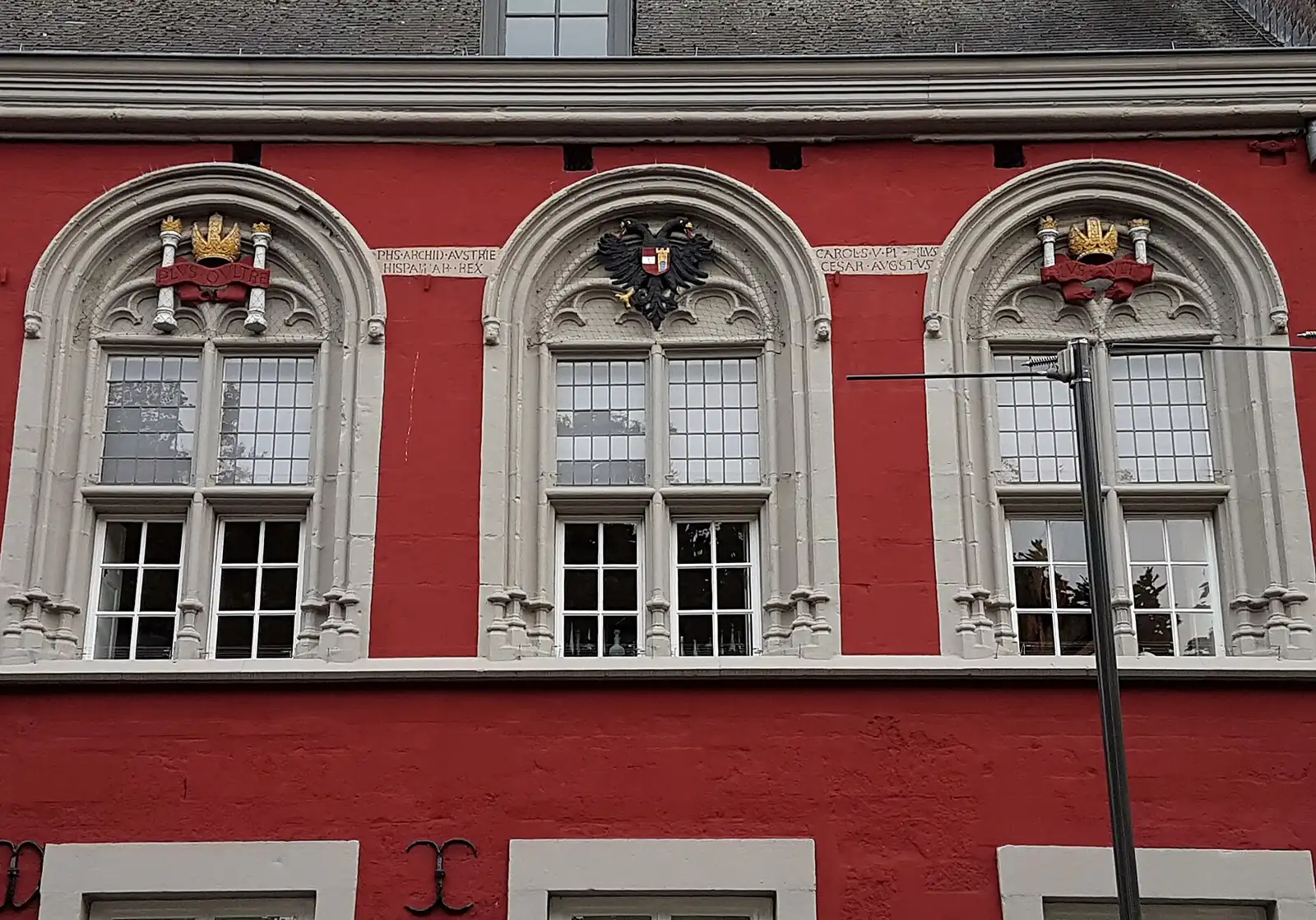
Several periods can be read on the facade. Three late Gothic upper windows carry reliefs linked to Charles V. According to Maastricht’s heritage project Zicht op Maastricht, the central window shows the Habsburg eagle; the outer ones display the Pillars of Hercules and the motto PLUS OULTRE. The national register also notes windows dating from 1670. A close look therefore reveals a sequence of changes, rather than a building from a single year.
The museum’s use changed too. From 1973 the Spaans Gouvernement housed Museum aan het Vrijthof. Restoration and extension followed between 2010 and 2012. The museum describes how the courtyard was covered and a new exhibition section linked to the older buildings. Since 2019, Zicht op Maastricht says, photography has been the focus. The former name belongs to that history; Fotomuseum aan het Vrijthof is the name for the current programme.
The two images show the Vrijthof facade after the 2011/12 renovation and a detail of the windows in 2016. They invite a comparison between late Gothic details and later changes to the facade. Inside, visitors can experience the link between historic rooms and newer exhibition space where the current route allows access.
A visit starts at the red facade on Vrijthof, but the story continues into the displays inside. The museum website provides the current photography programme, while its visit page covers tickets and facilities. Dates and opening hours for a specific exhibition should be taken from those current pages. The historic building can thus remain part of the visit without displacing the exhibition itself.