A villa turned into galleries
Moco Museum presents modern and contemporary art inside Villa Alsberg. The former home near Museumplein shapes the route, the rooms and access for visitors.
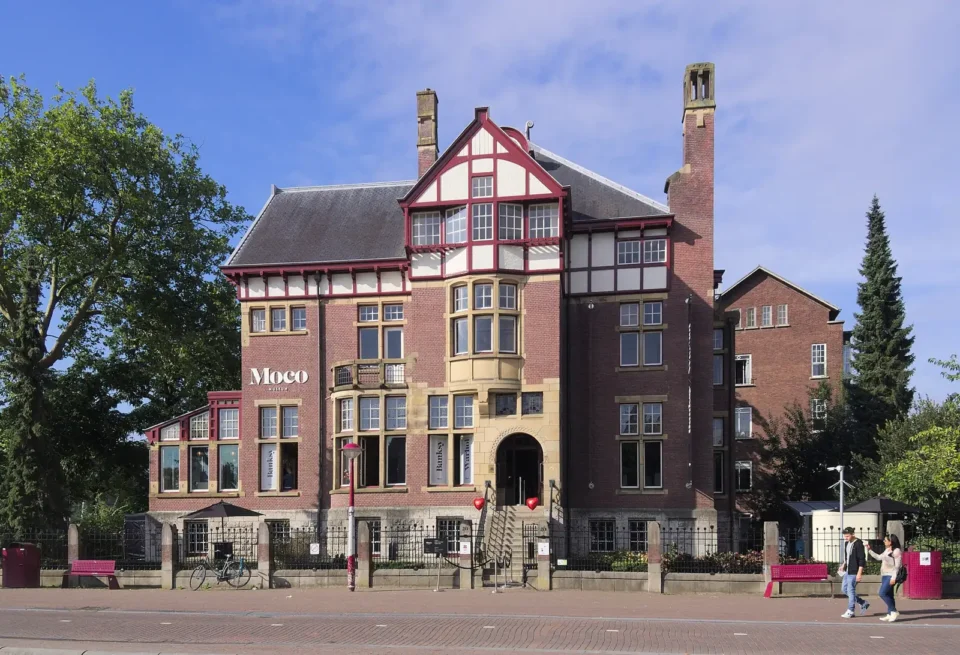
From Museumplein, Villa Alsberg looks more like a home than a museum. It once was one: Eduard Cuypers designed the villa at Honthorststraat 20 for the Alsberg family. Moco opened there in 2016. The Dutch Cultural Heritage Agency lists the address as a national monument. The building thus retains an earlier purpose behind today’s exhibitions.
The museum describes Villa Alsberg as a historic townhouse whose interior has been adapted for gallery use. Moco shows modern, contemporary, digital and immersive art there. The combination changes the visit: rooms and staircases are not neutral white boxes but shape the movement from one work to the next. Look room by room for traces of the villa’s earlier domestic use.
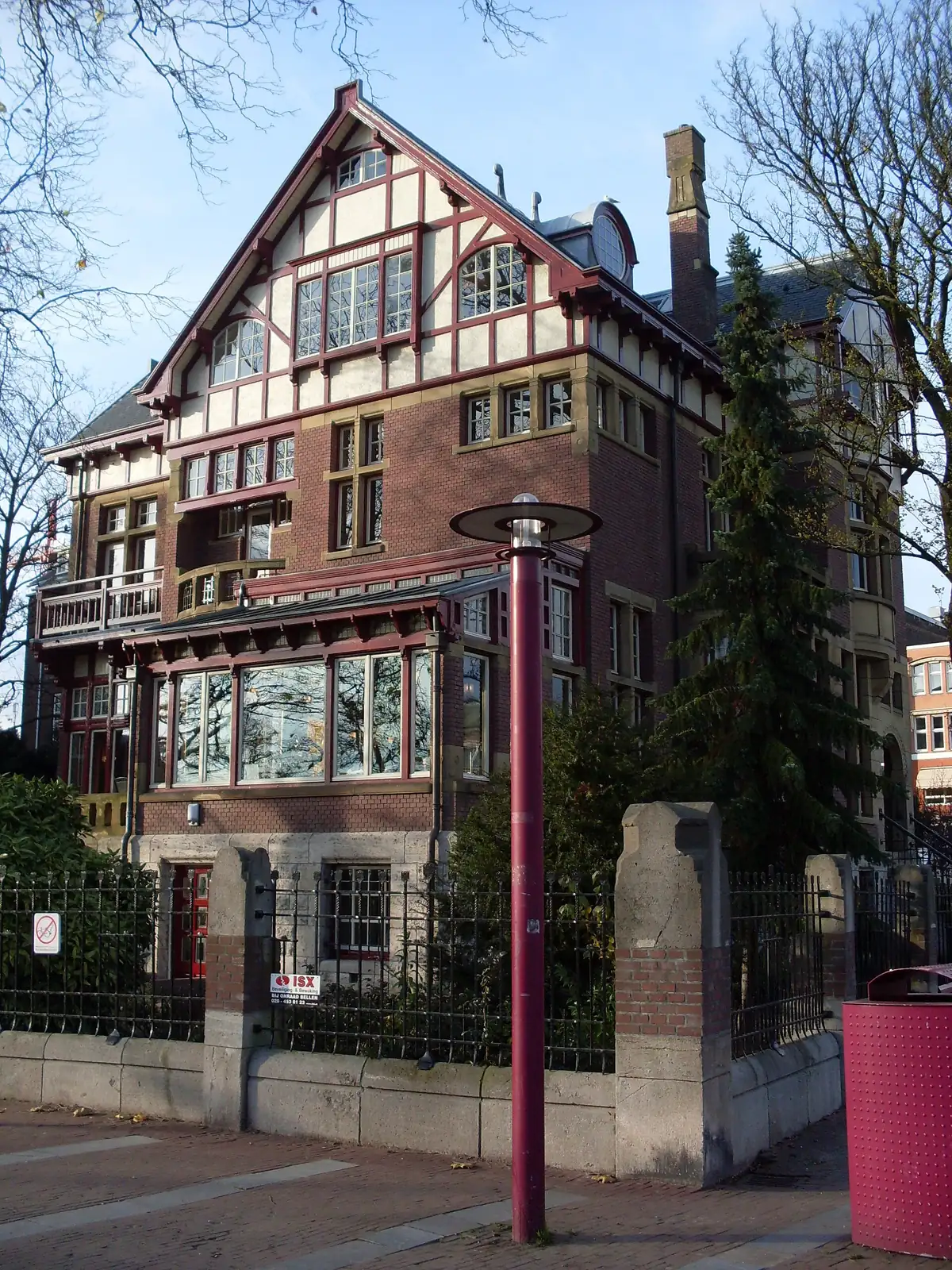
The two photographs show the exterior at different moments. One was taken in 2010, before Moco opened; the other dates from 2016, when the museum was already there. Together they show how the villa looked before and after it became a museum.
The monument also creates practical limits. Moco says the villa has many stairs and no lift. According to its visitor information, wheelchair and mobility scooter users cannot access the museum, and strollers cannot be taken inside. Visitors with a stroller can ask staff about parking it in the garden. This information matters before arranging a visit.
The villa is at Honthorststraat 20 beside Museumplein. Displays and temporary exhibitions may change; the museum website is the source for the current programme and entry slots. Start outside with the shape of the former home, then notice the scale of its rooms and stairs inside. How does an older domestic space affect the experience of contemporary art?