At Allard Pierson, antiquity meets the manuscript
Amsterdam’s Allard Pierson holds archaeological objects as well as handwritten and printed sources. They do not all share the same display case.

At Amsterdam’s Oude Turfmarkt, the Allard Pierson cares for the University of Amsterdam’s heritage. Its archaeological collections contain almost twenty thousand objects from, among others, the Greek, Roman, Egyptian and Etruscan worlds. The institution also holds manuscripts and early printed books. Together these collections connect material objects with written sources from many periods.
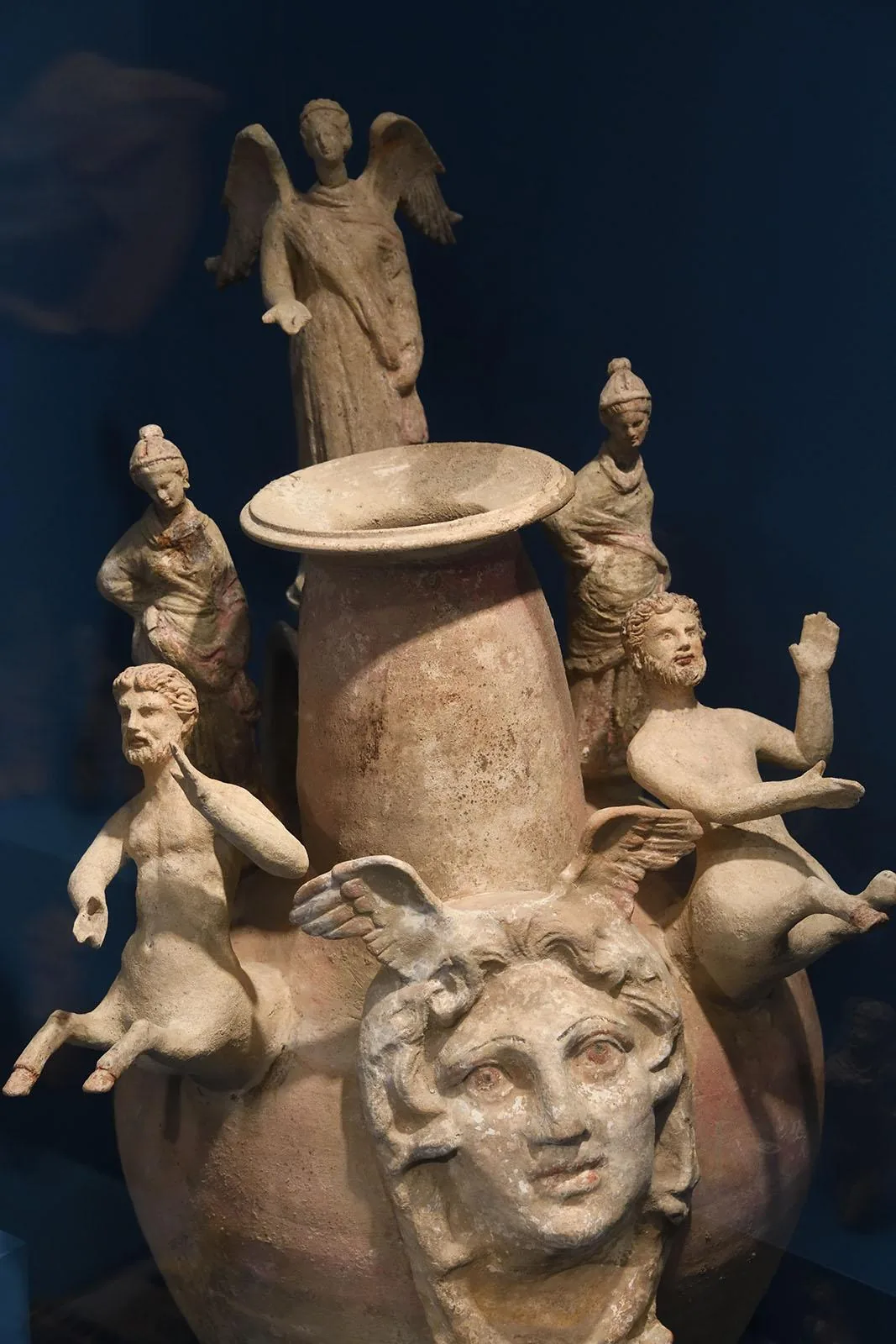
The archaeological material ranges from pottery, sculpture and jewellery to mummy coffins, papyri and textiles. According to its Wikimedia description, the photographed vase from Canosa is a Hellenistic funerary object in the collection. Its decoration and use place it in a historical context beyond its shape alone. Its precise location in the museum may change.
The written material spans many centuries too. The Allard Pierson describes manuscripts dating from the ninth to the twenty-first century and early printed books from the fifteenth to the eighteenth. It lists about three hundred medieval manuscripts and nearly six hundred incunabula, books from the earliest period of printing. Archaeology and book history thus meet within one heritage institution while remaining distinct collections.
For researchers, a manuscript is more than its text. Parchment or paper, binding, decoration and readers’ notes can reveal how a book was made and used. The museum says that cataloguing its manuscripts is still in progress. Some material can be found through catalogues; other items require a curator’s help or consultation in the Research Room.
A museum visit and a research visit therefore follow different routes. The museum presents changing displays; consulting heritage in the Research Room requires an application and a valid UvA, HvA or external library card. The website has current information on exhibitions and admission.