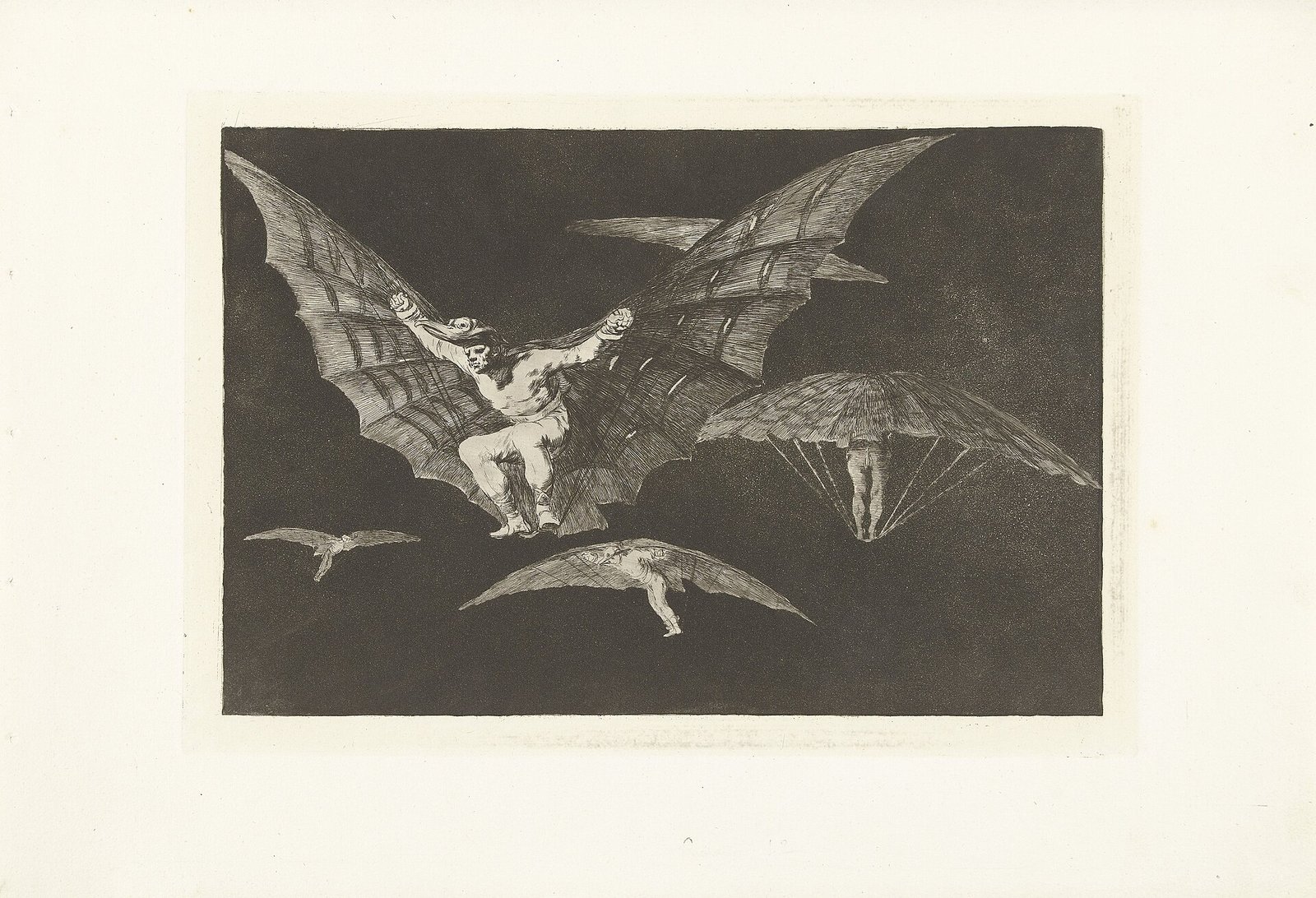
On Wednesday 23 September 2026, Museum JAN in Amstelveen opens the exhibition Lita Cabellut x Goya – De dwaasheden. On display there until 14 March 2027 are 22 etchings from Los Disparates by Francisco de Goya (1746–1828), hung alongside 22 large works by the Spanish-Dutch artist Lita Cabellut, Museum JAN reports. According to the museum, this is the first time the exhibition has been shown in the Netherlands.
Anyone who digs a little deeper after reading the news soon arrives at one question: what exactly are these Disparates? The answer is less clear-cut than you might expect.
A series without a fixed title
Goya worked on these prints in the final phase of his life. The Real Academia de Bellas Artes de San Fernando in Madrid, which holds eighteen of the copper plates, dates the series to probably between 1815 and 1824. They are etchings with aquatint, reworked in drypoint. Goya never published them himself. When he left for France, the plates stayed behind in his house near Madrid, the Quinta del Sordo.
The Academy bought the plates in 1862 and published the prints for the first time in 1864, under the title Proverbios, proverbs. Four other plates from the same series became separated from the rest at an early stage. They ended up in the Louvre in Paris in 2011. Together they make up the 22 sheets now also on show in Amstelveen.
The name is uncertain too. Early owners spoke of caprichos, later of sueños, dreams. The title Disparates, follies, comes from inscriptions on a number of proofs. The Real Academia writes that it has not been established with complete certainty that Goya added those inscriptions himself.
What the prints mean is still an open question. You see men floating through a black sky on large wings, a horse carrying off a woman in its mouth, and soldiers being mocked. Scholars read into them criticism of the rule of King Ferdinand VII, references to old proverbs, or the topsy-turvy world of carnival, in which authority is made to look ridiculous. Goya left no explanation, and the order of the sheets is arbitrary. Every interpretation therefore remains a suggestion.
Cabellut responds, sheet by sheet
Lita Cabellut, born in 1961, has a long history with Goya. According to Museum JAN, she lived on the streets of Barcelona as a child. When she was twelve she was adopted, and her new family took her to the Prado in Madrid. There, the museum says, she fell under the spell of the Old Masters, Goya above all. After training at the Gerrit Rietveld Academie in Amsterdam, she stayed on to live and work in the Netherlands. She was Artist of the Year in 2021.
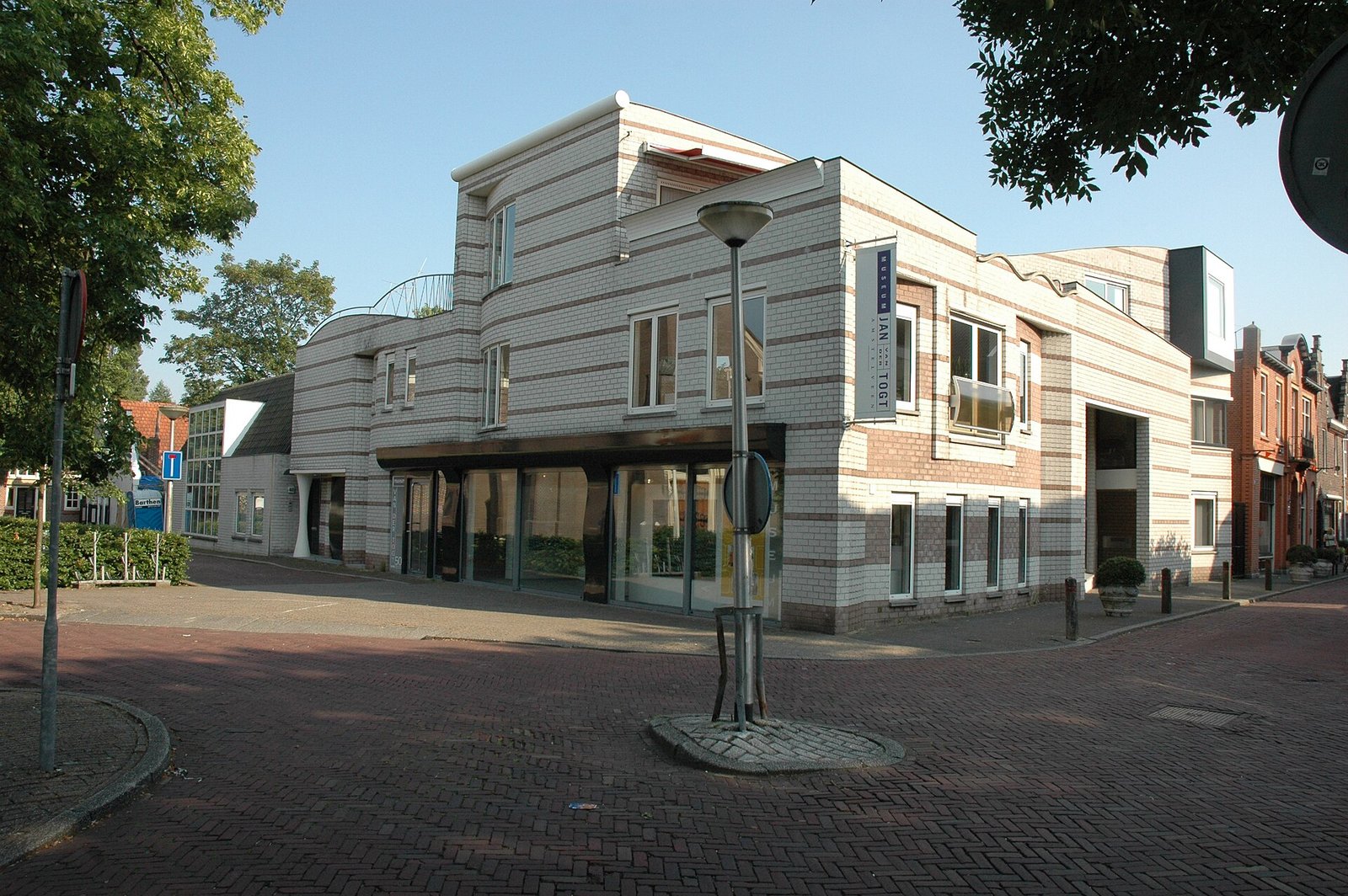
Museum JAN on the Dorpsstraat in the Oude Dorp of Amstelveen, then still called Museum Jan van der Togt, in a photograph from 2007.
Rokus C / Wikimedia Commons (CC BY 3.0) · CC BY 3.0
Image, caption and provenance ↗Her response to Goya is not a copy. Opposite the 22 etchings she sets 22 works of her own: large paintings, but also three-dimensional objects such as heads and masks. Next to Disparate 17, La lealtad (Loyalty), hangs a triptych from 2024 consisting of three canvases measuring 250 by 145 centimetres, according to the museum's website.
The pairing has been seen in Spain before. The Real Academia in Madrid showed the exhibition Goya x Lita Cabellut. Los Disparates from 30 October 2024 to 26 January 2025. It was curated by Eloy Martínez de la Pera Celada. On the Museum JAN website, he describes the project as an encounter between "two artists, two centuries apart, each questioning and scrutinising reality in their own unconventional way".
Museum JAN: from Tomado to glass art
That this exhibition should land in Amstelveen is less strange than it seems. Cabellut had already exhibited at the same museum in 2018. The museum opened in 1991 on the Dorpsstraat in Amstelveen, at the time still as Museum Jan van der Togt.
Jan van der Togt (1905–1995) founded the Tomado factory, known for its metal rack with coloured shelves. After selling his factories in 1971, he devoted all his attention to collecting: paintings, sculptures and modern glass art. Glass still forms the core of the museum's own collection.
Since January 2020 the museum has been called Museum JAN. The name also refers to its co-founder Jan Verschoor, a sculptor and former director. The museum is built around his home.
The museum describes the exhibition as a prelude to the commemoration of the bicentenary of Goya's death. A catalogue accompanying the exhibition is being published by Waanders Uitgevers.
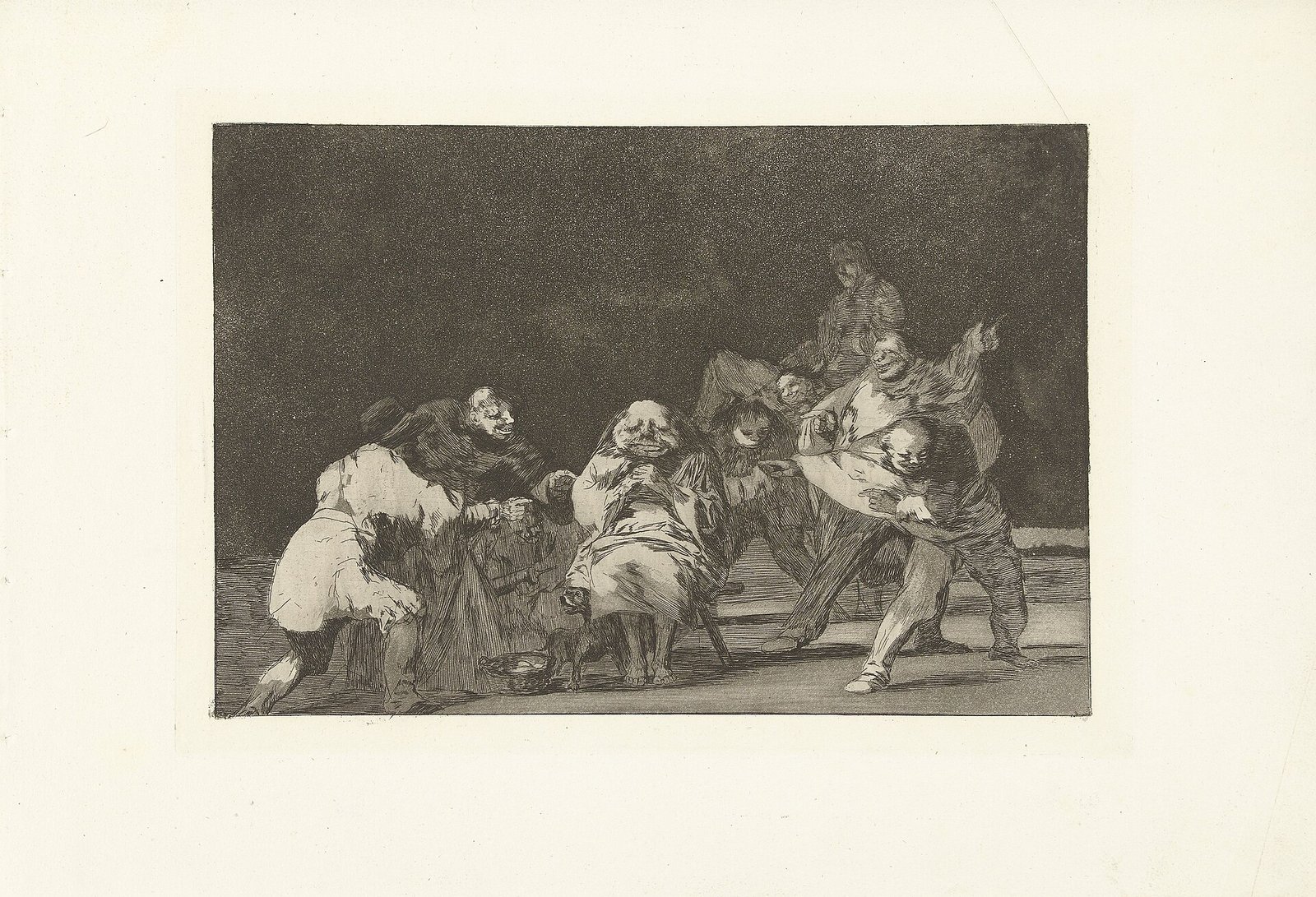
La lealtad (Loyalty), number 17 in Los Disparates: a group of grinning figures presses in on a man in a chair. Museum JAN shows an impression of this print next to Lita Cabellut's triptych of the same title. An impression from the first edition (1864) in the Rijksmuseum collection.
Rijksmuseum / Wikimedia Commons (CC0) · CC0
Image, caption and provenance ↗