Evening; The Red Tree: Mondrian on the way to abstraction
A fiery red apple tree against cobalt blue shows Mondrian beginning to transform the visible world. The painting belongs to Kunstmuseum Den Haag, but its current gallery placement needs checking.
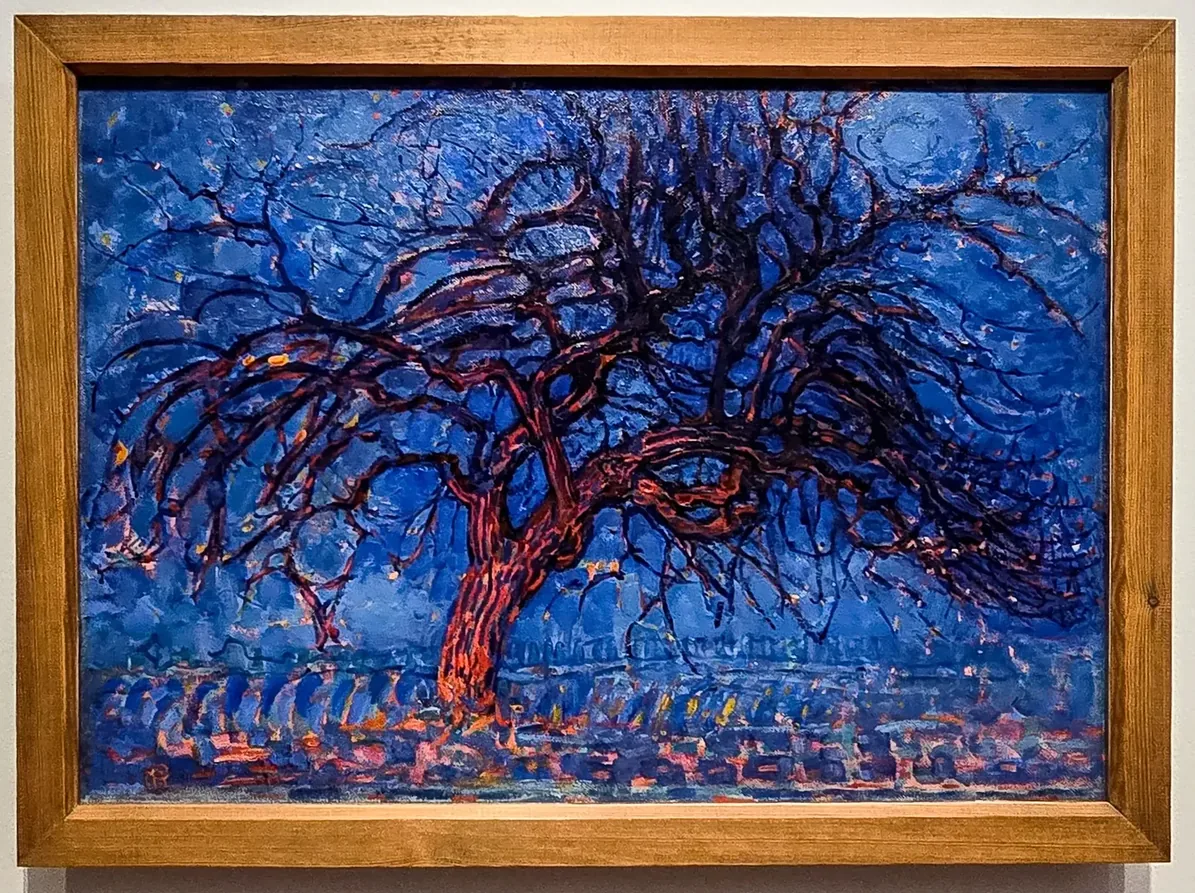
A tree fills almost the entire canvas. Its trunk glows red while its branches spread like a network across a deep-blue background. Painted between 1908 and 1910, the work is oil on canvas and measures 70 by 99 centimetres. It belongs to the collection of Kunstmuseum Den Haag. The image accompanying this story shows the work itself.
Anyone who knows Mondrian chiefly for black lines and rectangular blocks of colour sees an earlier stage of his development here. The tree remains recognisable, but the colours are not meant as a neutral record of what stood before him. The museum describes the red and cobalt blue as a break with his earlier naturalistic painting. Notice how the branches fill the entire surface: the trunk still belongs to one tree, while the pattern of lines almost becomes a composition in its own right.

According to the collection text, Mondrian spent a week in Domburg in September 1908. There he visited Villa Loverendale, the summer home of collector Marie Tak van Poortvliet and artist Jacoba van Heemskerck. An old apple tree with widely spreading branches stood in the garden. The museum cautiously writes that Mondrian probably drew the first version of The Red Tree there. The painting was not completed in a single afternoon: he began it in 1908 and, according to the museum, continued working on it until 1910.
The museum connects the painting’s energy with the influence of Vincent van Gogh. That comparison concerns freedom of colour and brushwork, not a literal copy of a Van Gogh. Later, his trees became less recognisable, until rhythm and lines mattered more than the image of one particular place.
From 10 October 2026, Kunstmuseum Den Haag presents a renewed display, Mondriaan & De weg naar abstractie. The former Mondriaan & De Stijl display has closed. The page for the new route names and pictures Evening; The Red Tree alongside other early works and the later Victory Boogie Woogie. This shows why the museum includes the tree in its account of Mondrian’s development. The page does not, however, explicitly confirm that this particular canvas is hanging in a gallery on Friday 16 October.
The Kunstmuseum Den Haag collection page also gives the physical details: oil on canvas, 70 centimetres high and 99 centimetres wide. It is large enough to follow the branches with your eyes, yet still rewards looking closely. The digital reproduction shows the composition, but a photograph cannot replace the paint surface and texture of the canvas. The museum says it holds the world’s largest collection of Mondrian works. A visit to the new display can therefore connect this red tree with works from other periods, even if the exact gallery selection needs to be checked in advance.
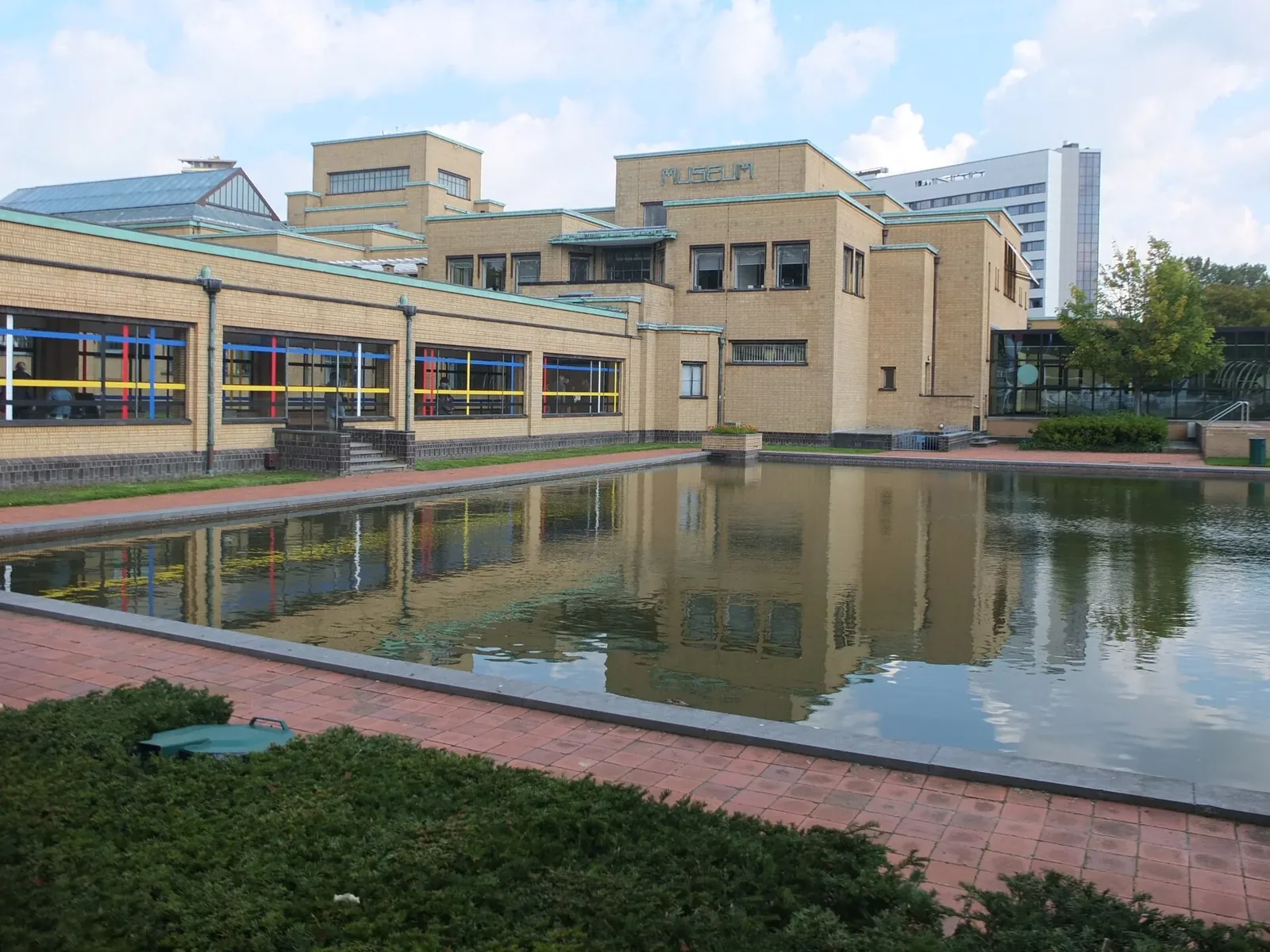
Kunstmuseum Den Haag is at Stadhouderslaan 41, 2517 HV The Hague. The visitor page lists regular hours of 10 am to 5 pm, Tuesday through Sunday; Friday 16 October falls within that schedule. A regular ticket costs €22, visitors aged eighteen and under and Museumkaart holders enter free, and students pay €12. The museum advises even Museumkaart holders to reserve a timed ticket. Tram 17 and bus 24 stop nearby.