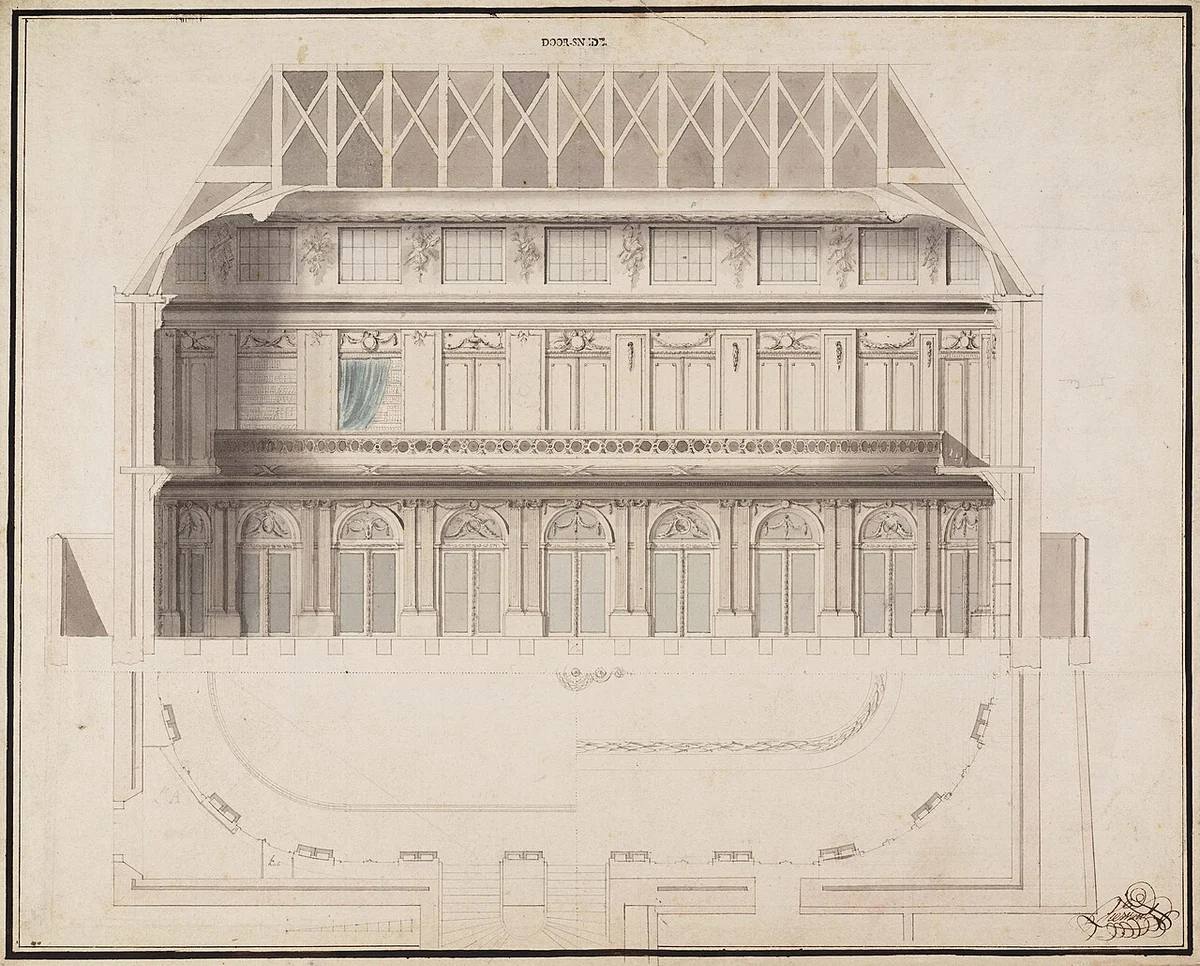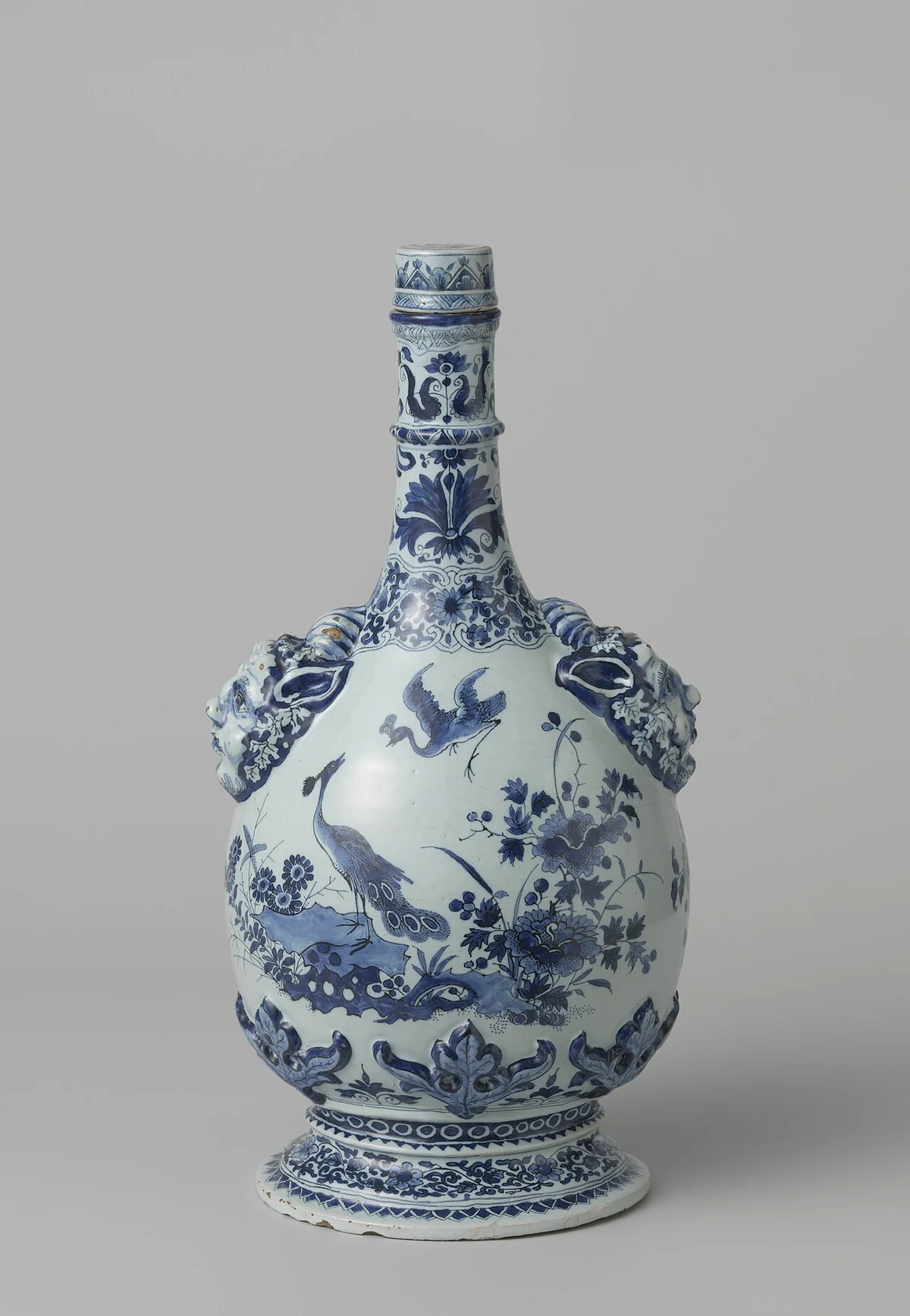
Porcelain and Delftware both start with clay. The difference lies in the firing and in the paste. True porcelain is fired so hot that the body sets into a hard, barely porous mass; kaolin is part of that recipe. That raw material was lacking in the Dutch Republic. Delft potters therefore coated a more porous body on both sides with an opaque white tin glaze and painted cobalt blue on top of it. Contemporaries called it Hollants porceleyn. In material terms it is faience: a white skin over earthenware.
The Rijksmuseum is studying some 1,600 pieces and calls them tin-glazed earthenware. Dishes, pyramids, butter tubs: the same family. In a photo of the foot or of a chip you will often see a warmer, duller body beneath the white. The eye read the blue and white first, not the firing curve. Tin glaze arrived via Italy and Antwerp; in Delft it remained the standard until around 1850. Strictly speaking, only what was made in Delft itself is called Delftware.
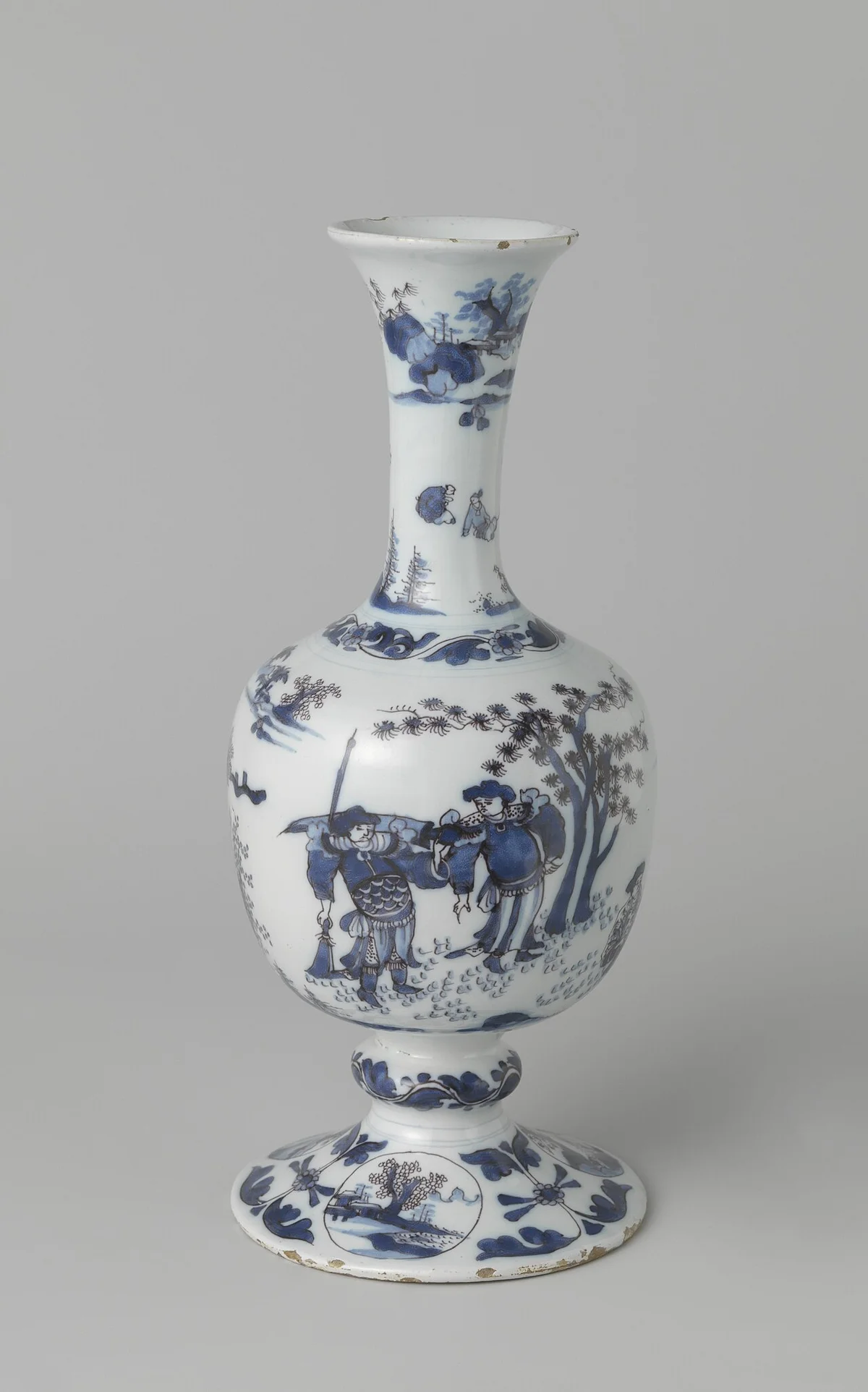
Delft vase with decoration after Chinese porcelain. Rijksmuseum.
In a catalogue photo, look for the unglazed foot. That is where the clay gives itself away. The blue stays in fashion. The body remains a different solution.