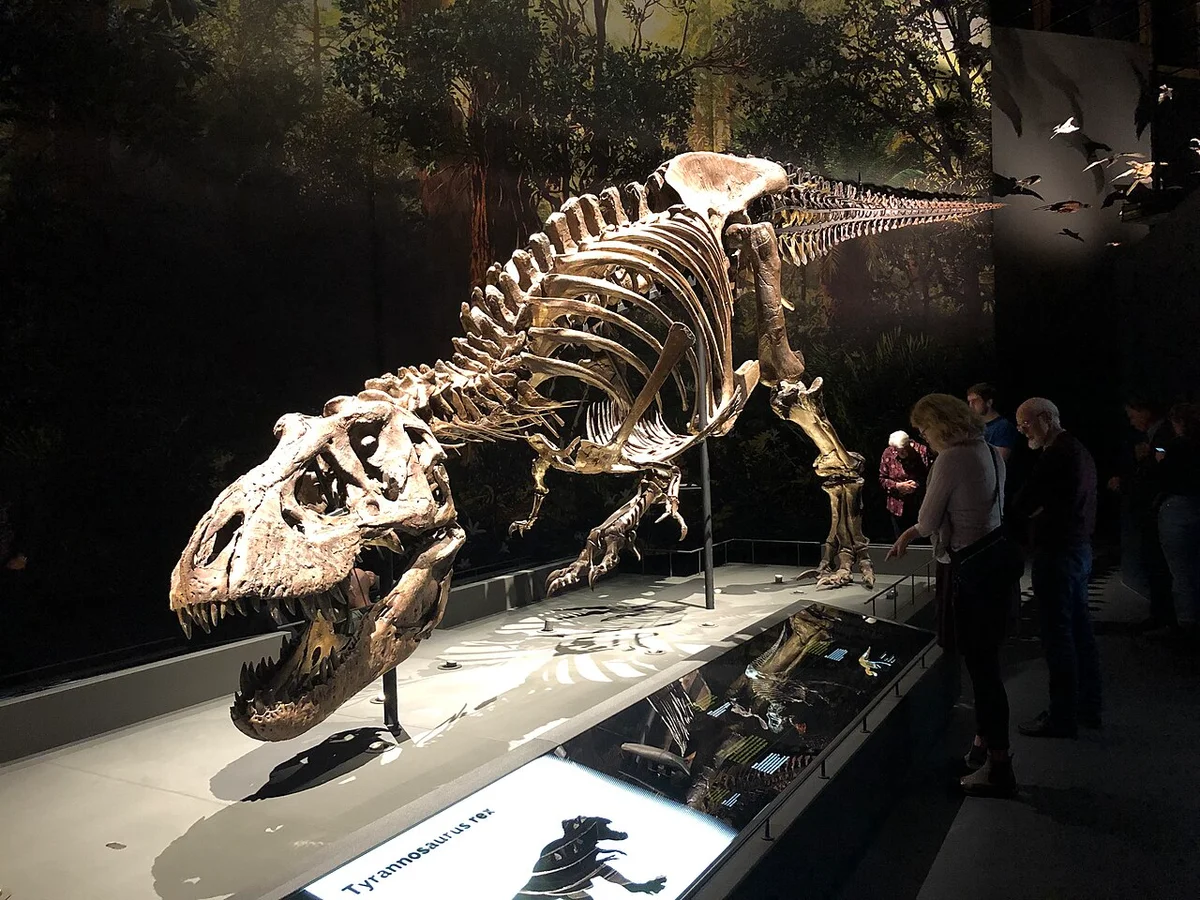
Trix is the skeleton of an adult Tyrannosaurus rex in Naturalis. Around eighty per cent of the bone volume is genuine fossil, the animal is some twelve metres long, and the bones were barely deformed in the sand. That is why the tail vertebrae still fit together as a series. What the skeleton does not say out loud is everything we would like to stick on around it. A fossil is evidence of bone, growth lines, fractures. The rest is reconstruction.
In 2020 Naturalis printed a three-dimensional copy. The original Trix stayed in Leiden; the print travelled as a kit to the Dinosaur Museum in Nagasaki, Leiden’s sister city. Every missing centimetre in the real skeleton had to be designed for that copy. So looking at Trix also means looking at seams: where does the fossil stop, and where do plaster or a printed addition begin? The animal in the gallery is an argument made of preserved mass. What you want to know about the animal’s life calls for research on top of that.
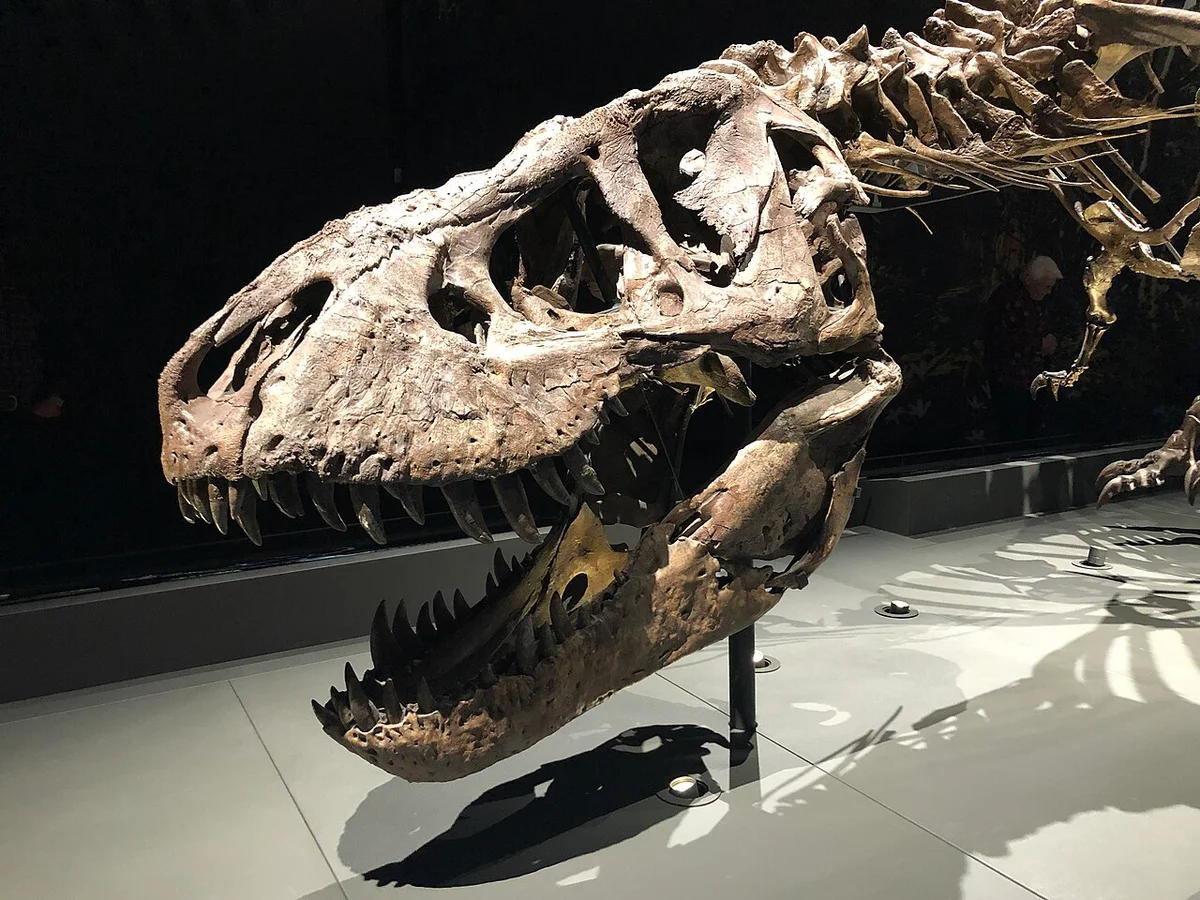
Walk along the tail and see how the vertebrae together form the long tail. That is where the object is at its clearest: stone that was once bone, not a complete biography.