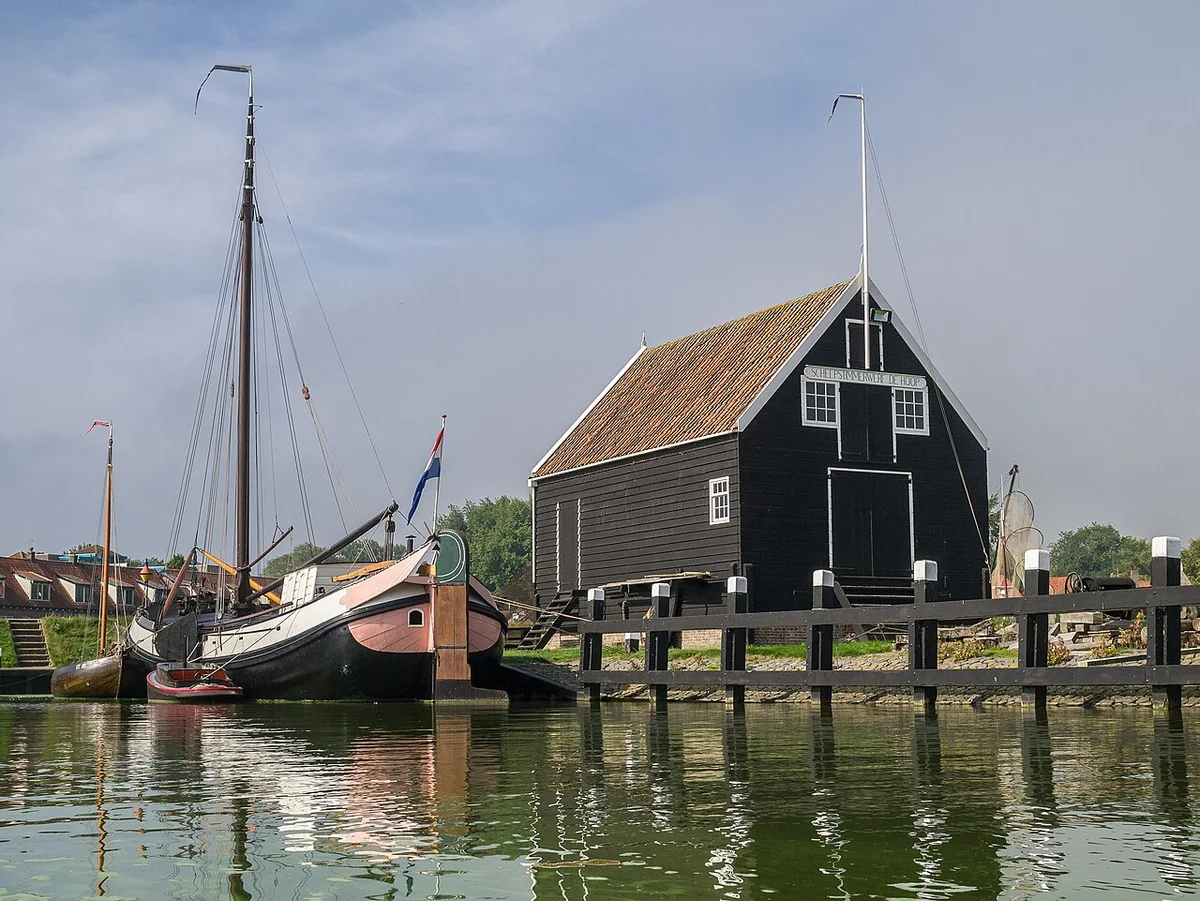
On 28 May 1932 the Afsluitdijk was closed. The Zuiderzee became the IJsselmeer on the inside and the Wadden Sea on the outside. Hard geographical facts. Fishing harbours such as Enkhuizen lost their saltwater fishing grounds; herring and anchovy gave way to eel and other freshwater fish. The Zuiderzeemuseum preserves what that upheaval did to houses, boats and crafts. Outdoor museum: more than a hundred and forty historic buildings stacked into a village. Indoor museum: collection and stories about water, work and communities.
The language of the region did not vanish on the day of the dyke. Dialects, songs and swear words change at their own pace. What did change straight away was the work on the water. Nets, boats, smokehouses: the museum shows how a trade adapts when the salt disappears. Walking over the brick paving outside is not a journey into a century standing still. It is a compact coastline of villages that once shared an inland sea.
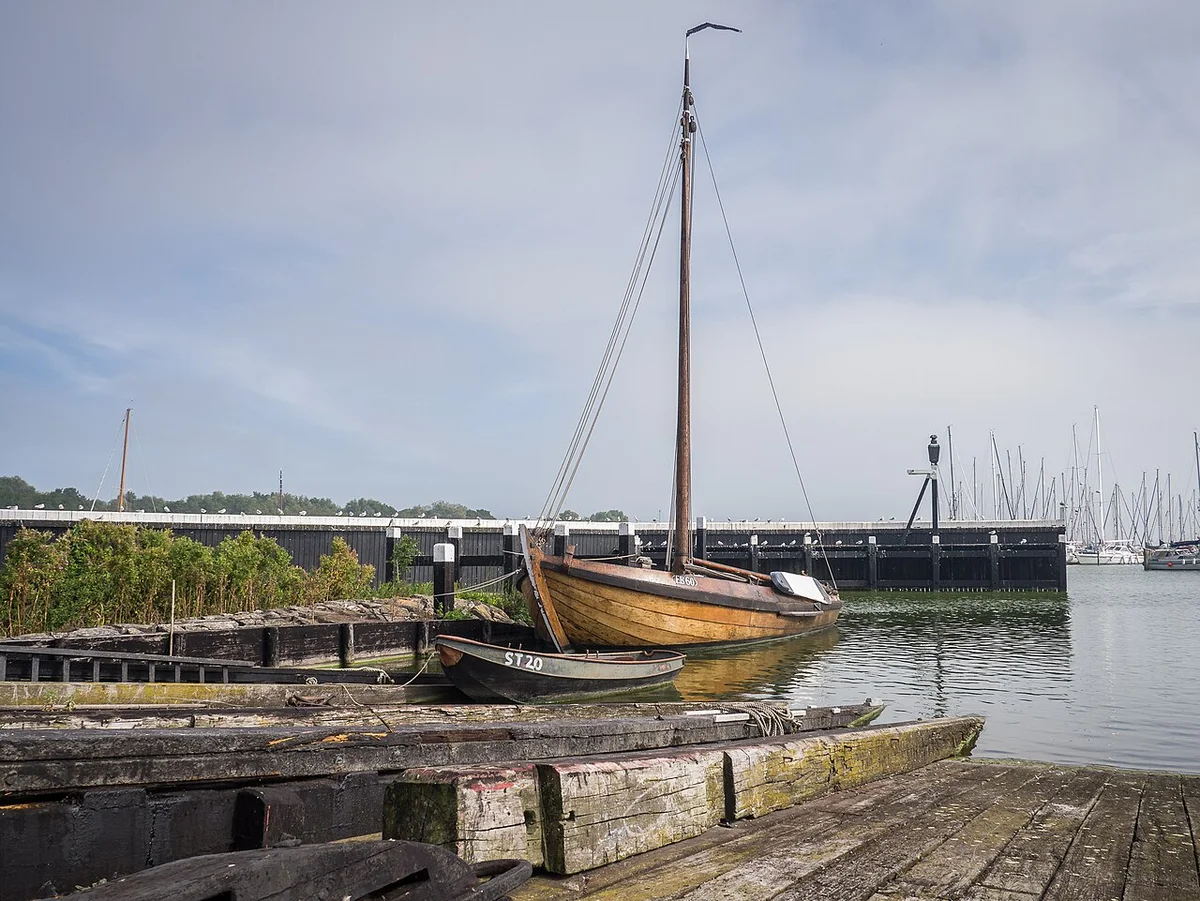
Walk from a fisherman’s house to the smokery. The smell and the nets tell the story of the transition more sharply than a date on a sign.