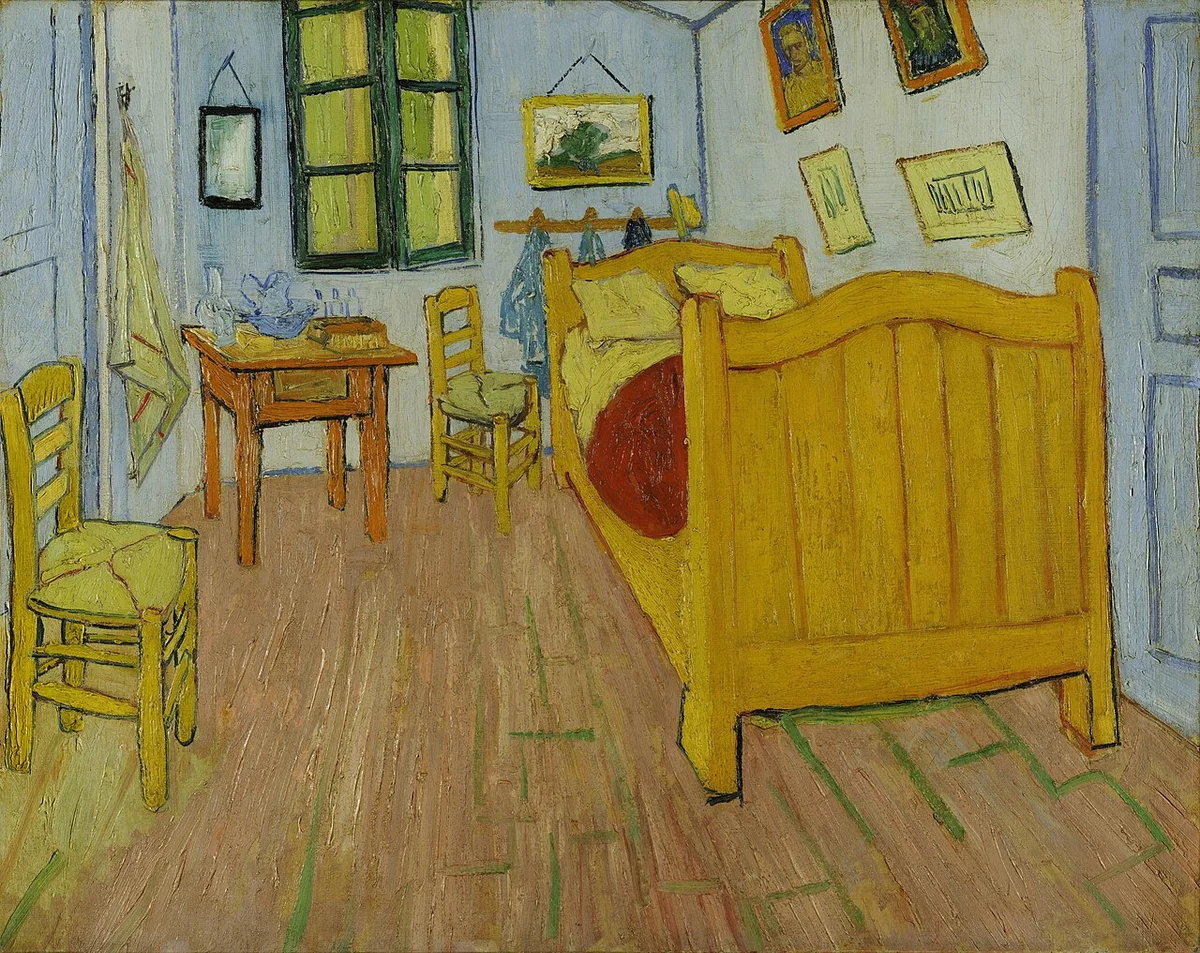
Van Gogh painted The Bedroom in Arles in October 1888. The Van Gogh Museum holds the version in which the furniture is firmly outlined, the floorboards run down towards you and the walls stand as planes of coolness. He wrote to Theo that he was looking for rest in the colour: simple objects, no play of shadow to make the bed sink away. What you see is that aim. The lines close off the forms. The bed is too big for the back wall. The chairs stand like shop signs.
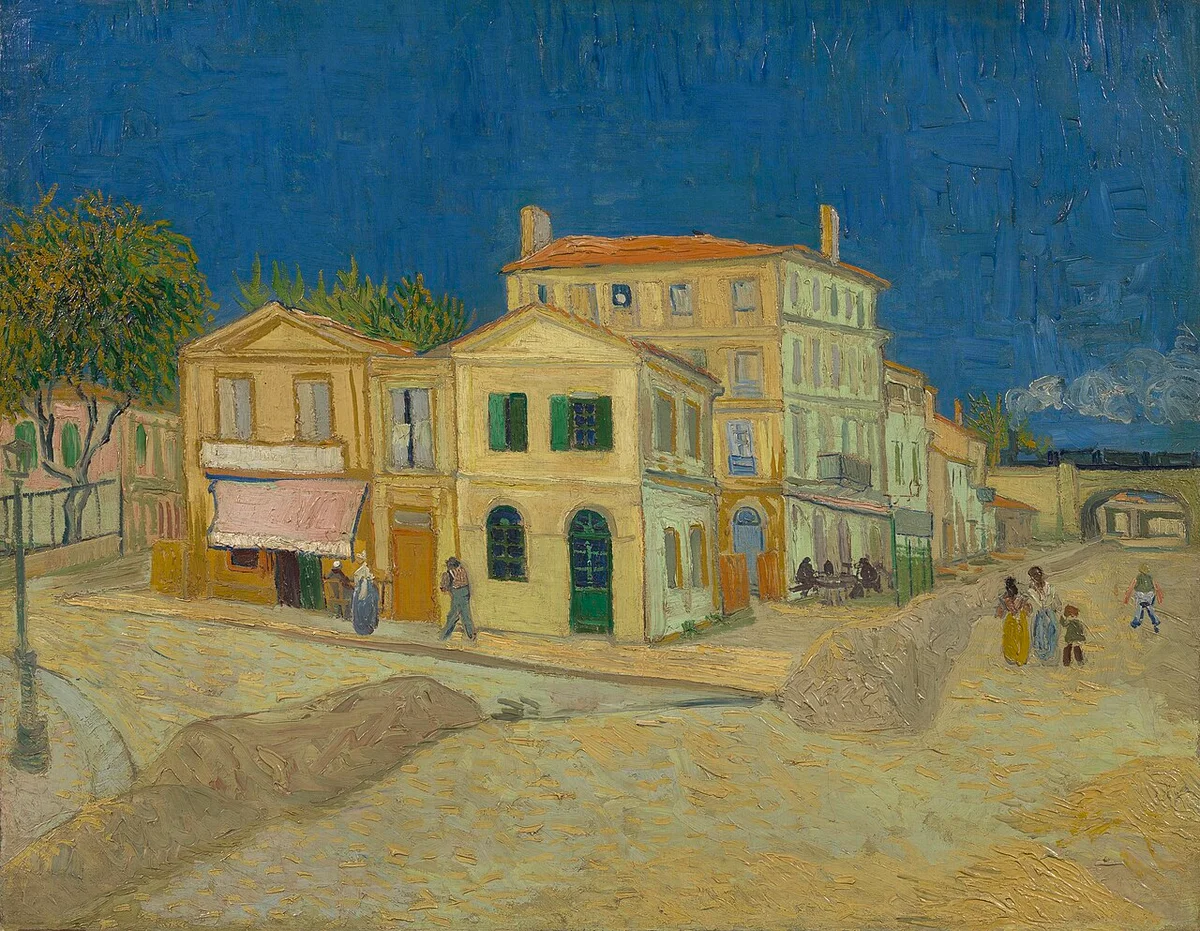
That is exactly what turns a rented room into an image. Count the gaps: between bed and washstand, between the two chairs, between the window and the wall behind it. Every space is a plane with its own colour. The room is a set of decisions: what to leave out, what to thicken, what to push against the edge. You don’t need to reconstruct the Yellow House to see which piece of furniture comes forward first. Usually it is the bed, because the lines converge where the headboard meets the wall.
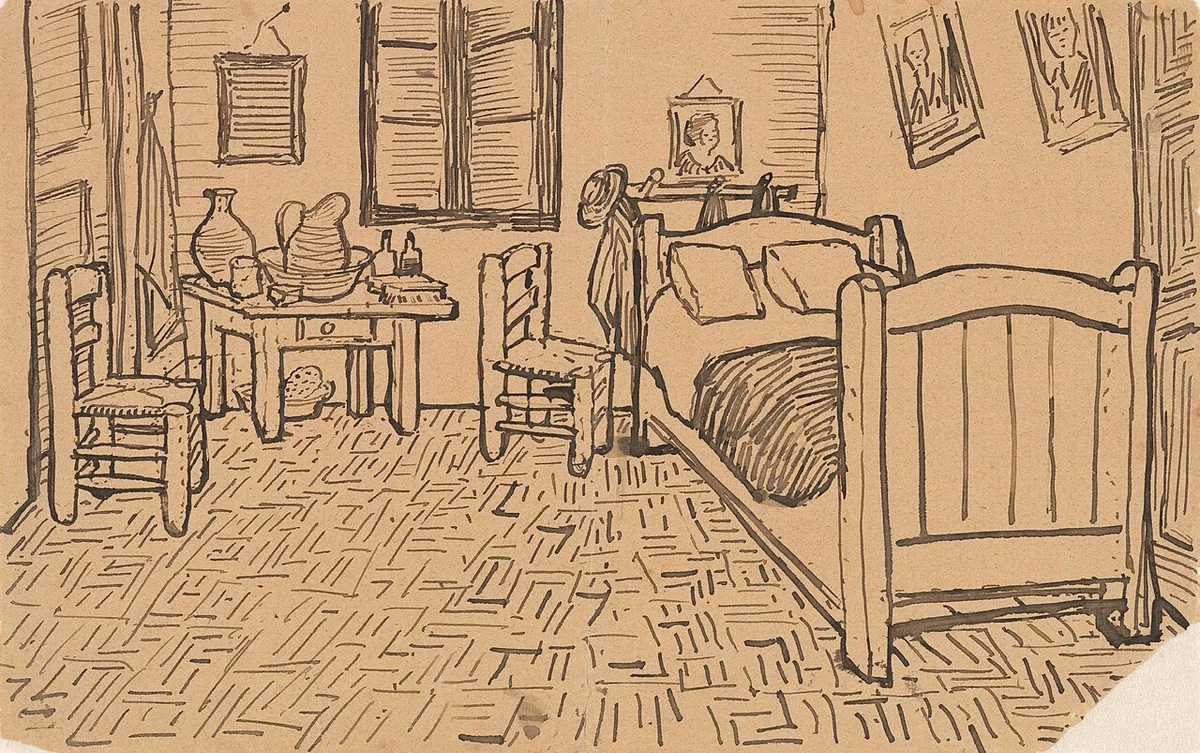
Compare the two chairs. The same function, not the same size on the picture plane. One is a seat. The other is a weight that holds the right-hand side in place.