Behind the gate of Breda’s former Old Men’s Home
The entrance to Stedelijk Museum Breda reveals nearly eight centuries of care, reuse and adaptation of a historic building for new visitors.
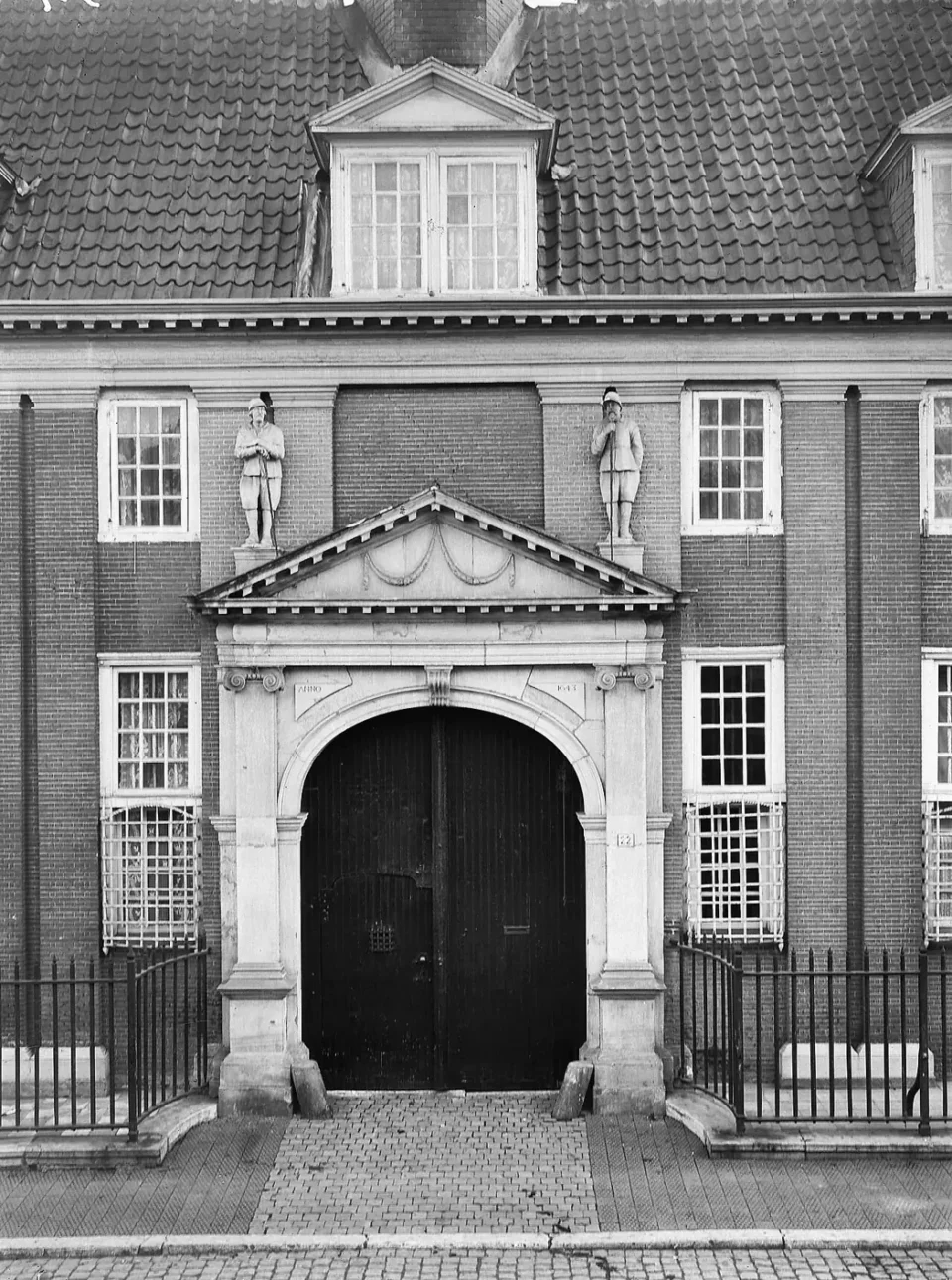
Entering Stedelijk Museum Breda on Boschstraat means crossing a site first recorded as a hospital in 1246. In his will, Godfried IV van Schoten left a bequest to Breda’s Gasthuis. At first it stood outside the city wall, on the road to ’s-Hertogenbosch. Poor travellers, pilgrims and sick residents found shelter there.
The Gasthuis expanded to include a chapel, cemetery, brewery and laundry. From the sixteenth century, older people could live there for a fee. Master stonecutter Laureys Drijffhout later created its monumental façade. Two elderly figures with walking sticks flank the stone gate; Breda knows them as Thijs and Geert. They reveal the building’s former purpose before visitors reach a gallery.
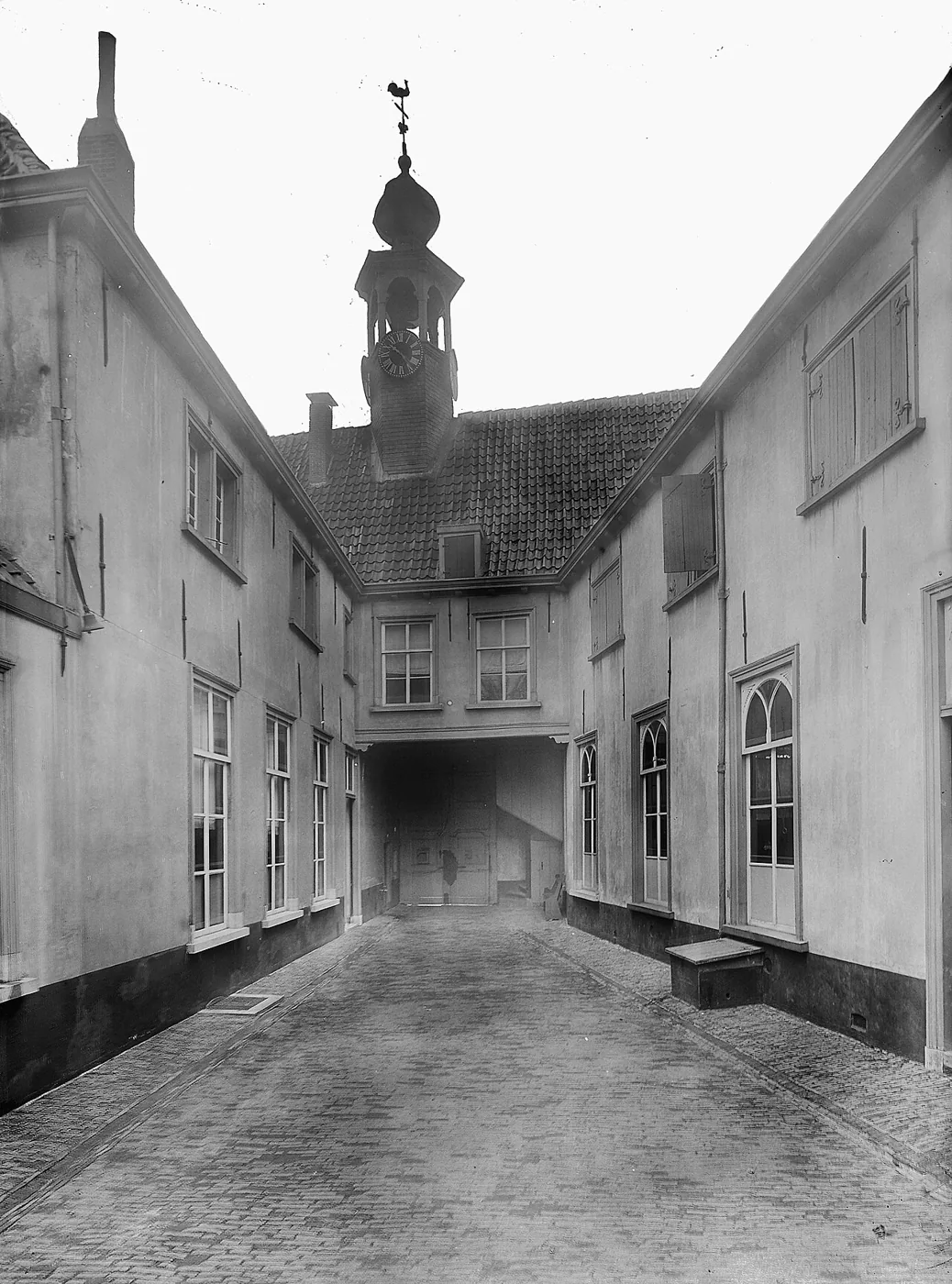
In 1798 the Gasthuis officially became an Old Men’s Home. It accommodated 51 men over sixty, with a sick ward and dormitory among its facilities. As care for older people changed, the home lost its role and closed in 1953. The historical photograph of the courtyard shows an earlier state, not the museum’s present interior.
The building remained in use. Cultural centre De Beyerd opened in 1956, followed in 2008 by the Graphic Design Museum, later MOTI. Boschstraat 22 has housed Stedelijk Museum Breda since 2017. Its policy plan describes a complex comprising a listed historic section, new construction and a renovated section. After a closure to renew floors in galleries and public areas, the museum reopened in stages.
That history makes the entrance more than a passage: a place of hospitality and elder care became a home for art and the city’s history. Thijs and Geert stand above the gate; the spaces beyond it now serve the museum. The museum opens Tuesday to Friday from 11 am to 5 pm and weekends from 10 am to 5 pm. Current visitor information is available on the museum website.