Tentoonstellingen
Willem de Kooning at work at the Rijksmuseum: a Rotterdammer returns with his drawings
From Friday 9 October 2026 the Rijksmuseum in Amsterdam shows how Willem de Kooning worked. It is a major retrospective of his drawings, a hundred years after he left Rotterdam.
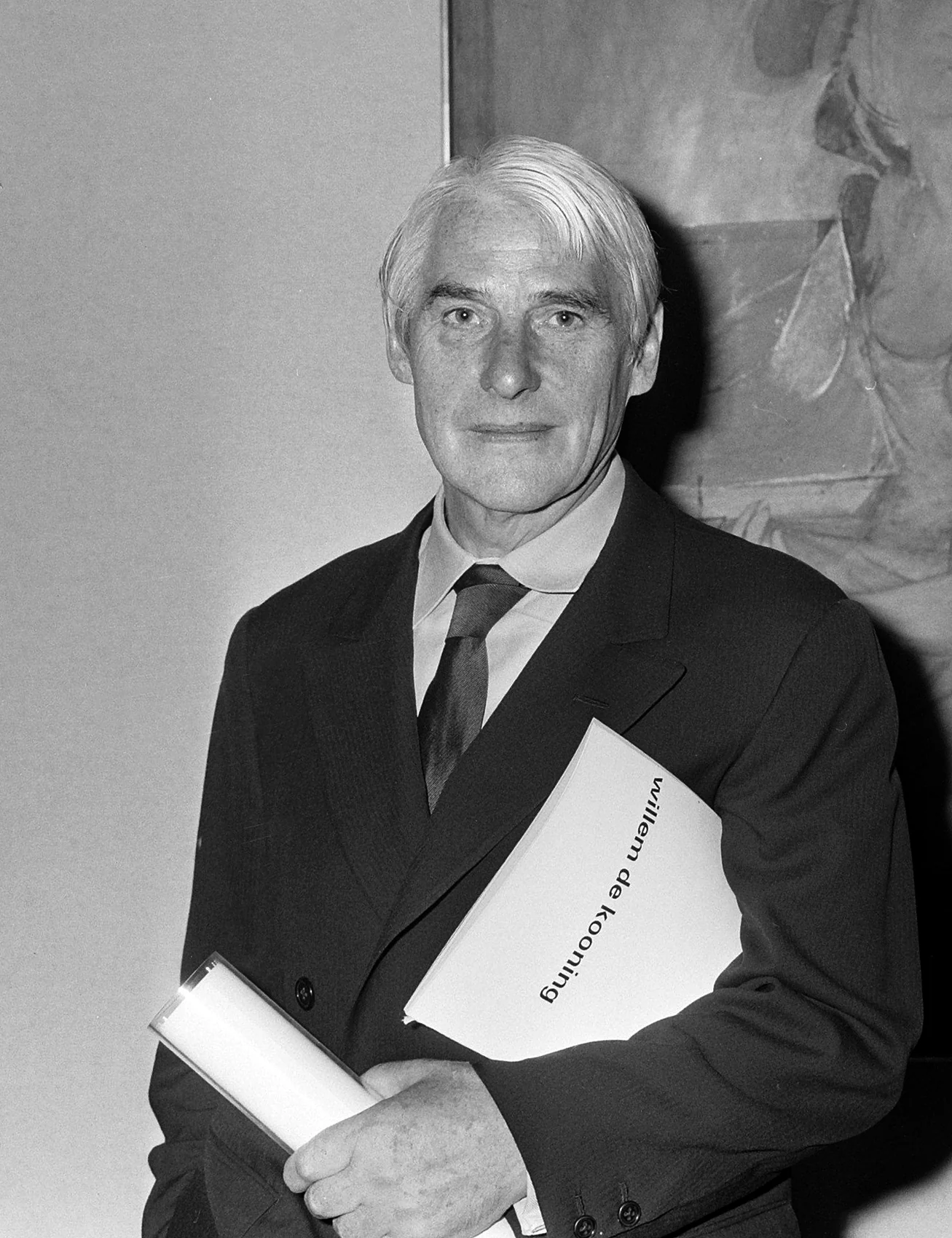
On Friday 9 October 2026 the Rijksmuseum in Amsterdam opens the exhibition Willem de Kooning at work. It runs until 17 January 2027, the museum says. It is a homecoming that has been exactly a hundred years in the making: in 1926 De Kooning, a native of Rotterdam, left the country to start a new life in New York. Now he returns, not with his famous expanses of paint, but above all with his drawings.
The museum is showing more than 120 works. How did one of the most important painters of the twentieth century draw, and why is that now the main subject?
Drawing as a way of thinking
For De Kooning, drawings were not preliminary studies for paintings, the Rijksmuseum says. Drawing was a way of investigating: sketching, correcting, repeating and deliberately surprising himself. According to the museum, that process lies at the root of his art in every medium. He liked to say: “I have to change to stay the same” (1981), the Rijksmuseum writes.
Just over 120 works show how his drawing developed over more than 65 years, from early study drawings to rapid charcoal sketches. The Rijksmuseum calls it a major retrospective of his drawings. According to the British art platform Artlyst, it is also the largest De Kooning exhibition in Europe in more than forty years. Alongside the drawings hang paintings and sculptures with which he made his name, including Excavation (1950) and Pink Angels (circa 1945), the museum says.
Two paintings beside The Night Watch
Something else is happening outside the exhibition galleries. In the Gallery of Honour, close to The Night Watch, two of his best-known paintings will be hung: Woman I (1950–1952) and Woman and Bicycle (1952–1953), the museum says. In its own words, the Rijksmuseum thereby places De Kooning among the great masters of Dutch painting. The art platform Artlyst reads a message in this: a Rotterdammer who left with little comes back as one of the defining figures in the history of Western art.
From Rotterdam to New York
Willem de Kooning was born in Rotterdam in 1904 and developed a passion for drawing and painting at an early age, the Rijksmuseum writes. In 1926 he stowed away on board a cargo ship bound for America. He settled in New York and in his first years worked as a house painter, illustrator and window dresser, until he developed into an independent artist. His breakthrough came at the end of the 1940s. He became a key figure of the New York School, alongside contemporaries such as Jackson Pollock, Lee Krasner, Barnett Newman and Mark Rothko.
The Art Newspaper writes that De Kooning crossed the Atlantic as a stowaway on a cargo ship at the age of twenty-two. The paper also reports that the exhibition Willem de Kooning Drawing at the Art Institute of Chicago was almost six years in the making and is the institute’s first major exhibition on the artist since 1969. Many of those works will then travel on to the Rijksmuseum, the paper writes.
An exhibition with two museums
Willem de Kooning at work was created in collaboration with the Art Institute of Chicago and The Willem de Kooning Foundation in New York, the Rijksmuseum says. Two books accompany the exhibition: a catalogue edited by the Art Institute of Chicago with new research into the drawings, and a Dutch-language overview of his career from the Rijksmuseum. In the museum’s Teekenschool, visitors can take a workshop, or they can follow an audio tour.
A different way of looking
From 9 October, a Rotterdammer will hang near The Night Watch in Rembrandt’s museum. According to The Art Newspaper, curator Kevin Salatino of the Art Institute often calls De Kooning the last old master, a continuer of the tradition of Rembrandt, Vermeer and Rubens. That sounds strange for a painter so often associated with Abstract Expressionism. But according to the Rijksmuseum, drawing lay at the root of his work in every medium. The earliest surviving drawing by him, The Art Newspaper writes, is a charcoal still life from his time at the Rotterdam academy.
Sources and image credits ↗